Best Travel Wallets (2026): The Complete Guide to Choosing Yours
Compare the best travel wallets of 2026 — slim, luxury, budget, and family organizers. RFID blocking explained honestly, plus a 5-step buying guide.
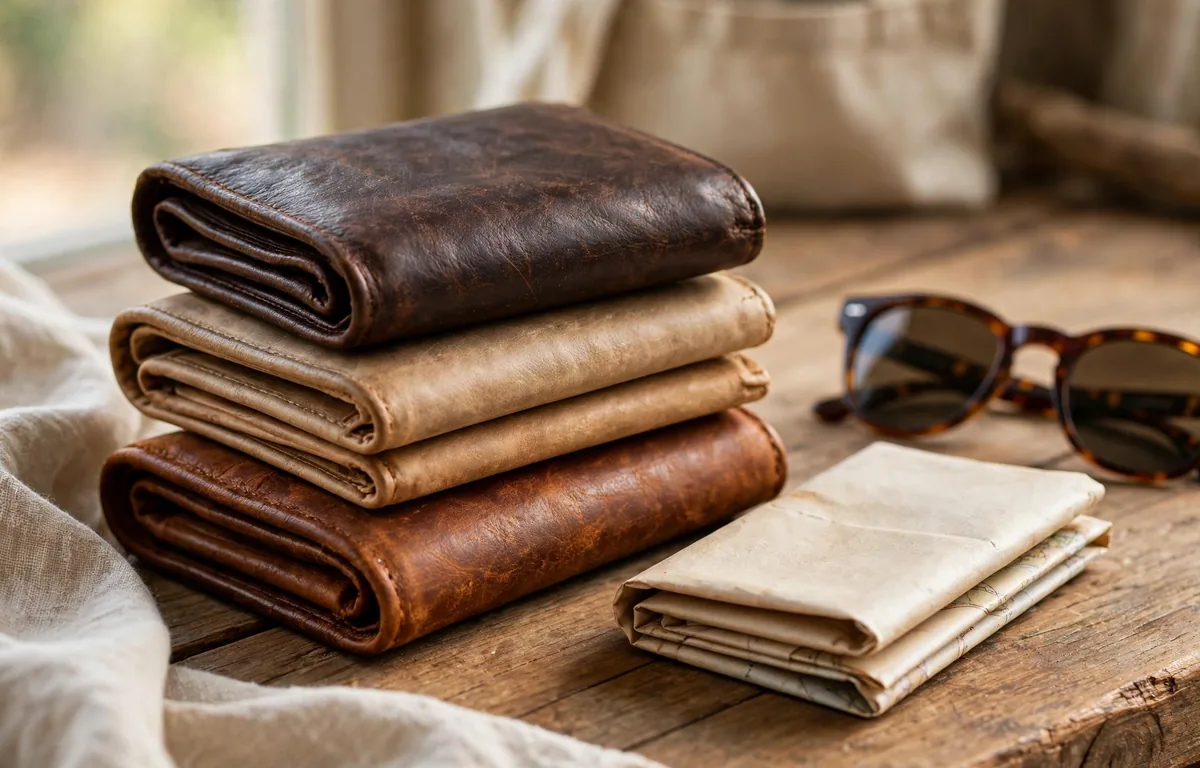
Best Travel Wallets (2026): The Complete Guide to Choosing Yours
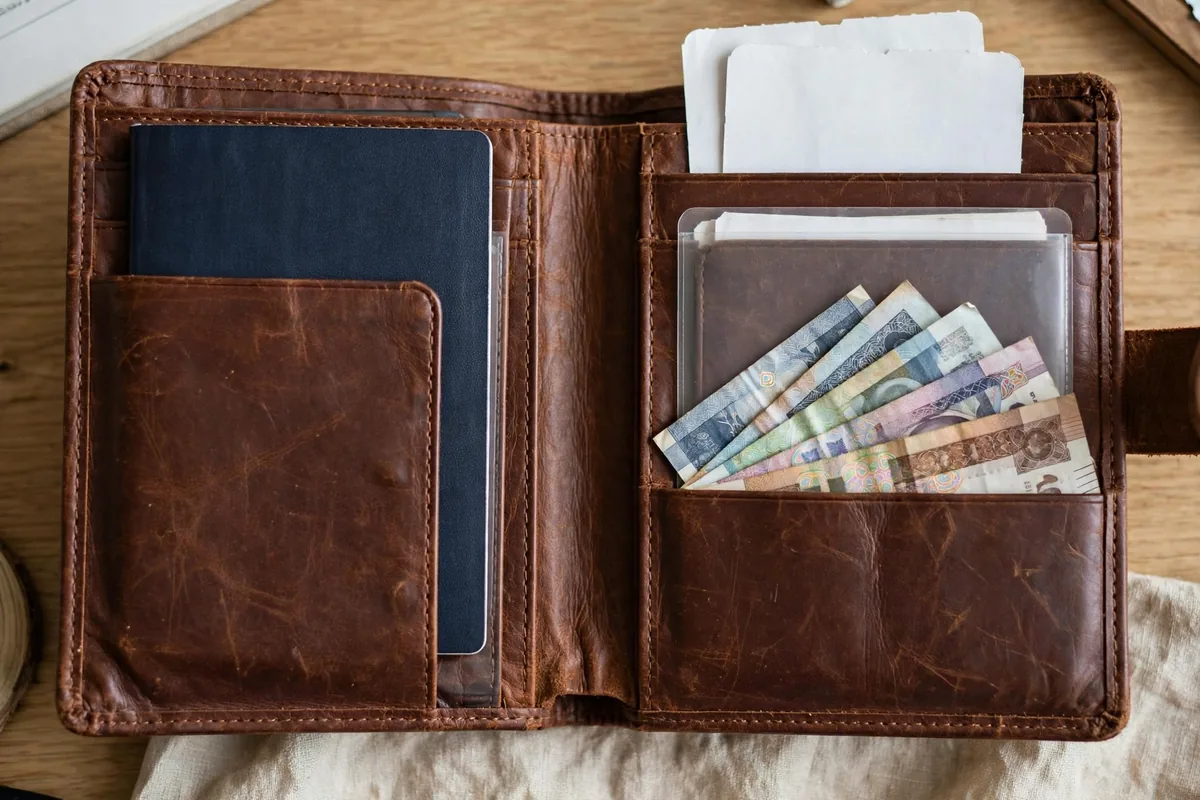
The short version: the best travel wallet keeps your passport, cards, cash, and documents organized and protected — and the right one depends on how you travel. Slim pocket wallets suit carry-on minimalists, neck and under-clothing wallets suit security-first travelers, and full organizer wallets suit families juggling multiple passports. This 2026 guide compares the top picks, explains RFID blocking honestly, and walks you through choosing one in five steps.
What Makes a Great Travel Wallet?
A regular wallet holds cards and cash. A travel wallet has a bigger job: it has to carry a passport (or several), boarding passes, multiple currencies, cards, maybe a phone — and keep all of it safe from loss, damage, and electronic theft. The best travel wallets do three things well:
- Organization: dedicated sleeves for a passport, card slots, a cash compartment, and ideally a pen loop or boarding-pass pocket. Everything has a home, so you’re not digging at the gate.
- Security: RFID-blocking lining to prevent electronic skimming, plus closure styles (zippers, locking flaps) that keep things from sliding out. Some go further with slash-resistant straps or cut-proof materials.
- Carry comfort: thin enough to actually fit in the pocket or bag you travel with. The most secure wallet in the world is useless if you leave it in the hotel safe because it’s a brick.
The Short Version: Our Top Picks at a Glance
| Wallet | Best for | Carry style | RFID blocking |
|---|---|---|---|
| Peak Design Travel Wallet | Best overall | Pocket / bag | Yes |
| Bellroy Travel Wallet | Luxury pick | Pocket / bag | Yes |
| VENTURE 4TH Neck Wallet | Best budget | Under-clothing | Yes (13.56 MHz) |
| ZOPPEN Passport Holder | Family documents | Bag organizer | Yes |
| Ridge Wallet | Minimalists | Front pocket | Yes (metal body) |
| Herschel Slim Bifold | Everyday travelers | Front pocket | Varies by model |
| Lewis N. Clark Family Organizer | Multiple passports | Bag organizer | Yes |
| Travelon Anti-Theft Classic | Max security | Crossbody / bag | Yes |
Step 1: Decide How You’ll Carry It
The short version: carry style determines everything else. Pick this first.
Travel wallets come in three security architectures, and each is a trade-off between access speed and protection:
Pocket wallets
These live in your pocket like a normal wallet — slim, fast to access, always on you. Picks like the Ridge Wallet, Herschel Slim Bifold, or the Peak Design Travel Wallet prioritize this style. The security model is simple: your body is the safe. They’re ideal for city trips, business travel, and anyone who hates fumbling at counters.
Under-clothing wallets
Neck pouches and money belts (VENTURE 4TH makes the most popular versions) sit under your shirt, invisible to everyone around you. They’re the most physically secure option — a pickpocket can’t steal what they can’t find — but they’re slow to access. Most owners use them for the passport and backup cash while keeping a slim wallet in the pocket for daily spending.
Bag-carry organizers
Full-size organizers like the ZOPPEN tri-fold or Lewis N. Clark Family Organizer hold everything: multiple passports, boarding passes, itineraries, pens, SIM cards. They work best as a “document station” inside a daypack or personal item, paired with a smaller wallet for your pocket.
The honest answer for most travelers: combine two styles. A slim pocket wallet for daily spending plus an under-clothing or bag-carry option for the passport and backup currency. It sounds like overkill until the day your pocket wallet walks away and your trip continues uninterrupted because the passport was separate.
Step 2: Understand RFID Blocking (and the Hype)

The short version: RFID skimming is real but rare; a wallet with genuine 13.56 MHz blocking is cheap insurance.
Contactless credit cards and modern biometric passports communicate over radio at a standard frequency: 13.56 MHz. In theory, someone with the right reader in a crowded queue could skim that data without touching you. In practice, it’s an uncommon crime — and most newer passports already have some RFID-blocking material built into the cover.
Still, if a wallet advertises RFID protection, hold it to a standard: it should specify 13.56 MHz blocking, not just “RFID blocking” in the marketing copy. Older 125 kHz blocking materials don’t protect modern payment cards or biometric passports. Verified picks — the Eagle Creek, VENTURE 4TH, ZOPPEN, and Allett lines, among others — publish 13.56 MHz protection. Some otherwise excellent wallets (Bellroy’s travel line and TUMI, for example) skip RFID blocking entirely, which matters most in high-density tourist areas, busy transit hubs, and packed queues where strangers press close.
One more honest note: RFID protection is one layer, not a security strategy. A zipper that keeps the wallet closed in your bag does more for you day-to-day than any shielding material. Buy the wallet for the organization first, and treat the RFID lining as a welcome bonus.
Step 3: Compare the Best Travel Wallets of 2026
Peak Design Travel Wallet — best overall
Peak Design built its reputation on camera gear, and it shows: this wallet is obsessively engineered. A quick-access card slot, a passport sleeve, and a hidden cash compartment come together in a slim package that doesn’t bulge in a jacket pocket. The origami-like construction uses very few seams, which means fewer failure points. It’s the pick for travelers who want one wallet that does everything without looking like tactical gear.
Bellroy Travel Wallet — best luxury pick
Crafted from premium, environmentally certified leather, the Bellroy feels like it belongs in a first-class lounge. Passport sleeve, microfiber-lined phone pocket, secure zip closure, and a layout that’s clearly been thought about by people who fly a lot. It’s the priciest wallet on this list, but leather ages well and this one is built to last a decade of trips. For more lifestyle gear guides, check out 9bio.
VENTURE 4TH Neck Wallet — best budget pick
The proof that security doesn’t have to cost much. This full-zip neck pouch offers ample space, genuine 13.56 MHz RFID protection, and multiple organizational pockets at a price that’s hard to argue with. It won’t win style awards — it lives under your shirt, so it doesn’t have to — but for nervous first-time international travelers, it’s the cheapest peace of mind in luggage.
ZOPPEN Passport Holder (Ver.4) — best family documents organizer
The tri-fold document organizer is a classic for a reason: it holds passports, cards, boarding passes, and cash in one zippered package, with room for a family’s worth of documents. The Ver.4 adds solid RFID blocking and enough structure to stay open on an airport counter while you dig. If you travel with kids, this is the command center that keeps everyone’s documents in one place during chaotic transitions.
Ridge Wallet — best minimalist
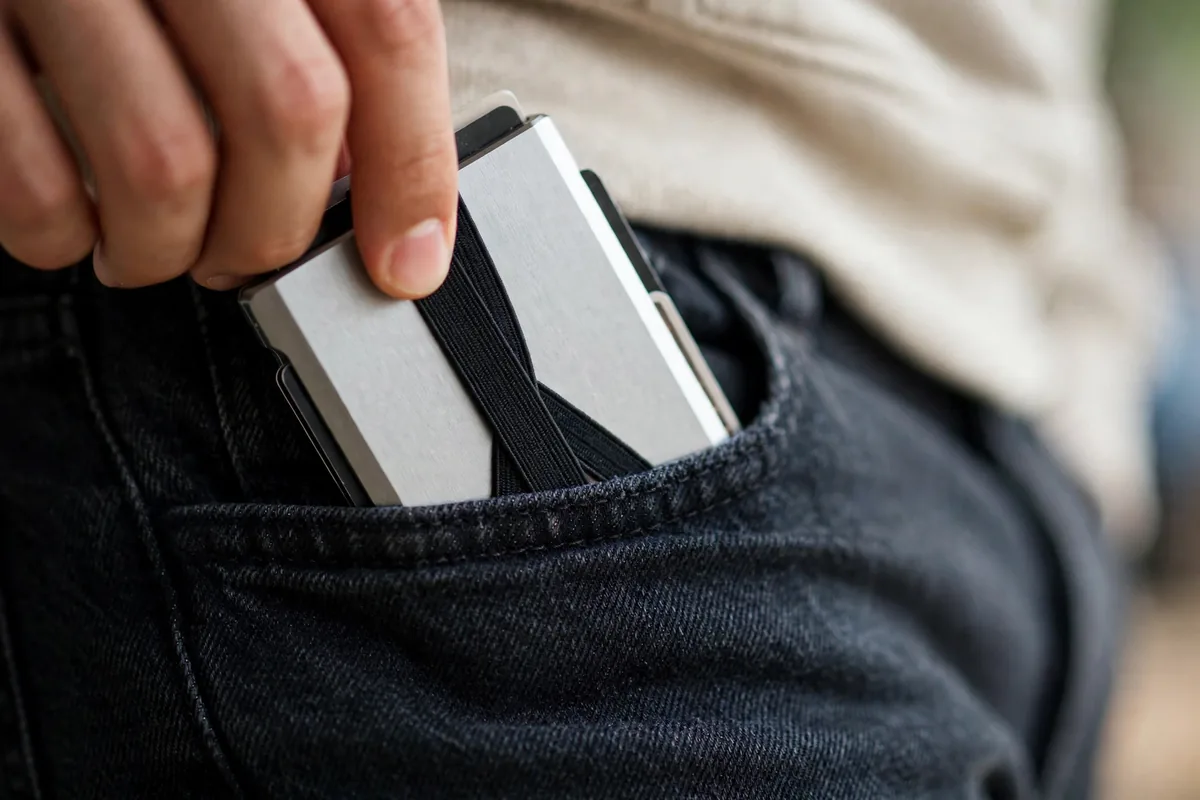
A slab of aluminum, titanium, or carbon fiber held together by an elastic band. The Ridge carries a handful of cards and folded cash in a front-pocket-friendly brick that blocks RFID by virtue of being a solid metal shell. It’s not for document carry — no passport fits — but as a daily-spend wallet for the trip, it’s nearly indestructible. Fair warning: the elastic eventually wears and needs replacing, though the company sells replacements cheaply.
Herschel Slim Bifold — best everyday carry
For the carry-on-only traveler who lives by “less is more.” It holds a few cards, some cash, and a passport in a sleek package that disappears into a front pocket. Herschel’s designs are clean enough to double as your regular wallet back home, which means one less thing to buy and pack. Check the specific model for RFID blocking — it varies across the line.
Lewis N. Clark Family Organizer — best for multiple passports
Designed to hold multiple passports, boarding passes, itineraries, and pens in labeled sections. If you’ve ever watched a parent at passport control juggling four people’s documents, you understand why this exists. It’s not pocketable — this lives in the daypack — but it turns document chaos into a filing system.
Travelon Anti-Theft Classic Wallet — best for maximum security
Beyond its RFID lining, this one adds locking compartments and slash-resistant construction. It’s built for travelers who go places where bag-slashing and skilled pickpockets are genuine concerns. Overkill for a weekend in Chicago; reassuring for crowded markets in unfamiliar cities.
Step 4: Match the Wallet to Your Trip Type
The short version: the “best” wallet changes with the itinerary.
| Trip type | What to carry | Best wallet style |
|---|---|---|
| Solo city break | ID, 3–4 cards, some cash | Slim pocket wallet (Ridge, Herschel) |
| International business | Passport, cards, receipts | Peak Design or Bellroy |
| Family vacation | 2+ passports, boarding passes, itineraries | ZOPPEN or Lewis N. Clark organizer |
| Backpacking / hostels | Passport, backup cash, cards | Neck pouch (VENTURE 4TH) + slim wallet |
| High-theft-risk areas | Everything, secured | Travelon Anti-Theft + under-clothing pouch |
| Couple’s getaway | 2 passports, cards | Zero Grid-style dual-passport holder |
Notice the pattern: nobody on this table carries just one wallet. The layered approach — pocket wallet for spending, secured carry for documents — keeps showing up because it works. Plan for the day something gets lost or stolen, and pack so that day is an inconvenience instead of a disaster.
Step 5: Check the Details Before You Buy
The short version: measure your passport against the sleeve, count the slots you’ll actually use, and check the closure.
- Passport fit: U.S. passports are about 3.5 × 5 inches, but sleeves vary. Some “passport wallets” are snug enough that pulling the passport out in a hurry is a fight. Check reviews for fit complaints.
- Slot honesty: Eight card slots sounds great until you realize you carry three cards. Empty slots add bulk. Start with what you actually carry and pick the smallest format that keeps it organized.
- Closure type: zippers are the most secure; magnetic snaps are the fastest; open-top sleeves are the riskiest. A zippered main compartment is the sweet spot for most travelers.
- Material: full-grain leather ages beautifully and lasts years but adds weight and cost. Ballistic nylon and coated canvas are lighter, weather-resistant, and cheaper. Aluminum (Ridge-style) is indestructible but holds the least.
- Water resistance: not waterproof — no wallet should be trusted in a downpour — but a water-resistant shell saves you from the spilled drink or the sudden shower.
- Weight empty: an organizer wallet can weigh half a pound before you put anything in it. If it’s going in a front pocket, every ounce matters.
Travel Wallet Mistakes to Avoid
After years of watching travelers (and being one), the same mistakes keep showing up:
- Buying for the trip you fantasize about, not the trips you take. A 12-slot family organizer is dead weight on a solo weekend. Buy for the 80% case.
- Putting everything in one place. Passport, all cards, all cash in a single wallet means one loss ends the trip. Split documents and daily spend.
- Ignoring the backup plan. Keep a photo of your passport and cards on your phone (in a secure note, not the camera roll), plus the card issuer’s international number. The wallet protects the originals; the backup gets you home if they vanish.
- Overpaying for RFID as the headline feature. RFID blocking is a nice-to-have, not a reason to spend triple. Organization, fit, and closure quality matter more every single day of the trip.
- Forgetting the return leg. Boarding passes, receipts, leftover currency — the wallet needs to work on day ten, stuffed with trip debris, not just on day one when it’s pristine.
Caring for Your Travel Wallet
A good travel wallet lasts years if you treat it decently. Leather wallets want occasional conditioning (once or twice a year keeps the leather from drying and cracking). Nylon and canvas wallets can be wiped down with a damp cloth — toss them in the wash only if the manufacturer says so, because RFID shielding layers don’t love the machine. Empty it between trips; old receipts and expired boarding passes are how wallets get fat and zippers get strained. And check the elastic on minimalist wallets yearly — it stretches with use, and a wallet that can’t grip its cards is a wallet that drops them.
FAQs
Do I really need an RFID-blocking travel wallet?
It’s sensible insurance rather than a necessity. RFID skimming is a real but uncommon crime, and newer passports already include some shielding. If the wallet you like has verified 13.56 MHz blocking, great — but don’t choose a worse wallet just for the RFID label.
Are RFID wallets allowed through TSA and airport security?
Yes. RFID-blocking wallets are TSA approved. You’ll still need to take your passport and ID out for inspection at checkpoints — the wallet doesn’t exempt you from showing documents.
What’s the best travel wallet for a family?
A bag-carry organizer: the ZOPPEN tri-fold or the Lewis N. Clark Family Organizer. Both hold multiple passports, boarding passes, and itineraries in one place. Pair one with a slim pocket wallet for daily spending.
Can a travel wallet hold a phone too?
Some can — the Bellroy Travel Wallet includes a microfiber-lined phone pocket, for example. But phones keep getting bigger, so verify your specific model’s dimensions against your phone before assuming it fits.
How much should I spend on a travel wallet?
Budget options under $20 (like the VENTURE 4TH neck pouch) cover the security basics well. Mid-range organizers run $30–$60. Premium leather wallets like Bellroy’s cost $100+ and are built to last a decade. Match the spend to how often you travel.
What’s the difference between a travel wallet and a passport holder?
A passport holder is usually just a sleeve for the passport. A travel wallet is a full organizer: passport sleeve plus card slots, cash compartments, and often boarding-pass and pen storage. For a short domestic trip a sleeve is fine; for international travel, get the wallet.
Read Also: VIN Number Lookup (2026): Complete Guide to Decoding Your Vehicle’s VIN
Related Stories

Chlor Calcium Explained: Uses, Safety and Practical Guide
Chlor calcium usually means calcium chloride, a versatile compound used for de-icing, drying, dust control, and more. Here…

Rivet: Types, Uses, and How to Choose the Right One
From solid rivets in aircraft and bridges to pop rivets in DIY projects, here is how rivets work,…

Moldavite Crystal Meaning and Real vs Fake Guide
What moldavite is, where it comes from, what collectors mean by its energy, and the practical checks that…