Chlor Calcium Explained: Uses, Safety and Practical Guide
Chlor calcium usually means calcium chloride, a versatile compound used for de-icing, drying, dust control, and more. Here is what it is and how to use it safely.

The short version: When people search for chlor calcium, they usually mean calcium chloride, a compound of calcium and chlorine that is widely used in everyday and industrial life. It is best known for melting ice on roads and paths in winter, but it is also used to control dust on unpaved roads, to dry the air in damp spaces, to speed up the setting of concrete, and, in a purified food-grade form, as an ingredient in food processing. It is a useful and versatile material, but it needs to be handled with care, because it attracts moisture strongly, can irritate skin and eyes, and can damage some surfaces if it is used incorrectly.
That combination, usefulness plus a need for care, is the theme of this guide. Calcium chloride is not a mysterious chemical known only to specialists. It is a workhorse compound that many people encounter without realising it, in a de-icing bag in winter, in a small tub designed to keep a wardrobe dry, or in the list of ingredients on a food product. Understanding what it is, what it does, and how to handle it safely will help you use it well, choose the right form for the job, and avoid the common mistakes that lead to damaged surfaces, wasted product, or irritated skin.
A note on the name is helpful at the start. “Chlor calcium” is not the standard scientific name for the compound. The standard name is calcium chloride, and you will find products labelled under that name, sometimes with additional wording describing their grade or intended use, such as de-icing, industrial, or food grade. Older or informal usage, and usage in other languages, sometimes reverses the word order or shortens it, which is how forms like chlor calcium arise. This guide uses calcium chloride as the main name, while keeping chlor calcium in the title and headings so that readers who searched for that phrase can find the information they need.
What Calcium Chloride Is
Calcium chloride is a salt, in the chemical sense of that word, formed from the elements calcium and chlorine. In its usual commercial form it appears as white flakes, pellets, granules, or a powder, and it is sold dry in bags, tubs, or containers designed to keep moisture out. Its most distinctive property, and the one that explains most of its uses, is that it attracts water very strongly. Left exposed to damp air, it will draw moisture from that air and gradually become wet, and eventually dissolve in the water it has absorbed. That property has a technical name, hygroscopic, and it is worth remembering, because it explains both why calcium chloride is so useful and why it must be stored carefully.
When calcium chloride is dissolved in water, it releases heat, a process that can be felt if you dissolve a quantity in a small amount of water. That warming effect is part of why it works well for melting ice: it does not merely sit on the surface, but actively helps to break down ice and snow and to keep the resulting brine liquid at temperatures where plain water would refreeze. The same attraction to water explains its use as a drying agent. Placed in a damp cupboard, a boat, or a storage space, it draws moisture from the air, helping to reduce dampness and the musty smell and mould growth that dampness encourages.
It is also worth understanding what calcium chloride is not. It is not the same as ordinary table salt, although both are salts in the chemical sense and both are used for de-icing. Table salt is sodium chloride, while calcium chloride is a different compound, with different properties, a different effectiveness at low temperatures, and different effects on surfaces and plants. Confusing the two can lead to poor results, because a product chosen for one job may not suit another, and because the handling and clean-up advice differs. When you buy a product, check the label for the actual compound named, rather than assuming from the appearance of white granules alone.
Why Calcium Chloride Works So Well for De-Icing
De-icing is the use most people associate with calcium chloride, and it is a good place to start, because it shows the compound’s strengths clearly. When spread on ice or snow, calcium chloride draws moisture, forms a brine, and lowers the freezing point of water, so that ice melts and the surface stays free of ice for longer than it would with plain water alone. It remains effective at colder temperatures than ordinary rock salt, which is why it is often chosen for harsh winter conditions, for steps and paths where safety matters, and for situations where a quick result is needed.
That effectiveness comes with responsibilities. Calcium chloride should be spread evenly and in the amount recommended on the product label, not heaped in piles. Using more than needed does not make a path proportionally safer, and it increases the risk of damage to surfaces, harm to nearby plants, and tracking of residue into the home. After ice has melted, the residue should be swept or washed away where practical, and footwear and paws should be cleaned after walking over treated surfaces. These are simple habits, but they make the difference between a product used well and a product that causes avoidable problems.
Surface compatibility deserves particular attention. Calcium chloride is generally used on concrete, asphalt, and stone, but it can be harsh on some surfaces, especially new concrete that has not fully cured, and on certain types of stone, metal, and vegetation. Product labels usually give guidance on suitable surfaces, and that guidance should be followed. If you are unsure about a particular surface, test a small, inconspicuous area first, or choose a different de-icing method for that surface. A path that is safe to walk on but damaged by the product used to clear it has not been well looked after.

Other Practical Uses
Beyond de-icing, calcium chloride has a range of practical uses that show how versatile a simple compound can be. On unpaved roads and tracks, it is used for dust control. Sprayed as a solution, it draws moisture from the air and from the road surface, keeping the surface damp and binding fine dust particles together, so that less dust is thrown up by traffic. That matters for visibility, for comfort, and for the maintenance of the road itself, because a dusty, dry surface erodes more quickly than a surface that holds together.
In construction, calcium chloride is used as an accelerator for concrete, meaning that it helps concrete set and gain strength more quickly, particularly in cold weather. That can be valuable when a project needs to proceed in winter, or when a slab or structure needs to be usable sooner rather than later. It is, however, a specialist use, and the amount, the type of concrete, and the presence of steel reinforcement all affect whether it is appropriate. It should only be used in construction on the advice of a qualified person or in accordance with a proper specification, not added casually to a home concrete mix on the basis of a general article.
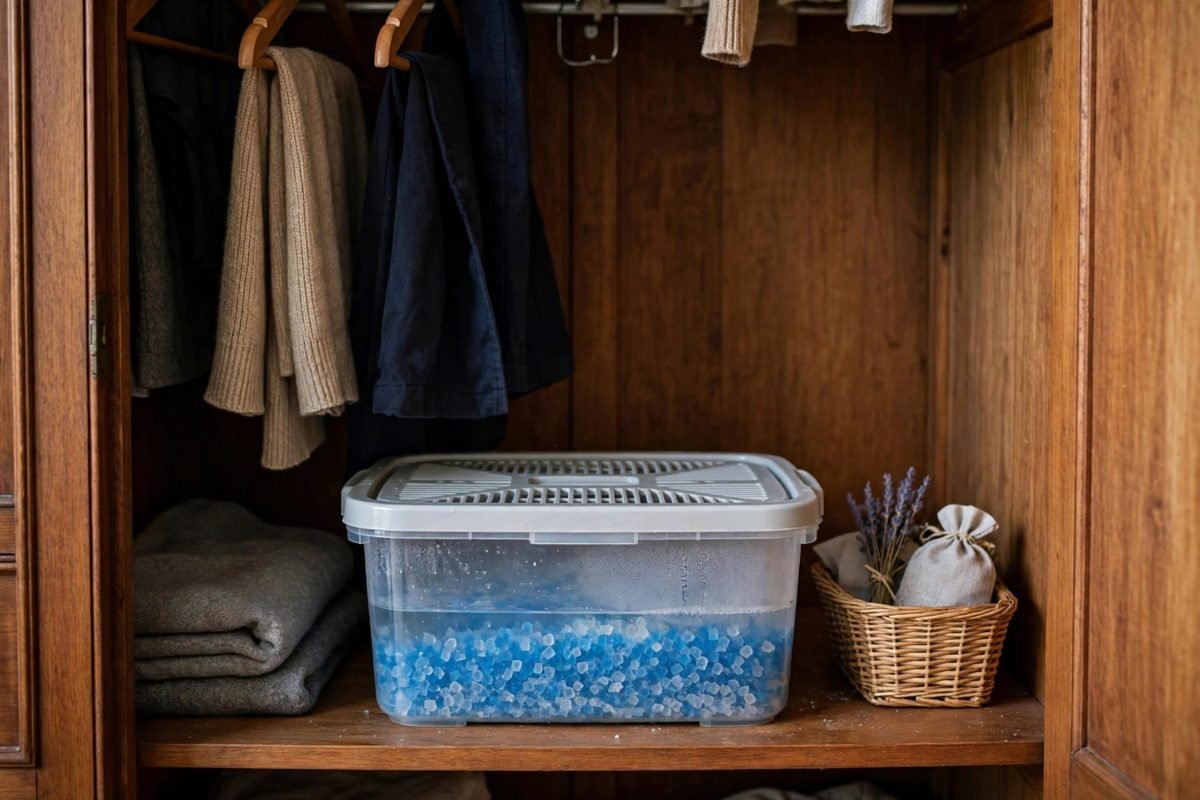
As a drying agent, or desiccant, calcium chloride is used in small tubs and sachets designed to protect enclosed spaces from damp. A tub placed in a wardrobe, a caravan, a boat cabin, or a storage box will gradually collect water as the compound draws moisture from the air, and the collected water can then be emptied and the unit replaced or refilled. This is a straightforward and effective use, provided the unit is kept upright, out of reach of children and pets, and emptied before it overflows. It is a good example of a use where the compound’s strongest property, its attraction to water, is the whole point.
In food production, a purified, food-grade form of calcium chloride is used for purposes such as firming vegetables during pickling and canning, and in cheese making, where it helps milk form a firm curd. It is also used in some bottled waters and sports drinks to add calcium and to adjust taste. Food-grade calcium chloride is produced and handled to food safety standards, and it should not be confused with industrial or de-icing grades, which are not intended for consumption. The distinction between grades is essential, and it is a reminder that the same chemical name can cover products of very different purity, made for very different purposes.
Other uses include water treatment, where calcium chloride is used to adjust the hardness of water in swimming pools and other systems, and industrial processes where its ability to attract water or to supply calcium ions is useful. These are specialist applications, and they are mentioned here to give a sense of the compound’s range, not as instructions for home use. For most readers, the relevant uses will be de-icing, damp control, and, indirectly, food products in which food-grade calcium chloride is already an ingredient.
Forms of Calcium Chloride and How to Choose
Calcium chloride is sold in several forms, and choosing the right one makes the job easier and the result better. Flakes are flat, irregular pieces that dissolve relatively quickly and are easy to spread by hand or with a scoop. Pellets are small, rounded pieces that are convenient for spreading evenly, roll less than flakes in some conditions, and are a popular choice for paths and driveways. Powder dissolves fastest of all, but it is also the most prone to clumping if it absorbs moisture, and it can be dusty to handle. Liquid solutions, ready mixed, are convenient for spraying on roads for dust control or for pre-treating a surface before ice forms, and they avoid the need to spread a solid product at all.
The grade matters as much as the form. De-icing and industrial grades are made for those purposes and are not suitable for food use. Food grade is made to food safety standards and is the only grade that should ever be used in food preparation, and then only in accordance with a reliable recipe or a food manufacturer’s instructions. Technical grades, used in industry, fall between these in terms of purity and intended use, and they should be used only for the purpose stated on the label. Buying the cheapest bag without checking its grade and intended use is a false economy if the product is wrong for the job.
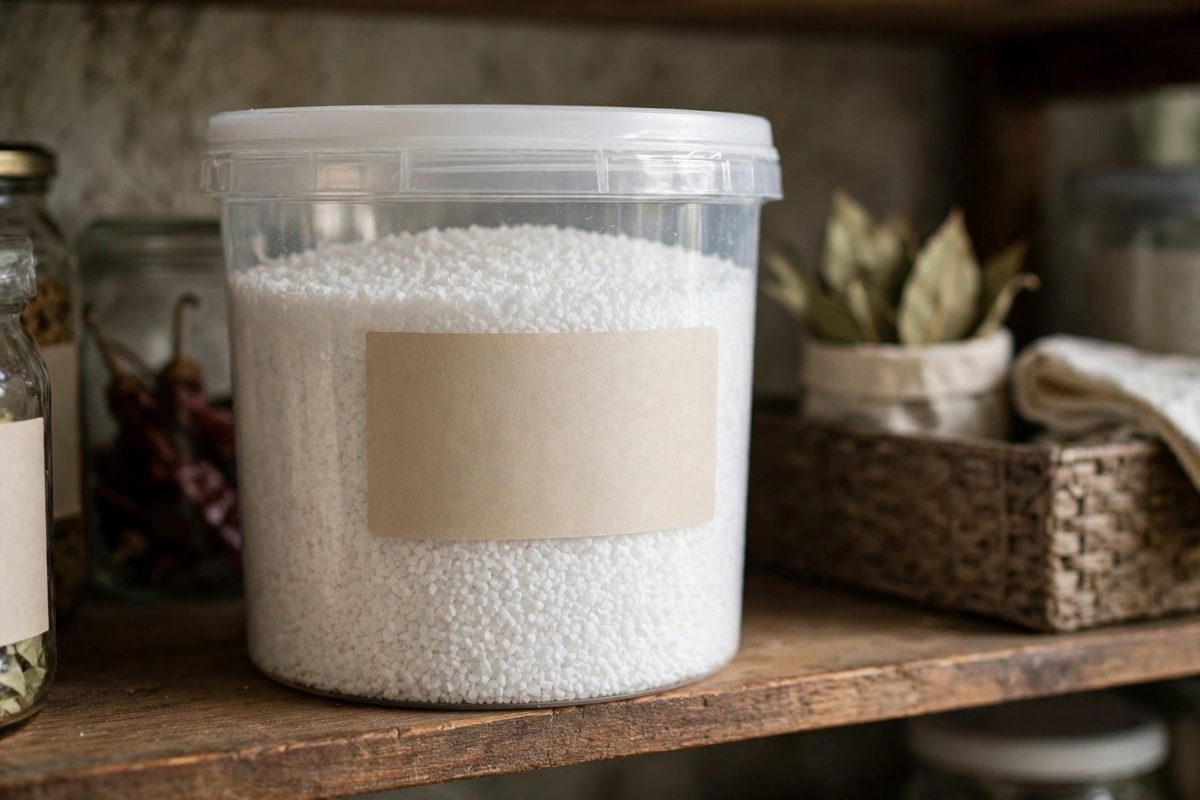
Packaging and quantity also matter. Because calcium chloride attracts moisture, it should be bought in a quantity you can use within a reasonable time and stored in a sealed, dry container. A large bag left open in a damp garage will gradually absorb water, clump, and become difficult to spread, and the product will be wasted. Smaller, resealable containers, or transferring the product to a sturdy, labelled, airtight tub, will keep it in usable condition for much longer. Always keep the original label, or copy its safety information onto the new container, so that anyone who handles the product knows what it is.

Step 1: Store Calcium Chloride Correctly
Good storage is the foundation of safe and effective use, and it begins the moment you bring the product home. Keep calcium chloride in a cool, dry place, in its original sealed packaging or in a clean, dry, airtight container that is clearly labelled. Keep it off damp floors, away from leaks, and away from sources of water. Keep it out of reach of children and pets, and away from food, animal feed, and medicines, so that there is no chance of confusion.
Check the container regularly, especially if it has been stored for a long time. If the product has absorbed moisture and formed a solid lump, it may still be usable for de-icing in some cases, but it will be harder to spread evenly, and the label guidance should be checked. If the container has leaked, clean up the spill promptly, wearing gloves, and dispose of the spilled material in accordance with local guidance. Do not store calcium chloride in a container that previously held food, and do not transfer food-grade product into a container that previously held an industrial product, because cross-contamination defeats the purpose of using a food-grade product in the first place.
Step 2: Handle It Safely
Handling calcium chloride safely is mostly a matter of common sense and a few simple precautions. Wear gloves when handling the dry product, and avoid getting it in your eyes. If you are handling powder, or spreading product on a windy day, consider eye protection and avoid breathing in dust. Wash your hands after handling, and avoid touching your face while you work. If the product contacts skin, wash the area with plenty of water. If it contacts eyes, rinse them gently with water for several minutes, remove contact lenses if present and easy to do so, and seek medical advice if irritation persists. If the product is swallowed, seek medical advice promptly and, if possible, show the product label to the healthcare professional.
These precautions are not a reason to be alarmed about calcium chloride. Used as directed, it is a widely used and well-understood product. They are, however, a reason to treat it as a chemical product rather than as harmless white granules. The same property that makes it effective, its strong attraction to water, means that it can draw moisture from skin and irritate it, especially with prolonged contact, and that it can irritate eyes and airways if dust is inhaled. Respecting those properties, and following the safety information on the label, is the whole of safe handling in most cases.
Keep calcium chloride away from plants and grass where possible, and avoid spreading it where run-off will flow directly into ponds, streams, or vegetable beds. Rinse treated footwear and clean pets’ paws after they have walked on treated surfaces, because residue can irritate paws and can be ingested when an animal grooms itself. Sweep up excess product after ice has melted, rather than leaving it to accumulate. These steps protect gardens, waterways, and animals, and they also keep the product working where it is needed rather than spreading where it is not.
Step 3: Use the Right Amount for the Job
Using the right amount is the single most common area where home users go wrong, and the error is almost always using too much. A thin, even spread, applied according to the label, will melt ice effectively. A thick layer will not work proportionally better, and it will increase residue, cost, and the risk of surface or plant damage. For paths and steps, start with the recommended amount, give it time to work, and add a little more only if needed, rather than emptying the scoop in one place at the start.
Pre-treatment is a useful technique where the label supports it. Applying a solution or a light spread before ice forms can prevent ice from bonding firmly to the surface, making it easier to clear later. That approach uses less product overall than trying to melt a thick layer of ice after it has formed, and it is safer, because the surface is treated before it becomes hazardous. It does require attention to the weather forecast, and it is not a substitute for clearing snow promptly, but as part of a winter routine, it is worth considering.
For damp control, the right amount is determined by the size of the space and the product’s design. A small tub is suitable for a wardrobe or a small cupboard, while a larger space, a caravan, or a boat cabin may need a larger unit or more than one unit. Follow the manufacturer’s guidance for the space, empty collected water regularly, and replace or refill the unit when it is exhausted. A desiccant unit left overflowing, or left in place long after it has stopped working, is not protecting anything, and it may itself become a source of damp or spillage.
Step 4: Clean Up and Dispose Responsibly
After de-icing, sweep up residue and dispose of it with household waste where local guidance permits, rather than washing large quantities into drains, gardens, or waterways. Rinse tools, scoops, and spreaders after use, and store them dry. Clean treated surfaces with water where practical, especially surfaces where children or pets play, and where vehicles or footwear will track residue indoors. A doormat, and a habit of removing shoes at the door in winter, will reduce the amount of residue brought into the home more effectively than any cleaning product.
For unused product that is no longer needed, or for product that has become contaminated, follow local waste guidance and the information on the label. Do not pour concentrated solutions into drains or watercourses, and do not mix calcium chloride with other chemicals unless a reliable source specifically directs you to do so. Mixing chemicals without proper knowledge can produce heat, fumes, or other hazards, and it is never a shortcut worth taking. When in doubt, contact your local waste service for advice, and keep the product label available so that you can describe exactly what you have.
Calcium Chloride Compared With Other De-Icers
| Product | Main strength | Main drawback | Best for |
|---|---|---|---|
| Calcium chloride | Works at colder temperatures, acts quickly | Can irritate skin, may affect plants and some surfaces | Cold winters, steps and paths where fast action matters |
| Sodium chloride (rock salt) | Cheap and widely available | Less effective in very cold weather, corrosive to metal | Milder winter conditions, large areas on a budget |
| Sand or grit | Provides grip without melting ice | Does not melt ice, needs clearing up afterwards | Adding traction on top of ice, especially near plants |
| Urea-based de-icers | Gentler on some surfaces and plants | Slower and less effective in severe cold | Areas where plant and surface protection is a priority |
This comparison is deliberately general, because the right choice depends on temperature, surface, budget, and what matters most in a particular situation. A product that is ideal for a motorway may be wrong for a garden path, and a product that is gentle on plants may be too slow for a busy entrance in a cold snap. The table is a starting point for thinking, not a substitute for reading the label of the product you actually buy.
Common Mistakes to Avoid
The most common mistake, as already noted, is using too much product. The second is storing it badly, so that it absorbs moisture, clumps, and becomes difficult to use. The third is using the wrong grade, especially using an industrial product where a food-grade product is required, or assuming that a de-icing product is safe for food use because it shares a chemical name. The fourth is ignoring surface guidance, and using a product on new concrete, delicate stone, or a surface the label warns against. The fifth is forgetting about plants, pets, and waterways, and leaving residue where it can do harm after the ice has gone.
All of these mistakes are avoidable with a few habits: read the label before you buy and before you use, store the product sealed and dry, wear gloves, spread evenly and sparingly, sweep up afterwards, and keep the product away from children, pets, food, and gardens. Those habits take no more time than careless use, and they turn a useful chemical into a safe and effective household tool. If you are ever unsure about a use, especially a construction or food use, seek advice from a qualified person or a reliable manufacturer source rather than guessing.
FAQs
What is chlor calcium?
Chlor calcium is an informal or reversed form of the name for calcium chloride, a compound of calcium and chlorine. Products are usually labelled calcium chloride, sometimes with a grade such as de-icing, industrial, or food grade, and the grade and intended use should always be checked on the label.
Is calcium chloride the same as table salt?
No. Table salt is sodium chloride, a different compound. Calcium chloride works at colder temperatures than table salt and has different effects on surfaces, plants, and skin, so the two should not be treated as interchangeable.
Is calcium chloride safe to handle?
Used as directed, with gloves, eye protection where dust is present, and hand washing afterwards, it is widely used and well understood. It can irritate skin and eyes, especially with prolonged contact, and dust should not be inhaled. Follow the safety information on the product label, and seek medical advice if irritation persists or if the product is swallowed.
Can I use de-icing calcium chloride in food?
No. Only food-grade calcium chloride, made to food safety standards, should ever be used in food preparation, and then only in accordance with a reliable recipe or manufacturer instructions. Industrial and de-icing grades are not intended for consumption.
Will calcium chloride damage my driveway?
It can damage some surfaces, particularly new concrete that has not fully cured, and certain types of stone and metal. Check the product label for surface guidance, use the recommended amount, sweep up residue after use, and test an inconspicuous area first if you are unsure.
How should I store calcium chloride?
Store it sealed, dry, cool, and clearly labelled, off damp floors and away from water, children, pets, food, and medicines. Transfer it to a clean, dry, airtight container if the original packaging cannot be resealed, and keep the safety information with it.
Read Also: Evil Eye Meaning, Symbols, History and Protection Guide
Related Stories

Rivet: Types, Uses, and How to Choose the Right One
From solid rivets in aircraft and bridges to pop rivets in DIY projects, here is how rivets work,…
Moldavite Crystal Meaning and Real vs Fake Guide
What moldavite is, where it comes from, what collectors mean by its energy, and the practical checks that…

Couples Therapy What to Expect First Session (2026 Guide)
A calm, honest walkthrough of the first couples therapy session — the structure, the questions, the ground rules,…