Evil Eye Meaning, Symbols, History and Protection Guide
The evil eye is an ancient belief that a jealous or envious look can bring bad luck. Here is what it means, where it comes from, and how people respond to it.

The short version: The evil eye is a belief, found in many cultures around the world, that a person can cause harm, bad luck, or illness to another person, animal, or possession simply by looking at them with envy, jealousy, or ill will. The look itself is called the evil eye, and the harm it is said to cause can range from a sudden run of bad luck to sickness, damage to property, or trouble for a child or a new venture. People who hold this belief also use a wide range of symbols, amulets, gestures, and rituals intended to protect against it, the most widely recognised being the blue, eye-shaped amulet often called the nazar.
It is important to say at the outset how this guide treats the subject. The evil eye is a cultural and religious belief, not a scientifically established fact. There is no scientific evidence that a look alone can cause illness or misfortune, and many of the misfortunes attributed to the evil eye have ordinary explanations, from illness and accidents to simple coincidence. At the same time, the belief is deeply held by millions of people, it has a long history, and it shapes behaviour, art, language, and family life in many communities. This guide therefore explains what people believe, why they believe it, and how they act on it, without presenting those beliefs as proven facts and without dismissing the people who hold them.
If you have seen a blue eye amulet hanging in a home, worn as jewellery, or displayed in a shop, or if you have heard a relative warn against showing off a new baby, a new car, or a success too openly, you have already met the evil eye in everyday life. This guide will help you understand what that warning means, where the idea comes from, how it differs from place to place, and what the symbols associated with it are intended to do.
What the Evil Eye Means
In its simplest form, the evil eye is the idea that envy can harm. The belief is not usually that every admiring glance is dangerous. It is that a look charged with jealousy, resentment, or excessive admiration can, knowingly or unknowingly, bring misfortune to the person or thing being looked at. A beautiful child, a healthy animal, a successful business, or a prized possession may be thought especially vulnerable, precisely because they attract attention and admiration, and because that admiration may conceal envy.
That connection between admiration and danger explains a great deal about how the belief works in practice. In many cultures, people are careful about praising a baby too lavishly, showing off wealth, or celebrating good fortune too publicly, not because they are ungrateful, but because they fear drawing an envious eye. Parents may dress a child modestly, delay announcing good news, or add a protective amulet to a pram or a new home. A business owner may hang a protective symbol near the entrance. These are not random superstitions tacked on to daily life. They are practical responses, within the logic of the belief, to a perceived risk.
It is also worth noting that the evil eye is not always thought to be cast deliberately. In many traditions, a person can give the evil eye without meaning to, and even without realising it. A person who is naturally prone to envy, or who admires something intensely, may be thought capable of causing harm unintentionally. That idea matters, because it shifts the focus from blaming a villain to managing a risk that could come from anyone, including a friend or a relative. It also explains why protection is often general and constant, in the form of an amulet worn every day, rather than aimed at one particular person.
A Belief With a Very Long History
The evil eye is one of the oldest beliefs of its kind, with roots that reach back to ancient civilisations around the Mediterranean and the Near East. Similar ideas appear in ancient Greek and Roman writing, in which the envious eye was discussed as a real danger, and in the traditions of peoples across North Africa, the Middle East, and South Asia. Over centuries, the belief travelled with trade, migration, and religion, adapting to local customs while keeping its core idea intact: that envy, expressed through a look, can harm.
Different religions and cultures have engaged with the belief in different ways. In some traditions, it is treated as a serious spiritual danger, and protective prayers, verses, or rituals form part of religious practice. In others, it is treated more as folk custom, something observed by families and communities even by people who do not think about it in strictly theological terms. In still others, it survives mainly as a cultural symbol, recognised in art and jewellery even by people who do not personally believe that a look can cause harm. That range, from religious conviction to cultural habit, is part of why the evil eye remains so visible today.
The belief has also proved remarkably durable. It has survived changes in religion, the rise of modern medicine, and the spread of scientific explanations for illness and misfortune, not because people are unaware of those explanations, but because the evil eye speaks to something those explanations do not fully address: the social experience of envy. Most people know what it feels like to be envied, and most people know what it feels like to envy someone else. The evil eye gives that uncomfortable social feeling a name, a cause, and a set of responses, and that social usefulness helps explain why it has lasted so long.
The Evil Eye Around the World
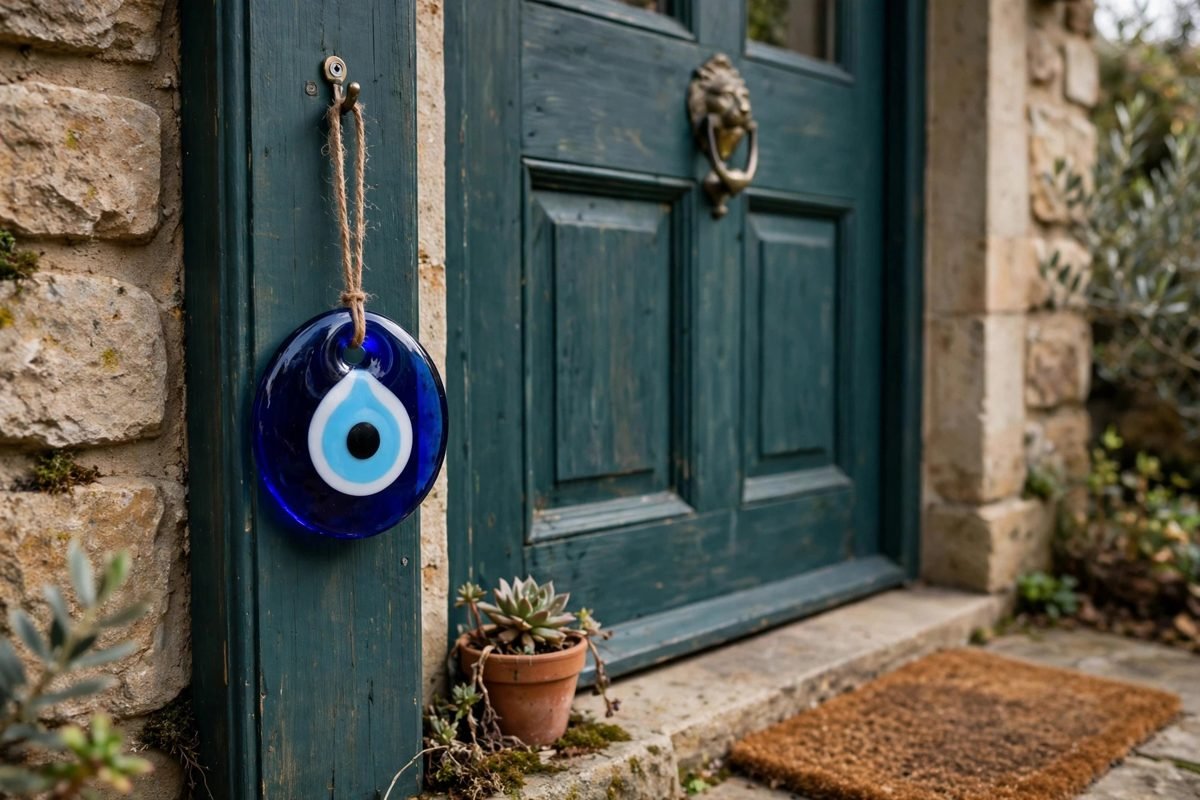
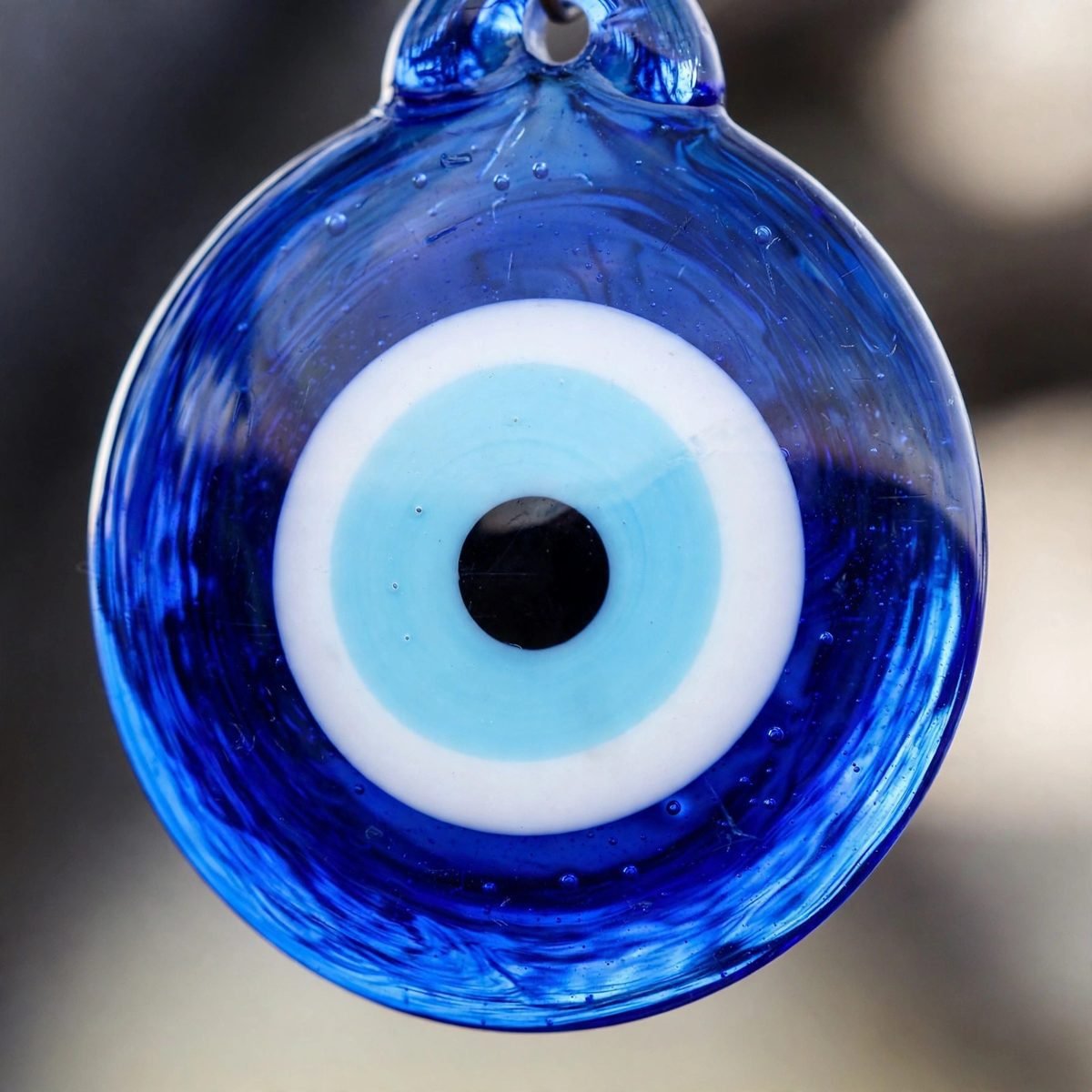
Although the core idea is shared, the evil eye looks different from place to place, and those differences are part of its interest. In the eastern Mediterranean and Turkey, the blue glass amulet known as the nazar is the most familiar symbol. It is made to look like an eye, usually with concentric circles of dark blue, light blue, white, and black, and it is hung in homes, cars, and workplaces, worn as jewellery, and given as a gift for a new baby, a new home, or a new business. When a nazar amulet breaks, many people take that as a sign that it has absorbed a harmful look and protected its owner, and they replace it with a new one.
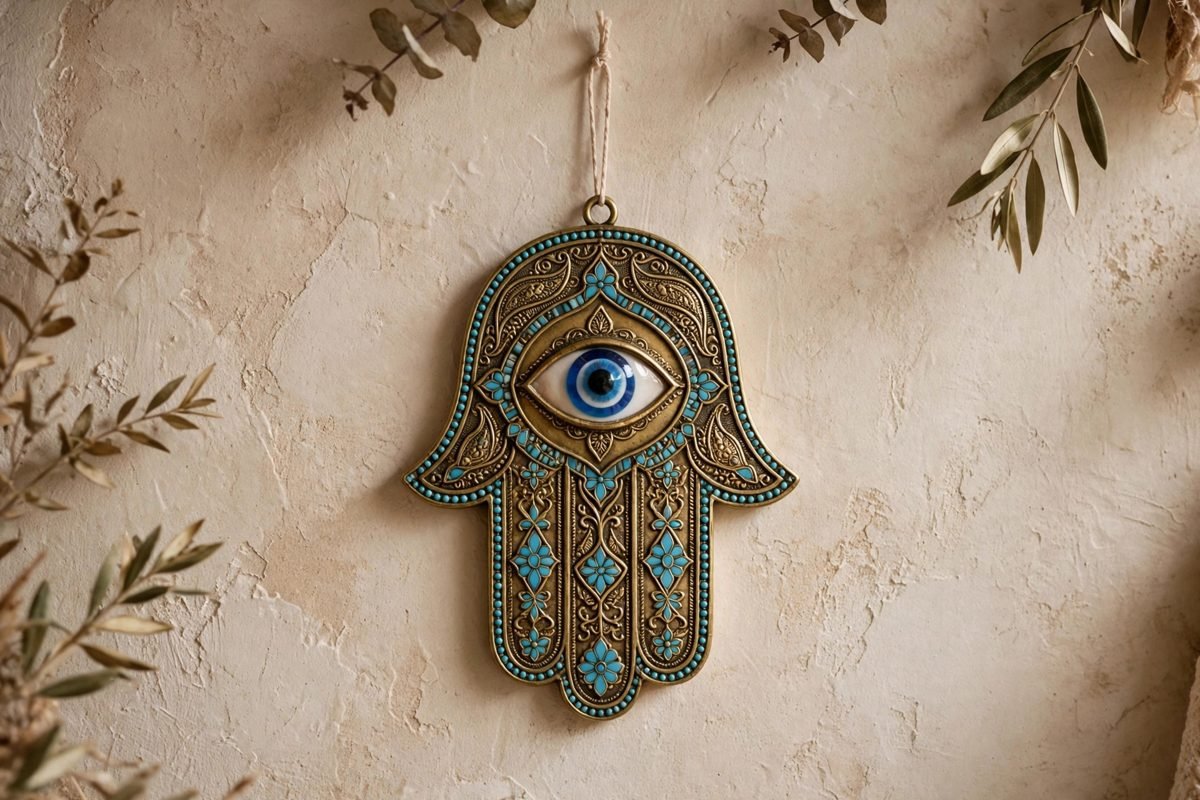
In Greece, the concept is often called mati, and the blue eye amulet is also common, alongside prayers and rituals intended to remove the evil eye once it is thought to have struck. In Italy, the malocchio, meaning literally the bad eye, is a well-known folk belief, and protective symbols include the cornicello, a small horn-shaped amulet, as well as gestures and prayers passed down within families. In parts of the Middle East and North Africa, the Hand of Fatima, also known as the hamsa, a hand-shaped amulet with an eye in its palm, is widely used for protection, and it appears in homes, jewellery, and decoration across religious communities.
In South Asia, the concept is often expressed through the word nazar, and the practices are varied and deeply woven into family life. A black mark may be placed on a baby’s cheek or forehead to deflect attention, a practice sometimes called kala teeka, on the reasoning that a small imperfection will draw the eye away from the child’s beauty and so protect the child. Amulets, threads, and rituals involving the removal of the evil eye are common, and elders often play a central role in identifying when the evil eye is thought to be present and in carrying out the protective or cleansing practice. In Latin America, the mal de ojo, again meaning the evil eye, is a familiar concept, especially in relation to babies and young children, and protective bracelets, often red, are commonly given to infants.
These examples are not exhaustive, and they should not be read as a claim that every person in these regions holds the same belief in the same way. Within any culture, belief varies by family, generation, education, and personal experience. What the examples show is how a single core idea, envy expressed through a look, has been adapted to different languages, religions, materials, and family customs, while remaining recognisable across them.
Signs People Associate With the Evil Eye
People who believe in the evil eye often describe a set of signs that suggest it has struck. For a person, those signs may include a sudden headache, tiredness, unease, or a feeling of being unwell without a clear cause, or a run of small accidents and disappointments. For a baby, they may include inconsolable crying, restlessness, or loss of appetite. For an animal, they may include sudden illness or a drop in milk yield. For a possession, they may include unexpected damage, breakdown, or loss. The common thread is suddenness: something was going well, and then, without an obvious reason, it went wrong.
It is important to handle this part of the subject with care. Many of these signs have ordinary medical or practical explanations, and a person who is unwell, or whose child is unwell, should seek appropriate medical care rather than relying solely on a folk remedy. The value of describing the traditional signs is not to encourage self-diagnosis, but to help a reader understand what family members mean when they say that someone has been affected by the evil eye, and why they may suggest a particular response. Understanding the language of a belief is different from endorsing it as a medical explanation, and this guide keeps that distinction throughout.
The suddenness of the supposed effects also helps explain why the belief is so persistent. Human beings are pattern-seeking creatures, and when a misfortune follows closely after praise, a public success, or a display of good fortune, it is natural to connect the two events. The evil eye provides a ready-made explanation for that connection, one that fits the social situation and offers a course of action. A scientific explanation, by contrast, may be accurate but may feel socially incomplete, because it does not address the envy, the relationship, or the feeling of exposure that the person experienced.
Symbols and Amulets Explained
The symbols associated with the evil eye are among its most visible features, and they repay a closer look, because they are not all doing the same thing. The blue eye amulet, the nazar, works on a principle that is easy to grasp: it meets a harmful look with a look of its own. By presenting an eye to the eye, it is thought to reflect, deflect, or absorb the harmful gaze before it reaches the person it was aimed at. That is why the amulet is often displayed prominently, where it can be seen, rather than hidden away. It is meant to be the first thing an envious look encounters.
The hamsa, or Hand of Fatima, works on a slightly different principle. It is a hand, open and protective, often with an eye set in its palm, and it represents divine protection, blessing, and the warding off of harm in a more general sense. It is used by people of different faiths, and its meaning varies with the community using it, but its protective intent is consistent. A person who wears or displays a hamsa is not only guarding against the evil eye in the narrow sense. The person is also expressing a broader hope for safety, health, and good fortune.
Other protective symbols work by distraction or misdirection. A small black mark on a baby’s face, a deliberately imperfect detail in a beautiful object, or an amulet in an unexpected colour are all thought to draw the eye away from what is most admired and therefore most at risk. The logic is charming in its simplicity: if envy is attracted by perfection, then a small imperfection may save the whole. These practices also reveal something important about the belief, which is that it is not only about other people’s envy. It is also about managing one’s own display of good fortune, and about humility as a form of protection.
Gestures and spoken phrases form another layer of protection. In many cultures, people spit lightly, or make a spitting sound, after praising a child, as a ritual way of warding off the evil eye that praise might attract. Others use phrases that invoke God’s will or blessing when praising, so that admiration is framed as gratitude rather than envy. These small, everyday actions are easy to miss if you are not looking for them, but they are among the most widespread responses to the belief, because they cost nothing, require no object, and can be used in any conversation.
Step 1: Notice How the Belief Shows Up in Daily Life
If you want to understand the evil eye in a particular family or community, start by noticing the small, everyday signs rather than looking for dramatic rituals. Look for the amulet by the front door, the bracelet on a baby’s wrist, the careful way good news is shared, or the phrase added after a compliment. These are the places where the belief lives most of the time, not in formal ceremonies, but in habits passed from parents to children and from grandparents to grandchildren.
Pay attention, too, to the language people use. Words for the evil eye, and for the act of removing it, often carry a warmth and familiarity that a formal description misses. They are family words, used with affection as well as concern, and they are part of how a family looks after its members. A grandmother who performs a ritual to remove the evil eye from a grandchild is not only, in her own understanding, removing a harmful influence. She is also showing care, spending time, and passing on a tradition. That social and emotional dimension is essential to understanding why the belief endures.
Step 2: Understand the Rituals for Removing the Evil Eye
When the evil eye is thought to have struck, many traditions have rituals intended to remove it. These vary widely, and the details matter less for this guide than the general pattern they share. A ritual often involves an elder or a person recognised within the family or community as knowledgeable, a simple set of actions using everyday materials such as water, salt, oil, or a cloth, and a prayer, verse, or spoken formula. The person affected may be asked to rest, to drink water, or to sit quietly while the ritual is performed, and improvement afterwards is taken as confirmation that the evil eye has been lifted.
Some rituals involve diagnosis as well as cure. Oil dropped into water, for example, may be watched to see how it behaves, with a particular pattern taken as a sign that the evil eye was present. Others involve passing an object over the person’s body, or using smoke, steam, or a specific hand movement to draw the harmful influence away. The variety is enormous, and it reflects the creativity of folk practice, in which ordinary materials are given protective meaning by tradition, intention, and community agreement.
Again, the health caution applies. A ritual may bring comfort, reassurance, and a sense of being cared for, and those are real benefits in themselves. They are not, however, a substitute for medical attention when someone is ill, and a person who is seriously unwell should always be seen by a healthcare professional. The most respectful way to approach these rituals is to recognise both their cultural meaning and their limits, and to avoid presenting them as medical treatments.
Step 3: Think About Protection Without Fear
For people who hold the belief, protection is usually a calm, routine matter rather than a source of constant anxiety. An amulet is hung and then largely forgotten. A bracelet is put on a baby and left in place. A phrase is added after praise without much thought. That routine quality is important, because it shows that the belief, for most people, is a way of managing a perceived risk in the background of life, not a preoccupation that dominates every decision.
For people who do not hold the belief, but who live or work alongside people who do, a little understanding goes a long way. Accepting a nazar as a gift graciously, respecting a family’s wish not to photograph a newborn too publicly, or avoiding lavish praise of a child in a particular setting are small courtesies that cost nothing and mean a great deal. They do not require you to share the belief. They simply require you to recognise that it matters to someone else, and to act with the same respect you would show to any other deeply held family or religious practice.
The Evil Eye in Art, Jewellery, and Popular Culture
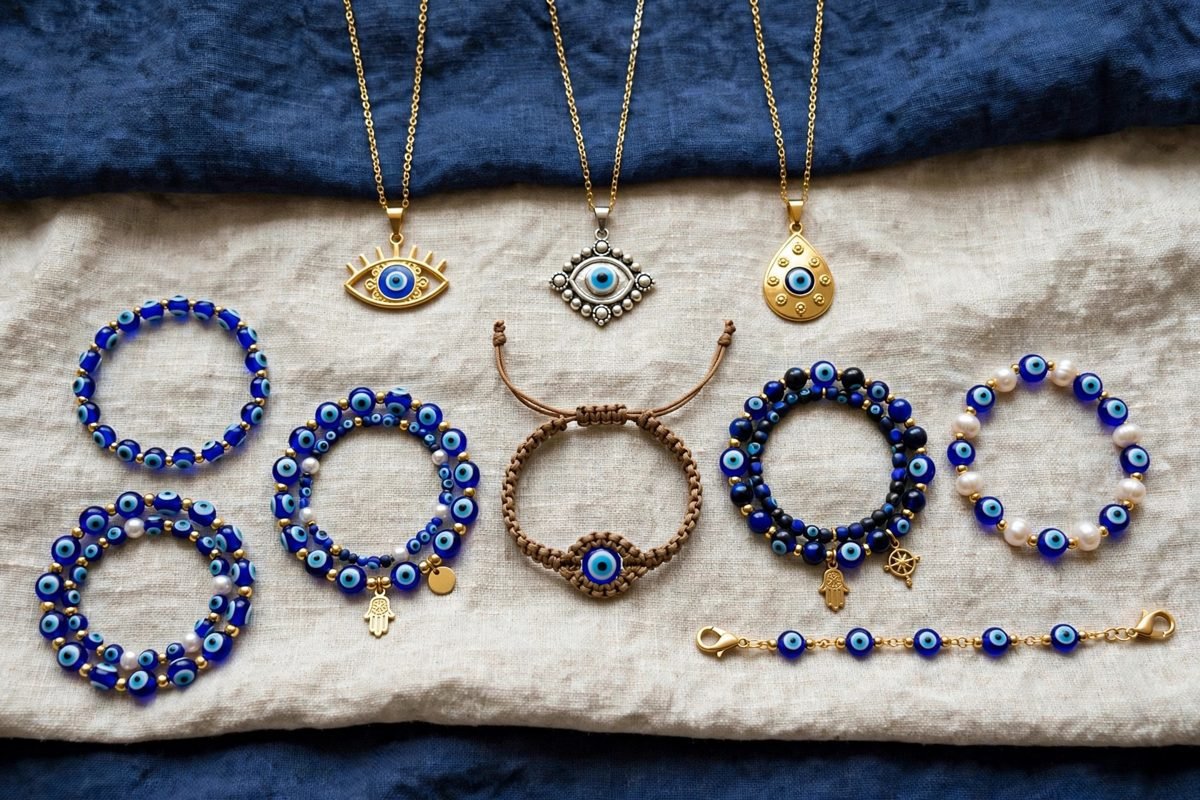
In recent years, the evil eye has become a major motif in jewellery, fashion, home decoration, and popular culture, far beyond the communities in which the belief originated. Blue eye pendants, bracelets, earrings, and wall hangings are sold worldwide, often to buyers who are drawn to the design, the colour, or the idea of protection in a general sense, rather than to the specific folk belief behind it. That popularity has brought the symbol to new audiences, but it has also raised questions about cultural appreciation and appropriation, and about whether a protective symbol loses its meaning when it becomes a fashion accessory.
There is no single answer to those questions, and opinions differ, even within communities where the belief is traditional. Some people welcome the wider recognition of a symbol they grew up with, and see its popularity as a sign of respect and interest. Others feel that mass-produced versions, sold without any understanding of their meaning, trivialise something they take seriously. A thoughtful buyer can navigate this by learning what the symbol means, buying from makers who understand and respect its origins where possible, and wearing or displaying it with awareness rather than as a purely decorative trend.
The evil eye has also appeared in literature, film, and music, often as a shorthand for envy, fate, or hidden danger. Writers use it to signal a character’s jealousy, or to suggest that success has attracted unwanted attention. That literary use, like the fashion use, draws on the symbol’s recognisability, and it shows how deeply the idea has entered the shared imagination, even for audiences who have never encountered the folk belief directly.
Evil Eye Meaning at a Glance
| Aspect | What it usually means |
| Core belief | An envious or jealous look can bring harm, bad luck, or illness |
| Who or what is at risk? | People, especially babies and children, animals, possessions, and new ventures |
| Is it always deliberate? | No: in many traditions it can be cast unintentionally |
| Best-known symbol | The blue eye amulet, the nazar |
| Other symbols | The hamsa, the cornicello, protective bracelets, and a small black mark on a child |
| Common responses | Amulets, prayers, gestures, spoken phrases, and removal rituals |
| Scientific status | A cultural and religious belief, not a scientifically established fact |
FAQs
What does the evil eye mean?
The evil eye means the belief that a look charged with envy or ill will can cause harm, bad luck, or illness to the person, animal, or possession being looked at. It is a cultural belief found in many parts of the world, not a scientifically proven effect.
What is a nazar amulet?
A nazar is a blue, eye-shaped glass amulet, traditionally hung in homes, cars, and workplaces or worn as jewellery, to protect against the evil eye. It is thought to meet a harmful look with a look of its own, deflecting or absorbing it. If it breaks, many people replace it, taking the break as a sign that it has done its protective work.
Is the evil eye real?
That depends on what is meant by real. As a cultural and social reality, it is very real: millions of people believe in it, act on it, and pass it on within families. As a physical cause of illness or misfortune, it is not established by scientific evidence, and illness or bad luck attributed to it should also be considered in ordinary medical or practical terms.
How do people protect against the evil eye?
Common forms of protection include wearing or displaying an amulet such as the nazar or hamsa, using gestures or spoken phrases after praise, placing a small black mark on a baby, and, when harm is thought to have occurred, performing a traditional removal ritual. The specific practices vary by culture and family.
Can a baby be affected by the evil eye?
In many traditions, babies and young children are thought to be especially vulnerable, because they attract admiration. That is why protective bracelets, amulets, and careful practices around praise and photography are common for infants. Any baby who is unwell should always receive proper medical care, whatever the traditional explanation offered.
Is it disrespectful to wear an evil eye amulet if I do not believe in it?
Opinions differ. Many people wear it for its design or for a general sense of protection, while others within traditional communities prefer that it be worn with understanding of its meaning. Learning about its origins and treating it with respect is a thoughtful approach, whatever your personal beliefs.
Read Also: King’s Regulations Explained and Their Lasting Impact
Related Stories

Understanding Mohmen: A Complete Guide to Islamic Belief and Practice
When I first started learning about Islamic terminology, I found myself genuinely confused about the term "Mohmen." I…
1 response