Rob Lorentz That Ain’t Bad: The Trick Shot Star Explained
Rob Lorentz That Ain't Bad is the trick-shot star from Wasilla, Alaska, who turned an inside joke into a YouTube brand. Here is his full story.
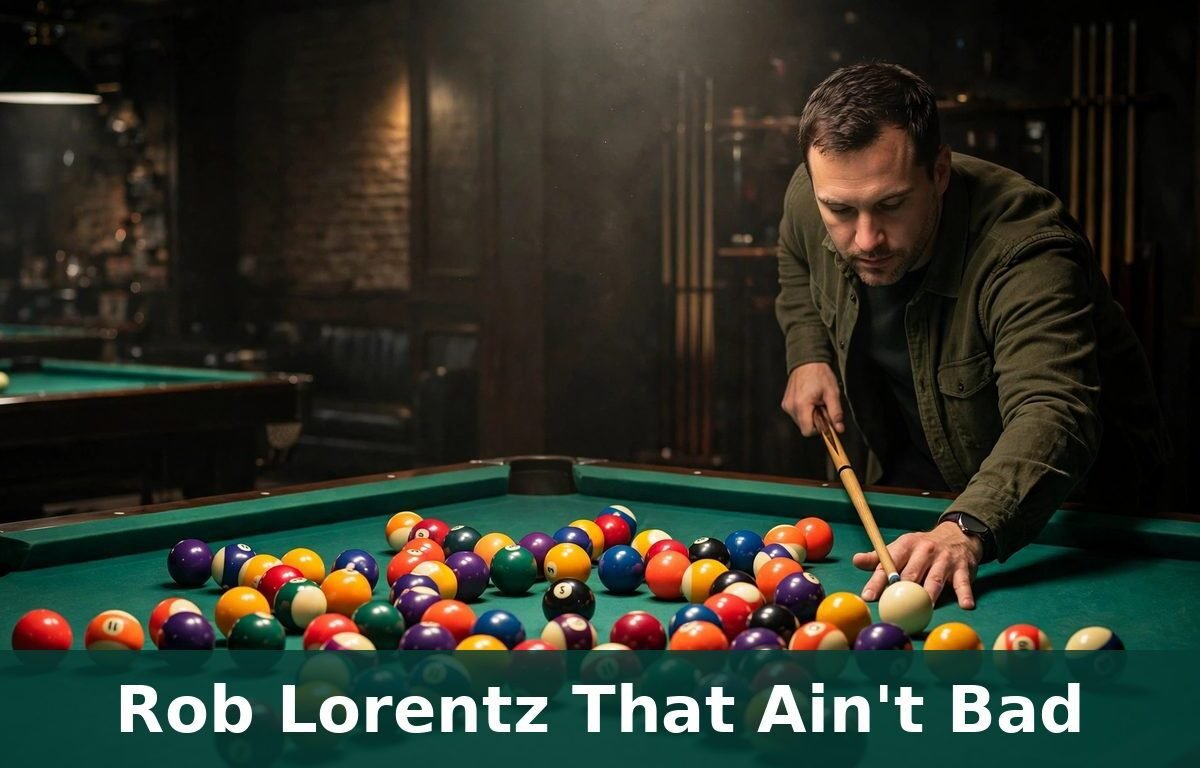
Rob Lorentz That Ain’t Bad: The Trick Shot Star Explained
The short version: “Rob Lorentz that ain’t bad” is not about a hockey player. It is about Rob Lorentz, a trick shot artist from Wasilla, Alaska, whose YouTube channel “That Ain’t Bad” turned impossible-looking shooting stunts into a fast-growing brand. He films himself spinning 360 degrees before firing, shooting upside down, and hitting tiny targets like paperclips in midair, then shrugs at the result with his signature line: “That ain’t bad.”
If you have seen one of his clips and wondered who he is, how he started, and what the phrase actually means, this guide has the answers. It also clears up the common mix-up with the NHL player of a similar name, because the two men have nothing to do with each other.
Who Is Rob Lorentz?
Rob Lorentz is an American trick shot artist and shooting lifestyle creator. He learned to shoot in the woods near his home in Wasilla, Alaska, where he grew up around firearms and the outdoors. He did not start out chasing fame or a spotlight. According to a profile published in the American Shooting Journal in January 2026, he began filming trick shots for the love of the craft, and the audience found him, not the other way around.
Today he runs the “That Ain’t Bad” channel on YouTube, with a presence on Instagram and Facebook under the same name, @thataintbad. His videos mix jaw-dropping marksmanship with a relaxed, good-humoured personality, and that combination is the core of his appeal. He is not a competition shooter or a tactical instructor. He is an entertainer who happens to be an outstanding shot, and his channel sits at the intersection of sport shooting, stunt performance and outdoor lifestyle content.
It is worth clearing up the confusion right away. There is an NHL forward named Steven Lorentz who plays for the Toronto Maple Leafs, and searches for “Lorentz” often return hockey clips. Rob Lorentz is a different person entirely. He is not a professional hockey player, and his “That Ain’t Bad” brand has nothing to do with the NHL. If you came here looking for hockey highlights, you have the wrong Lorentz. If you came looking for the trick shot guy, you are in the right place.
What Does “That Ain’t Bad” Mean?
The phrase started as an inside joke between Rob and his friends. It was something he would say when a shot did not quite go as planned but was not all that bad either. It was an understatement, a shrug, a way of laughing off a near miss. Over time it became his catchphrase, the line he delivers after a shot lands, and then the name of the whole channel.
The attitude behind the phrase is a big part of the brand. As Rob has put it, “If it doesn’t suck, ‘That Ain’t Bad.’ Keep going.” That is not just a slogan. It is a way of looking at practice, failure and progress that his audience clearly connects with. A missed shot is not a disaster. It is a step toward the next one. The phrase gives his fans a simple, repeatable way to frame their own efforts, whether they are at the range, at work, or just trying something hard for the first time.
The phrase is now a trademarked brand. A trademark application for “THAT AIN’T BAD” was filed in the name of Lorentz, Robert, on January 8, 2021, covering goods including hats, shirts, sweatshirts, stickers, magnets and patches, and it was published for opposition on January 4, 2022. What began as a joke between friends is now a registered brand with merchandise and a growing community behind it.
How Rob Lorentz Started on YouTube
The origin story is refreshingly low-tech. Rob and his fiancee Megan began filming his shots with just an iPhone, using the Arizona desert as their backdrop. Megan has been behind the camera since day one, and she remains a central part of the operation. There was no studio, no crew, and no big budget. There was a phone, a stretch of open desert, and a shooter with an unusual talent for making difficult shots look easy.
The channel grew fast. Within just ten months, “That Ain’t Bad” had reached 162,000 subscribers on YouTube and 15,400 followers on Instagram, and several of Rob’s videos had passed a million views each. That is a remarkable pace for a channel built on a single idea, and it says a lot about how shareable the content is. A trick shot is the kind of video people send to friends, and each share brought in new viewers who stayed for the personality as much as the shooting.
The growth also shows how much the format matters. Rob’s videos are short, visual and immediately understandable. You do not need to know anything about firearms to enjoy watching someone hit a paperclip in midair. The skill is obvious in the first few seconds, and the payoff is instant. That is the same formula that powers the best short-form video, and Rob arrived at it with nothing more than a phone and a desert.
More Information: When Is the Next Solar Eclipse? (2026 Guide)
The Trick Shots That Made Him Famous
Rob’s catalogue covers a wide range of stunts, and the variety is part of the fun. Some of his signature shots include spinning a full 360 degrees before firing, bending over and shooting upside down, and hitting paperclips in midair. Each one demands a different kind of skill: body control, spatial awareness, timing and pure accuracy, all at once.
The 360-degree spin is a good example. The shooter turns completely around, stops, acquires the target and fires, all in a single flowing motion. It looks effortless on camera, which is the point, but it requires hours of practice to make the spin end in exactly the right position. The upside-down shot is even stranger to watch, since the shooter fires from a bent-over position with the world turned over. And the paperclip shot, hitting a target the size of a paperclip while it is moving through the air, is the kind of feat that makes viewers replay the clip just to convince themselves it was real.
Beyond the stunts, Rob has built a reputation for testing guns from major manufacturers and giving brutally honest reviews. That honesty matters to his audience. In a world of sponsored content, a creator who will say plainly when a product disappoints earns trust, and trust keeps viewers coming back. His go-to sidearm is the Springfield Echelon, and his favourite rifle is from Bravo Company Manufacturing, known as BCM. Those details matter to shooting enthusiasts, who follow his gear choices closely and often ask about them in comments.
It is important to be clear about what these videos are. They are performed by an experienced shooter in controlled settings, and they are not something to copy without training, supervision and a safe range. The entertainment value is real, but so is the discipline behind it. Rob’s background, years of practice and careful setup are what make the shots possible, and that context is part of the story.
The “That Ain’t Bad” Brand and Business
Today, “That Ain’t Bad” is more than a catchphrase or a channel name. It is a trademarked brand, a growing online community and, in Rob’s own framing, a way of life. He sells “That Ain’t Bad” hats and shirts through his website, thataintbad.net, and he has spoken about his dream of turning the brand into a full-fledged lifestyle label. The goal is a brand that inspires people to push boundaries, ignore the critics and live authentically, which is a natural extension of the attitude in the catchphrase itself.
The business side follows a familiar creator path: a YouTube channel builds the audience, social media extends the reach, merchandise turns fans into customers, and brand partnerships add revenue. What sets Rob apart is how closely the brand is tied to a single authentic idea. The phrase was not invented by a marketing team. It was something he actually said, and the audience adopted it because it felt real. That authenticity is hard to manufacture, and it is a big reason the brand has grown as fast as it has.
Rob also hosts a podcast under the “THAT AIN’T BAD” name, described as real-life stories from people like him, with four episodes released since March 2022. The podcast extends the brand beyond trick shots into conversation and storytelling, and it shows the direction he wants to take the brand: less about any single video, more about a community and a mindset.
Rob Lorentz Away From the Camera
Away from the range, Rob’s life looks like that of many Alaskans who grew up outdoors. He is an avid Harley rider and enjoys golfing, hunting, snowboarding and hitting the gym. Those interests fit naturally with the outdoor lifestyle image of the brand, and they give his content a broader base than shooting alone. His audience is not only gun enthusiasts. It includes people who like the outdoors, motorcycles, and the general attitude of trying hard things and laughing when they go sideways.
His personal life is part of the story too. He recently got engaged to Megan, the same woman who has been behind the camera since the channel began. That detail matters because it explains the feel of the videos. They are not a corporate production. They are a couple with a phone, a desert, and an idea, and the audience can feel that. The engagement is a reminder that the channel grew out of a real life, not a content strategy.
Why “That Ain’t Bad” Took Off
There are plenty of shooting channels on YouTube, so it is worth asking why this one grew so quickly. Part of the answer is the skill itself. The shots are genuinely difficult, and viewers can tell the difference between a real feat and a camera trick. Part of it is the format. The videos are short, visual and built for sharing, which is exactly what spreads on social media.
But the biggest factor may be the tone. Rob’s whole brand is built on understatement. He does something extraordinary, then shrugs and says it ain’t bad. That is funny, it is humble, and it is the opposite of the loud, boastful style that dominates much of online video. It invites the viewer in rather than showing off at them, and that warmth is what turns a one-time viewer into a subscriber.
The timing helped too. Short-form video was exploding just as the channel launched, and trick shots are tailor-made for the format. A viewer who has never held a firearm can still appreciate a 360-degree spin shot, and a viewer who shoots every weekend can appreciate the difficulty. That broad appeal is rare, and it explains how the channel reached six figures in subscribers within its first year.
More Information: Anime Vanguards Tier List
Where to Follow Rob Lorentz
If you want to see the shots for yourself, the main place is YouTube, where the channel is called “That Ain’t Bad.” He is also on Instagram and Facebook as @thataintbad, and his website, thataintbad.net, is the home of the brand and the merchandise store. The podcast is listed under “THAT AIN’T BAD” on podcast platforms. New viewers should start with the most-viewed videos, which are usually the best introduction to the style, and then work through the catalogue to see how the stunts have evolved.
A quick note for anyone searching: because the NHL player Steven Lorentz shares the surname, hockey results often appear alongside Rob’s videos in search. Adding “that ain’t bad” to the search, or searching for the channel name directly, will get you to the right Lorentz. The same applies on social media, where the @thataintbad handle is the surest way to find the trick shot creator rather than the hockey player.
FAQs
Who is Rob Lorentz?
Rob Lorentz is an American trick shot artist and shooting lifestyle creator from Wasilla, Alaska. He runs the YouTube channel “That Ain’t Bad,” where he films difficult shooting stunts such as 360-degree spins, upside-down shots and hitting paperclips in midair. He is not the NHL player Steven Lorentz.
What does “that ain’t bad” mean?
It started as an inside joke between Rob and his friends, something he would say when a shot did not go perfectly but was not all that bad either. It became his signature line, then the name of his channel, and eventually a trademarked brand selling hats and shirts.
How many subscribers does That Ain’t Bad have?
Within its first ten months, the channel reached 162,000 subscribers on YouTube and 15,400 followers on Instagram, with several videos passing a million views each. The channel has continued to grow since then, driven by the shareability of the trick shot format.
What guns does Rob Lorentz use?
His go-to sidearm is the Springfield Echelon, and his favourite rifle is from Bravo Company Manufacturing (BCM). He also tests guns from major manufacturers and gives honest reviews, which has become a valued part of the channel.
Is Rob Lorentz a hockey player?
No. That is a common mix-up. Steven Lorentz is the NHL forward who plays for the Toronto Maple Leafs. Rob Lorentz is a trick shot artist and YouTube creator from Alaska, and the two are unrelated. Adding “that ain’t bad” to a search will bring up the right person.
Where can I watch Rob Lorentz trick shots?
The main place is YouTube, on the channel “That Ain’t Bad.” He is also on Instagram and Facebook as @thataintbad, and his website is thataintbad.net, where he sells branded hats and shirts.
What is the That Ain’t Bad podcast?
It is a podcast hosted by Rob under the “THAT AIN’T BAD” name, featuring real-life stories from everyday people. Four episodes have been released since March 2022, and it extends the brand beyond trick shots into conversation and storytelling.
Conclusion
Rob Lorentz did not set out to become famous. He learned to shoot in the woods near Wasilla, started filming trick shots with an iPhone in the Arizona desert, and kept going because he loved the craft. The phrase “that ain’t bad” began as a joke, became a catchphrase, and then became a trademarked brand with hundreds of thousands of followers and a growing merchandise line. The story is a reminder that the internet still rewards the simple things: real skill, an honest attitude, and a line that makes people smile. If a shot does not go perfectly, it is not a failure. As Rob would say, if it doesn’t suck, that ain’t bad. Keep going.
Read Also: T Post Remover: How to Use It and Pick the Right One
Related Stories
J.Crew Men’s Soft-Touch Polo Shirt: Fit, Fabric and Style
Soft fabric, a classic collar, and a fit that works tucked or untucked — the J.Crew men's soft-touch…
Old Navy Women’s Fit & Flare Asymmetrical Shoulder Mini Dress
A fitted bodice, a flared mini skirt, and one bare shoulder — the Old Navy women's fit &…
T Post Remover: How to Use It and Pick the Right One
A T post remover pulls stubborn metal fence posts fast. Learn the types, how to use one step…
3 responses