J.Crew Men’s Soft-Touch Polo Shirt: Fit, Fabric and Style
Soft fabric, a classic collar, and a fit that works tucked or untucked — the J.Crew men's soft-touch polo shirt is the kind of wardrobe staple you buy once and reach for for years.
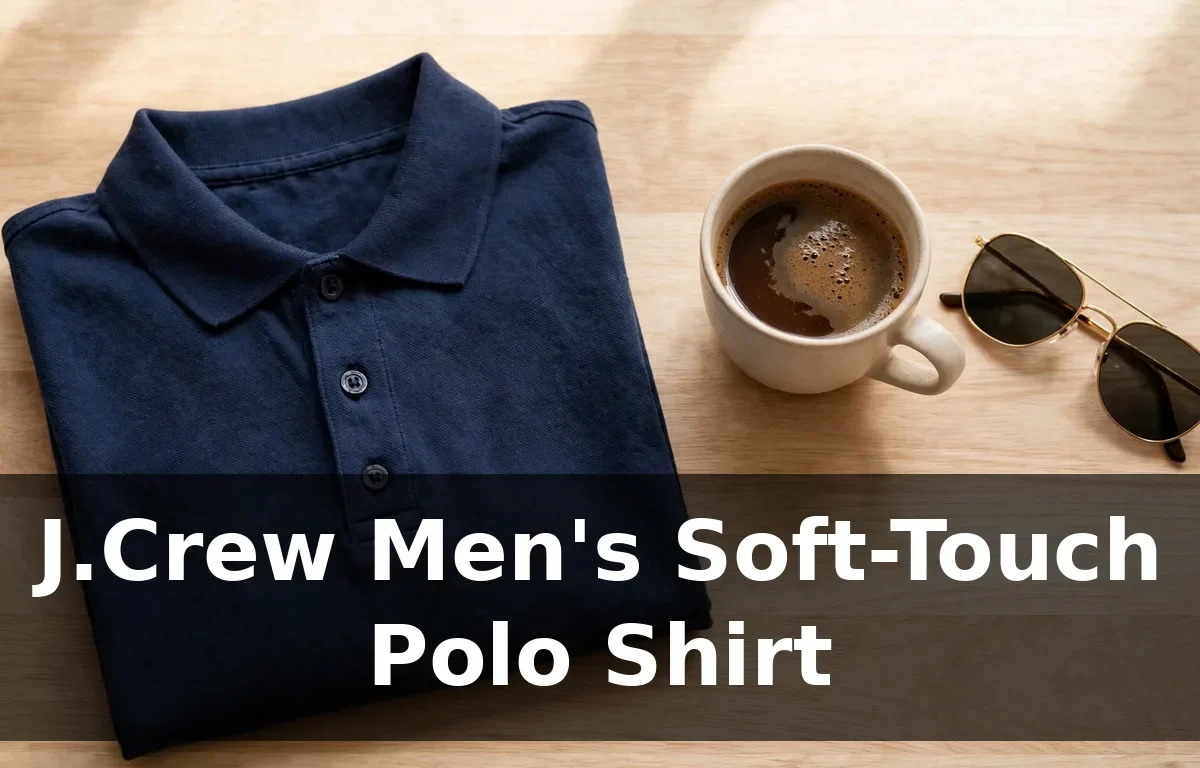
J.Crew Men’s Soft-Touch Polo Shirt: Fit, Fabric and Style
The short version: the J.Crew men’s soft-touch polo shirt is exactly what the name promises — a polo made from a soft cotton blend that feels good the moment you put it on, cut in the classic J.Crew shape that has made the brand a default for preppy, smart-casual menswear. It is not a performance polo, it is not a fashion statement, and it is not trying to be either of those things. It is a well-made basic, and basics done well are harder to find than they should be.
The polo shirt is one of the most useful items in a man’s wardrobe, and also one of the easiest to get wrong. Too tight and it looks like a gym shirt. Too loose and it looks like you borrowed it from your dad. Too stiff and it feels like cardboard. Too thin and it loses its shape after three washes. The J.Crew soft-touch polo exists in the middle of all of those extremes, and that middle ground is the reason people keep buying it.
J.Crew has been selling polos for decades, and the soft-touch version is their answer to a simple observation: men will wear the softest shirt they own more than any other shirt they own. The fabric is a cotton blend with a smooth, slightly brushed hand feel — soft without being flimsy, structured without being stiff. It is the kind of shirt you put on in the morning and forget about, which is the highest compliment a basic can earn.
More Information: What Is a Blue Moon? Meaning, Types and How Rare It Is
What “Soft-Touch” Actually Means
Clothing brands use a lot of words for softness, and most of them mean very little. “Soft-touch” in J.Crew’s case refers to the finish of the fabric: a cotton blend knit that has been treated so the surface feels smooth and slightly sueded against the skin, rather than crisp or papery the way some pique polos can feel when they are new.
The shirt is a short-sleeve cotton blend polo — listings for the style show it as a cotton blend rather than pure cotton — with a classic collar and a button placket. That blend matters. Pure cotton polos can feel great when new but tend to shrink, fade, and lose their shape faster. A blend holds its shape better, resists wrinkling more, and keeps the soft feel through more washes. The trade-off is that it breathes slightly less than pure cotton on a very hot day, but for most wearers, in most weather, the blend is the better all-round choice.
The knit itself is a smooth jersey-style construction rather than a heavy pique. Pique is the textured, slightly bumpy knit you see on classic tennis-style polos — it is durable and it breathes well, but it has a firmer, more structured hand. The soft-touch knit is flatter and smoother, which is why it feels softer and drapes a little more easily. It also means the shirt looks slightly less sporty and slightly more polished than a traditional pique polo, which is useful if you want one polo that works in more settings.
If you have ever owned a J.Crew polo before, the soft-touch version will feel familiar but noticeably softer out of the packet. If you have not, think of it as the difference between a regular cotton T-shirt and one that has been washed a dozen times and gone beautifully soft — except you get that feel from the first wear, not the twelfth.
Step 1: Get the Fit Right
The short version: J.Crew polos run true to size in a classic fit. Take your usual size, then check the shoulders, the chest, and the sleeve length.
J.Crew’s classic fit is what the name suggests: a traditional cut with comfortable ease through the chest and waist, neither slim nor boxy. It is designed to look neat without feeling restrictive, and for most men that means taking their usual size. If you are between sizes, the decision comes down to how you like your clothes to fit. Size down for a neater look, size up for a more relaxed one — but do not size up expecting the shirt to look slimmer. It will not. It will just look bigger.
Check the shoulders first. The shoulder seam should sit at or very near the edge of your shoulder bone. If it drops halfway down your upper arm, the shirt is too big. If it pulls inward toward your neck, it is too small. This is the single most reliable fit check on any shirt, and it is the one people skip most often.
Then check the chest. The fabric should lie flat across your chest without horizontal strain lines pulling from the buttons. Button the placket and look at it: if the buttons gape or the placket pulls open, the shirt is too tight. A polo should have enough room for you to sit, reach, and move without the fabric fighting you.
Then check the sleeves. On a short-sleeve polo, the sleeve should finish around the middle of your upper arm, with the opening skimming your arm rather than squeezing it. Sleeves that are too tight create a squeezed look around the bicep, and sleeves that are too loose flap around and make the shirt look sloppy. The J.Crew soft-touch polo has a standard short sleeve that hits this middle ground for most body types.
Finally, check the length. Untucked, the hem should fall just below your waistband — long enough to look intentional, short enough not to overwhelm your trousers. If you plan to tuck it in, you need enough length for the shirt to stay tucked when you sit down and reach up. The classic fit gives you that length. Slim-fit polos from other brands sometimes do not, which is one more reason the classic cut is the safer choice.
Step 2: Understand the Details That Make It a J.Crew Polo
A polo is a simple garment, and the differences between a good one and a mediocre one live in small details that are easy to miss on a screen. Here is what to look for on this one.
The collar is a classic ribbed polo collar, designed to sit flat and hold its shape. A good polo collar frames the neck and stays put when you move. A bad one curls, flops, or collapses after a few washes. J.Crew’s collars are generally well made, but they still benefit from being buttoned up or laid flat when stored, rather than being crushed under a pile of folded clothes.
The placket is a two-button placket, which is the standard for a classic polo. Two buttons give you a choice: button both for a neater look, or leave the top one open for a more relaxed feel. Leaving both undone tends to look sloppy, and buttoning both up to the neck tends to look formal in a way a polo is not meant to be. One button open is the default, and it is the default for a reason.
The hem is straight with small side vents, which is a classic polo detail. The vents let the shirt move when you sit or bend, and they stop the hem from riding up or bunching at the waist. They also make the shirt look finished and deliberate when worn untucked, rather than like a T-shirt that happens to have a collar.
The logo, if your version has one, is small and embroidered on the chest. J.Crew keeps its branding quiet on this style, which is part of the appeal. A polo with a giant logo across the chest is a billboard. A polo with a small embroidered mark is a shirt. If you prefer no logo at all, some colourways of J.Crew polos come without one, so check the listing before you buy.
Step 3: Choose a Colour You Will Actually Wear
The soft-touch polo comes in a range of colours, and the right choice depends on how you plan to wear it. Navy is the hardest working option. It goes with chinos, jeans, shorts, and linen trousers. It looks good untucked at the weekend and tucked in at a smart-casual office. It hides stains better than lighter colours and it never looks out of place. If you are buying one polo, buy navy.
White is the cleanest option and the hardest to keep clean. A white polo looks sharp with navy chinos or dark jeans, and it is the best choice for the warmest days because it reflects heat. But it shows every mark, and a white cotton blend will pick up discolouration faster than a darker colour. If you buy white, wash it separately and do not leave it in the wash with dark clothes.
Heathered colours — light blue heather, grey heather, green heather — are the soft-touch polo’s sweet spot. The heathered knit has a slightly mottled, textured look that suits the soft fabric well, and the muted tones are easy to pair with almost anything. A heather blue polo with khaki chinos is a combination that is hard to get wrong.
Brighter colours and stripes exist too, and they are worth considering as a second or third polo rather than your first. A red or green polo adds variety to a wardrobe that is mostly navy and white, and a striped version works well under a jacket. But bright colours are harder to repeat without being noticed, and they limit what you can pair them with. Build the foundation first, then add the fun colours.
Step 4: Style It for the Occasion
The short version: chinos and loafers for smart-casual, jeans and trainers for the weekend, shorts and sandals for warm weather, and a jacket on top when you need to look sharper.
For a smart-casual office or a dinner out, pair the polo with chinos in navy, khaki, or charcoal, and finish with loafers or clean leather trainers. Tuck it in if the setting calls for it — the shirt has enough length to stay tucked — and add a leather belt. The collar and the placket do the work of making you look put together, so you do not need anything else.
For the weekend, the same shirt works with dark jeans and white trainers. Keep it untucked, leave the top button open, and you have an outfit that took thirty seconds to put together and looks like you thought about it for longer. This is the polo’s natural habitat: relaxed, clean, and effortless.
For warm weather, pair it with shorts — chino shorts in a neutral colour, not cargo shorts — and boat shoes or sandals. The cotton blend breathes well enough for a hot day, and the collar keeps the outfit looking smarter than a T-shirt would. This is also where the soft-touch fabric earns its keep: a stiff pique polo can feel scratchy and hot against the skin in summer, while the softer knit stays comfortable.
For cooler weather, layer it. A polo under a lightweight jacket, a Harrington, a bomber, or an unstructured blazer is a classic combination. The collar should sit outside the jacket collar, and the placket should be visible, so the layers read as deliberate rather than accidental. A quarter-zip sweater over a polo works too, though it hides the collar, which is half the point of wearing a polo in the first place.
How It Compares to Other Polos
The polo market is crowded, and the J.Crew soft-touch polo sits in a useful middle position. At the budget end, supermarket and fast-fashion polos cost less but tend to lose their shape, fade, and develop collar curl after a few washes. They are fine for a season, but they are not shirts you keep.
At the premium end, brands like Sunspel, John Smedley, and Lacoste sell polos at two or three times the price, often in finer cottons like Supima or Egyptian cotton. Those shirts are beautiful, and if you want the very best fabric you can buy, they are worth the money. But for most people, the difference between a good mid-priced polo and a premium one is smaller than the price gap suggests.
J.Crew sits between those two poles. You pay more than fast fashion, but you get a shirt that holds its shape, keeps its colour, and survives the wash. The brand also runs sales frequently, and the soft-touch polo often appears in those sales at a meaningful discount. If you are patient, you can buy it at a price that makes the value argument very hard to beat.
There is also the question of J.Crew versus J.Crew Factory. The Factory line is the brand’s lower-priced outlet range, and its polos are cheaper but use different fabrics and a slightly different cut. The mainline soft-touch polo is the better shirt. If the price difference is small, buy the mainline version. If you are shopping at Factory, check the fabric content on the label before you assume it is the same shirt.
More Information: Troy Aikman’s Daughter: Family, Life and Public Story
Care: Keeping the Soft Feel
The soft-touch finish is the reason to buy this shirt, and looking after it is mostly about not undoing that finish in the wash. Wash it cold, inside out, with similar colours, on a gentle cycle. Avoid fabric softener — it sounds like it should help, but it coats the fibres and actually makes the fabric feel less soft over time, as well as reducing how well the cotton breathes.
Hang it to dry or tumble dry on low. High heat is the enemy of cotton blends: it shrinks the fibres, fades the colour, and wears out the collar faster than anything else. If you do tumble dry it, take it out while it is still slightly damp and hang it up. That small habit prevents most wrinkles and keeps the collar sitting flat.
Ironing is rarely necessary. If the shirt comes out of the dryer with creases, hang it in a steamy bathroom for a few minutes or give it a quick pass with a steamer. If you do iron it, use a low heat and iron the collar from the inside, which stops the collar from developing a crease line down the middle.
Storage matters too. Hang the polo on a proper hanger rather than folding it in a drawer, so the collar keeps its shape and the shoulders do not develop fold marks. If you do fold it, fold it loosely and do not stack heavy items on top. A polo that is looked after will keep its soft feel and its shape for years. A polo that is thrown in the wash hot and dried on high will be a different shirt within a season.
Common Mistakes to Avoid
A few small mistakes turn a good polo into a bad outfit, and all of them are easy to avoid once you know them.
| Mistake | Why it matters | What to do instead |
|---|---|---|
| Popping the collar | Looks affected, not stylish | Keep the collar flat and natural |
| Sizing down for a “slim” look | Strain lines at the chest, tight sleeves | Take your true size in a classic fit |
| Buttoning both buttons to the neck | Looks stiff and formal in a casual shirt | Leave the top button open |
| Wearing it with cargo shorts | Clashes with the clean, preppy cut | Choose chino shorts or linen shorts |
| Using fabric softener | Coats the fibres, dulls the soft feel | Wash cold, skip the softener |
| Tumble drying on high heat | Shrinks the blend, wears the collar | Hang to dry or tumble on low |
The collar point deserves emphasis, because it is the most common mistake and the easiest to make. A popped collar was a look in the 2000s, and it has not come back. On a J.Crew polo, the collar is designed to sit flat and frame the neck. Let it do that. If you want sun protection, wear sunscreen and a hat — the collar is not a sunshade.
Is It Worth the Money?
That depends on what you compare it to and how often you will wear it. As a single purchase, the soft-touch polo costs more than a budget polo and less than a premium one. As a cost-per-wear calculation, it is one of the best value shirts a man can buy, because a polo this versatile gets worn constantly.
Think about it practically. A shirt you wear twice a week for two years costs very little per wear, even at full price. A shirt you wear twice and then stop wearing because the collar curled or the fabric went baggy costs far more per wear, even though the price tag was lower. The soft-touch polo is built to be the first kind of shirt, not the second.
The best time to buy is during one of J.Crew’s regular sales, when the price drops and the value becomes obvious. If you like the shirt, buying two in different colours at sale price is a reasonable move — navy and a heathered blue, for example, cover most situations between them. But buy one first, wear it for a few weeks, and make sure the fit and the fabric suit you before you buy a second. A wardrobe full of a shirt you do not love is not a bargain, whatever the price.
FAQs
What is the J.Crew men’s soft-touch polo shirt made of?
It is a cotton blend knit with a soft, smooth finish — listings for the style describe it as a soft-touch cotton blend rather than pure cotton. The blend is what gives it the soft hand feel while helping it hold its shape and resist wrinkling better than a pure cotton polo. Check the label on your specific shirt for the exact fibre content, as it can vary by colourway.
Does the J.Crew soft-touch polo run true to size?
Yes, in the classic fit it runs true to size for most men. Take your usual size and check the shoulder seam — it should sit at the edge of your shoulder — and the chest, which should lie flat without strain lines at the placket. If you are between sizes, size down for a neater fit or up for a more relaxed one.
Can you wear a polo shirt to a smart-casual office?
Yes, in most smart-casual workplaces. Tuck it into chinos, add a leather belt and loafers, and button the placket neatly. The collar and the clean cut make it look deliberate rather than casual. If your office is formal — suits and ties — a polo is not the right choice, but for smart-casual dress codes it is a standard option.
How do you stop a polo collar from curling?
Wash it cold, avoid high-heat tumble drying, and store it on a hanger with the collar laid flat rather than folded under other clothes. If the collar does start to curl, a quick pass with a steamer or an iron on low heat, ironing from the inside, will usually flatten it out. Fabric softener does not help and can make the problem worse over time.
Is the soft-touch polo better than a pique polo?
It depends on what you want. The soft-touch knit is smoother, softer, and slightly more polished, which makes it better for smart-casual settings. A pique knit is more textured, more breathable, and more sporty, which makes it better for very hot days and athletic settings. Many men own both and choose based on the occasion.
Should you tuck in a polo shirt?
It depends on the outfit. Tuck it in with chinos for a smart-casual look or a dinner out — the shirt has enough length to stay tucked. Leave it untucked with jeans or shorts for a relaxed weekend look, making sure the hem falls just below your waistband. Both are correct; the mistake is tucking in a shirt that is too short to stay tucked, or leaving a shirt untucked that is so long it overwhelms your trousers.
Read Also: Rob Lorentz That Ain’t Bad: The Trick Shot Star Explained
Related Stories

Old Navy Women’s Fit & Flare Asymmetrical Shoulder Mini Dress
A fitted bodice, a flared mini skirt, and one bare shoulder — the Old Navy women's fit &…

Rob Lorentz That Ain’t Bad: The Trick Shot Star Explained
Rob Lorentz That Ain't Bad is the trick-shot star from Wasilla, Alaska, who turned an inside joke into…

T Post Remover: How to Use It and Pick the Right One
A T post remover pulls stubborn metal fence posts fast. Learn the types, how to use one step…