2026 Dodge Durango: Prices, Trims, Towing & the 710-HP Hellcat (Complete Guide)
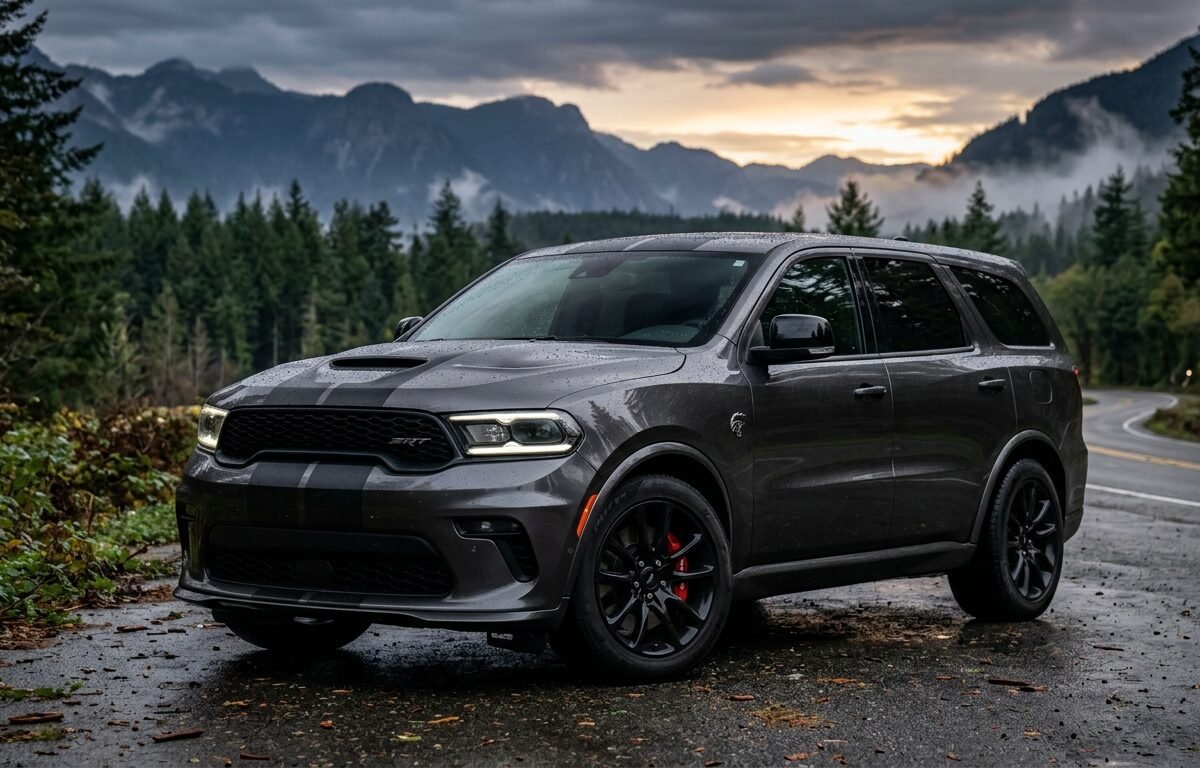
The Dodge Durango: America’s Last V8 Family SUV (2026 Complete Guide)
There is no new idea in the 2026 Dodge Durango. That is the entire point.
While every other three-row SUV in America spent the last five years shrinking its engine, adding a hybrid badge, and apologizing for existing, the Durango went the other direction. Dodge took a platform that debuted back when the iPad was brand new, stuffed a supercharged 710-horsepower V8 into it, and kept selling it until the model posted the best sales year in its history.
The result is something the car world does not really have a category for anymore: a three-row family SUV with the heart of a muscle car. It can tow your boat on Saturday, embarrass sports cars at a stoplight on Sunday, and still get the kids to school on Monday. Nothing else on sale in 2026 does all three.
This guide covers everything you actually need to know: the 2026 trims and real pricing, all four V8 options (yes, four), towing capacity, interior space, honest fuel economy, reliability, how it compares to the Ford Explorer and Chevy Tahoe, whether it is being discontinued, and which version you should actually buy.

What Exactly Is the Dodge Durango?
The Dodge Durango is a three-row midsize SUV built by Dodge, a brand of Stellantis, at the Jefferson North Assembly Plant in Detroit, Michigan. It seats five to seven people, comes with rear- or all-wheel drive, and is the only mainstream three-row SUV in America still sold with V8 engines.
The Durango name goes back to 1998, but the SUV you can buy today is the third generation, which launched for the 2011 model year. That makes it the oldest new SUV on sale in the United States by a wide margin. It received a significant facelift in 2014, with new styling, an updated interior, and the excellent ZF eight-speed automatic transmission it still uses today.
Under the skin, the Durango rides on a platform it shares with the Jeep Grand Cherokee, which explains two things about it: why it feels more planted and rear-drive-biased than most car-based crossovers, and why it tows like a truck. Dodge is not shy about the formula. As the brand likes to put it, this is the family SUV for people who never grew out of muscle cars.
The Short Version: Should You Buy a Dodge Durango?
Buy the Durango if: you tow anything heavier than a jet ski, you want a V8 while you still can, you need a genuinely usable third row, or you are simply tired of driving appliances.
Skip the Durango if: fuel economy is your top priority, you want the latest semi-autonomous driver assists, or you plan to keep a car for fifteen years and never open the hood.
That is the honest split. The Durango is not the most refined, efficient, or high-tech three-row you can buy. It is the most fun, the strongest tower, and the last of its kind. Whether that trade excites you or worries you tells you everything about whether this is your SUV.
More Information: DopeBox: What It Is, How It Works, and Whether It’s Safe & Legal (2026 Guide)
2026 Dodge Durango Trims and Prices
The 2026 lineup went through some shuffling during the model year, but it has settled into five main flavors. Every price below is the starting MSRP before the $1,995 destination charge, and before your local dealer gets involved.
| Trim | Engine | Power | Starting MSRP |
|---|---|---|---|
| GT | 3.6L V6 | 295 hp | $38,495 |
| GT HEMI V8 | 5.7L V8 | 360 hp | ~$43,290 |
| R/T 392 | 6.4L V8 | 475 hp | $49,995 |
| SRT Hellcat | 6.2L supercharged V8 | 710 hp | $79,995 |
| SRT Hellcat Jailbreak | 6.2L supercharged V8 | 710 hp | ~$80,990 |
A few things worth knowing about this lineup. The base GT keeps the proven 3.6-liter Pentastar V6, which is the sensible choice and nothing to be embarrassed about. The big news for 2026 is that the 5.7-liter HEMI V8 moved down into GT territory, which Dodge claims makes the Durango the most affordable all-wheel-drive V8 vehicle in America. Whether or not you care about the record, a V8 three-row for the low forties is genuinely unusual in 2026.
The R/T is the enthusiast bargain of the range. For 2026 it gets the 6.4-liter “392” HEMI as standard, the same 475-horsepower engine that used to be reserved for the old SRT 392 models. Under fifty grand for 475 horsepower in a seven-seater is the kind of value that barely exists anymore.
And then there is the Hellcat. The supercharged 6.2-liter V8 carries over with the same 710 horsepower and 645 lb-ft of torque. The Jailbreak version adds extensive customization: multiple wheel designs, exterior colors, stripe options, brake caliper colors, seat choices, and even seatbelt colors. Dodge spent years telling us the Hellcat was dying. It is still here.
Engines and Performance: Pick Your Poison
No other mainstream SUV gives you this many ways to burn gasoline. Here is each engine, translated from spec sheet to real life.
3.6L Pentastar V6: 295 hp, 260 lb-ft
The base engine is the one nobody writes songs about, and that is fine. The Pentastar V6 has been around forever because it works: smooth, reliable enough, and paired with the eight-speed it moves the Durango without drama. Fuel economy is rated at 18 mpg city and 25 highway. If your Durango will spend its life on school runs and highway trips, this engine does the job and saves you thousands up front.
5.7L HEMI V8: 360 hp, 390 lb-ft
This is the classic American V8 experience: a deep rumble, effortless highway passing, and cylinder deactivation that shuts down four cylinders when you are cruising to save fuel. Dodge says the V8 GT hits 60 mph in about 6.2 seconds, which is properly quick for a family SUV. This is probably the engine most buyers should get. It sounds like a Durango should sound.
6.4L HEMI V8 (“392”): 475 hp, 470 lb-ft
The 392 is the sweet spot for people who read car reviews for fun. It is the engine from the old SRT models, now standard in the R/T for under $50,000. Throttle response is immediate, the exhaust has a proper bark, and the 0-to-60 time drops by nearly two seconds compared to the 5.7. If you want the muscle-car experience without Hellcat money, this is your engine.
6.2L Supercharged HEMI V8 (Hellcat): 710 hp, 645 lb-ft
The numbers first: 0 to 60 mph in 3.5 seconds, the quarter mile in 11.5 seconds, and a top speed of 180 mph. In a three-row SUV that weighs 5,575 pounds. Let that sink in.
The Hellcat remains the most powerful gasoline-only SUV you can buy, and there is nothing else shaped quite like the experience. The supercharger whine layered over the V8 roar is automotive theater of the highest order. Reviewers who have driven the 2026 version keep landing in the same place: the engine and drivetrain are incredible, and the interior is overdue for a redesign. They are both right, and most Hellcat buyers will tell you only one of those facts matters.
Every Durango uses the same ZF eight-speed automatic, which is one of the best transmissions in the business: quick, smooth, and smart about holding gears when you are driving hard. Rear-wheel drive is standard on the base GT; everything else is all-wheel drive.
Towing Capacity: The Durango’s Secret Superpower

Here is the spec that actually sells Durangos, even if the Hellcat gets the headlines: towing capacity ranges from 6,200 pounds with the V6 to 7,200 pounds with the 5.7L V8, all the way up to 8,700 pounds with the SRT Hellcat.
To put that in perspective, a Ford Explorer maxes out around 5,600 pounds. A Honda Pilot manages 5,000. The Durango’s V6 alone out-tows most of its car-based rivals, and the Hellcat’s 8,700-pound rating is full-size-truck territory. Boats, car trailers, campers: the Durango handles the loads that send other midsize SUV owners shopping for a pickup.
If towing is your reason for reading this guide, pay attention to the Tow N Go package, available on the R/T for $5,990. It is far more than a hitch. You get a Class IV receiver hitch, an integrated trailer brake controller, bigger Brembo brakes, 20-inch wheels, a sport exhaust, and adaptive dampers. It is the difference between a SUV that can tow and a SUV that was built to tow. For anyone pulling a boat or a car trailer regularly, it is the best five grand you will spend on this truck.
One honest note: the Hellcat tows 8,700 pounds, which is a hilarious and wonderful fact, but almost nobody buys a 710-horsepower SUV as a dedicated tow rig. The R/T with Tow N Go is the smart tow vehicle in this lineup.
Interior, Space, and Family Life

The Durango seats five, six, or seven depending on configuration. Most trims come standard with seven-passenger seating. SRT models seat five as standard, with seven-passenger seating available and a six-passenger captain’s-chair layout offered on the Hellcat Jailbreak.
The space numbers tell the practical story:
| Measurement | Figure |
|---|---|
| Cargo behind third row | 17.2 cu ft |
| Cargo behind second row | 43.3 cu ft |
| Max cargo (rows folded) | 85.1 cu ft |
| Third-row headroom / legroom | 37.8 in / 33.5 in |
Here is what those numbers mean in real life: the third row is genuinely usable by adults for real trips, not just a punishment seat for short hops. The second row slides and reclines. Fold everything flat, including the front passenger seat, and you get 85.1 cubic feet, enough for a genuine IKEA run or a camping trip without a roof box.
The dashboard centers on the Uconnect 5 infotainment system with a 10.1-inch touchscreen, wireless Apple CarPlay and Android Auto, and physical climate controls underneath. Uconnect has always been one of the easiest systems to use in the industry, and it still is: big icons, fast responses, no hunting through menus for the heated seats.
Now the honest part. The cabin is where the 2011 birthdate shows. There are hard plastics in places a $50,000 vehicle should not have them, some switchgear feels a decade old because it is, and the overall design cannot match a new Kia Telluride or Hyundai Palisade for polish. Higher trims dress it up well: Nappa and Laguna leather, heated and ventilated front seats, heated second-row seats, red accent stitching, forged carbon fiber trim, and a 19-speaker Harman Kardon system with an 825-watt amplifier on the Hellcat.
Here is the thing, though: everything is where you expect it, the buttons are big enough to use with gloves, and the driving position feels like a proper SUV, high and commanding. Owners tend to describe the interior as “dated but honest,” which is about right. You are paying for the powertrain. The cabin is the cover charge.
Fuel Economy: Let’s Not Pretend
Nobody cross-shops a Durango against a Toyota Highlander Hybrid on fuel costs. But you should still know the numbers before you sign anything.
| Engine | City | Highway | Combined |
|---|---|---|---|
| 3.6L V6 | 18 mpg | 25 mpg | 20 mpg |
| 5.7L HEMI V8 | ~14 mpg | ~22 mpg | ~17 mpg |
| 6.4L 392 V8 | ~13 mpg | ~19 mpg | ~15 mpg |
| 6.2L Hellcat V8 | 12 mpg | 17 mpg | 13 mpg |
The V6 figures are EPA ratings. The V8 figures above are realistic real-world estimates; the Hellcat’s official EPA rating is 12 city, 17 highway, 13 combined, and one extended test averaged 13.7 mpg in mixed suburban driving. Drive the Hellcat the way it begs to be driven and single digits are entirely possible.
Context helps: a Highlander Hybrid gets 35 mpg combined. Over 15,000 miles a year, the fuel-cost gap between that and a HEMI Durango is roughly two to three thousand dollars annually, depending on gas prices. That is the real price of the V8 soundtrack. Most Durango buyers know this going in and consider it money well spent. Just do the math with your eyes open.
Reliability: The Question Everyone Asks
Let us address the elephant in the room directly. The Durango does not have Toyota-grade reliability ratings, and pretending otherwise would be dishonest.
The fair version of the story has two sides. On the plus side, this platform has been in production since 2011, which means every weakness is a known quantity. The Pentastar V6 and the 5.7 HEMI are among the most proven engines Stellantis makes, parts are cheap and everywhere, and any independent mechanic in America knows how to work on them. There are no first-year teething problems because there has not been a first year in a decade and a half.
On the minus side, predicted-reliability scores from the major consumer publications have historically landed around average to below average for the Durango, with electrical gremlins and minor quality issues being the most common complaints. The powertrains are generally stout; it is the fiddly stuff, sensors, infotainment glitches, trim pieces, that generates most owner complaints.
Practical advice: if you are buying used, get a pre-purchase inspection from an independent mechanic and check for open recalls, which you can do free on the NHTSA website with the VIN. If buying new, the factory warranty covers the essentials, and Dodge dealers are, if nothing else, very experienced at fixing Durangos.
Bottom line: a Durango will not be a Toyota. It was never trying to be. Budget a little more for maintenance than you would for a Japanese rival, and in exchange you get character, capability, and a V8. Most owners consider that a fair trade.
Dodge Durango vs. the Competition
The Durango does not really compete with other three-row SUVs so much as exist alongside them. But since you are probably cross-shopping, here is the honest comparison.
| Dodge Durango | Ford Explorer | Chevy Tahoe | Honda Pilot | |
|---|---|---|---|---|
| Max horsepower | 710 hp | 400 hp | 420 hp | 285 hp |
| Max towing | 8,700 lbs | 5,600 lbs | 8,400 lbs | 5,000 lbs |
| Third row | Adult-usable | Adult-usable | Spacious | Adult-usable |
| Starting price | ~$38,500 | ~$37,000 | ~$58,000 | ~$41,000 |
| Fuel economy (base) | 20 mpg comb. | 24 mpg comb. | 18 mpg comb. | 22 mpg comb. |
| V8 available? | Yes, four of them | No | Yes | No |
The Ford Explorer is the rational alternative: newer, more efficient, better tech, available hybrid. It tows far less and its top engine makes 400 horsepower to the Durango’s 710. If your spreadsheet makes the decision, buy the Explorer. If your heart makes the decision, you already know.
The Chevrolet Tahoe is the only rival that plays in the same towing league, and it does it with more interior space. But it starts around $20,000 higher, it is enormous to park, and its V8 makes 420 horsepower. The Durango is the budget-conscious way to get V8 towing muscle.
The Jeep Grand Cherokee L is the Durango’s platform sibling and the refined choice: nicer interior, same Detroit roots, more modern tech. It no longer offers a V8, though, which is exactly why the Durango exists.
The Honda Pilot and Toyota Highlander win on refinement, efficiency, and predicted reliability. They lose on soul, sound, and towing. There is no wrong answer here, only an honest one about what you value.
Is the Dodge Durango Being Discontinued?
This question follows the Durango around like a shadow, because Dodge has been threatening to kill it for over a decade. Here is the actual history.
The Durango was supposed to die after the 2009 model year. Dodge brought it back for 2011 instead. Then the Hellcat era arrived with a series of “last call” special editions that sure sounded like goodbyes. Then 2026 arrived with a full lineup, four V8 options, and a new Jailbreak customization program.
The market has responded. Dodge’s CEO has noted Durango sales rising for fourteen consecutive months, and 2025 was reportedly the model’s best sales year ever, clearing 81,000 units. For 2026, Dodge even did the expensive, unglamorous work of bringing the big V8s into emissions compliance for California and other CARB states, restoring nationwide availability. You do not spend that kind of money on a product you plan to cancel next quarter.
So no, the Durango is not being discontinued for 2026. What happens after that is genuinely unconfirmed: Stellantis has not announced a next-generation Durango, and the industry is moving hard toward electrification. The honest read is that the Durango is living on borrowed time in the best possible way, kept alive by customers who keep buying it. If you have ever wanted one, this is the window. Windows like this do not stay open forever.
Which 2026 Durango Should You Buy?
The smart buy: GT HEMI V8. All-wheel drive, a real V8 soundtrack, 360 horsepower, and a starting price in the low forties. This is the Durango that makes sense for actual families, and the one most buyers will be happiest with five years from now.
The enthusiast buy: R/T 392. Four hundred seventy-five horsepower for under fifty thousand dollars, plus the Tow N Go package if you tow. This is the best horsepower-per-dollar deal in the three-row segment and it is not close.
The dream buy: SRT Hellcat. Buy it because you can, because life is short, and because your kids will tell stories about this car for the rest of their lives. Just get an insurance quote before you fall in love, budget for premium fuel and tires, and accept that your fuel economy will be a conversation starter.
The sensible buy: GT V6. No shame in it. Same space, same towing advantage over car-based rivals, lower purchase price, and the best fuel economy of the bunch. It just does not rumble.
As for the Jailbreak: it is for the buyer who wants their Hellcat to look like no other Hellcat. If you are already spending eighty grand on a supercharged family SUV, the customization money is a rounding error. Enjoy it.
5 Mistakes to Avoid When Buying a Durango
- Skipping the insurance quote. Hellcat insurance can be genuinely shocking, especially for younger drivers. Get a real quote with the VIN before you sign anything, not after.
- Skipping the Tow N Go package if you tow. The standard hitch is fine for a utility trailer. If you are pulling a boat or a car trailer more than a few times a year, the upgraded brakes, cooling, and suspension in the Tow N Go package are worth every penny of the $5,990.
- Paying a big dealer markup. High-performance Durangos have historically attracted “market adjustments.” The Hellcat is a limited-production vehicle, but it is not a limited-edition collectible. Shop multiple dealers and be willing to walk away.
- Buying it for fuel economy. This sounds obvious, but people do it: they love the idea of the Durango, then resent the fuel bills. If 13 mpg combined would bother you every single week, buy the Explorer Hybrid instead and be happy.
- Ignoring recalls on used models. Fifteen years of production means fifteen years of recall campaigns. Run any used Durango’s VIN through the free NHTSA recall checker before you buy. It takes two minutes.
Dodge Durango FAQs
How much does a 2026 Dodge Durango cost?
Pricing starts at $38,495 for the V6-powered GT. The 5.7L HEMI V8 GT starts around $43,290, the 475-horsepower R/T 392 starts at $49,995, and the 710-horsepower SRT Hellcat starts at $79,995. All prices exclude the $1,995 destination charge, taxes, and dealer fees.
How many seats does a Dodge Durango have?
Five, six, or seven, depending on configuration. Most trims seat seven as standard. SRT models seat five standard with seven-passenger seating available, and the Hellcat Jailbreak offers a six-passenger layout with second-row captain’s chairs.
What is the Dodge Durango’s towing capacity?
Up to 8,700 pounds with the SRT Hellcat. The 5.7L V8 tows up to 7,200 pounds and the V6 up to 6,200 pounds. The R/T with the Tow N Go package is the best-equipped towing setup in the lineup.
Is the Dodge Durango being discontinued?
No. The 2026 Durango is on sale with a full lineup including the Hellcat, sales have been growing for over a year, and 2025 was reportedly the model’s best sales year ever. Dodge has not announced an end date, though a next generation has not been confirmed either.
What engine is in the Dodge Durango Hellcat?
A supercharged 6.2-liter HEMI V8 producing 710 horsepower and 645 lb-ft of torque, paired with an eight-speed automatic and all-wheel drive. It runs 0 to 60 mph in 3.5 seconds and tops out at 180 mph.
Is the Dodge Durango good on gas?
Honestly, no. The V6 is rated at 20 mpg combined, and the Hellcat at 13 mpg combined, with real-world results often lower. If fuel economy matters to you, look at hybrid three-rows instead.
Which tows more: Dodge Durango or Ford Explorer?
The Durango, by a wide margin. The Durango tows up to 8,700 pounds versus about 5,600 for the Explorer. If towing is a priority, the Durango is the clear winner.
Read Also: 2 Minute Timer: How to Set One + 15 Smart Ways to Use It
Related Stories

Honda Grom (2026): Complete Buyer’s Guide to the MiniMOTO Street Bike
The Honda Grom is one of the most approachable motorcycles ever sold. This guide walks you through deciding…