Powerball Drawing: The Complete Guide to Schedule, Results, How to Play & Winning Odds
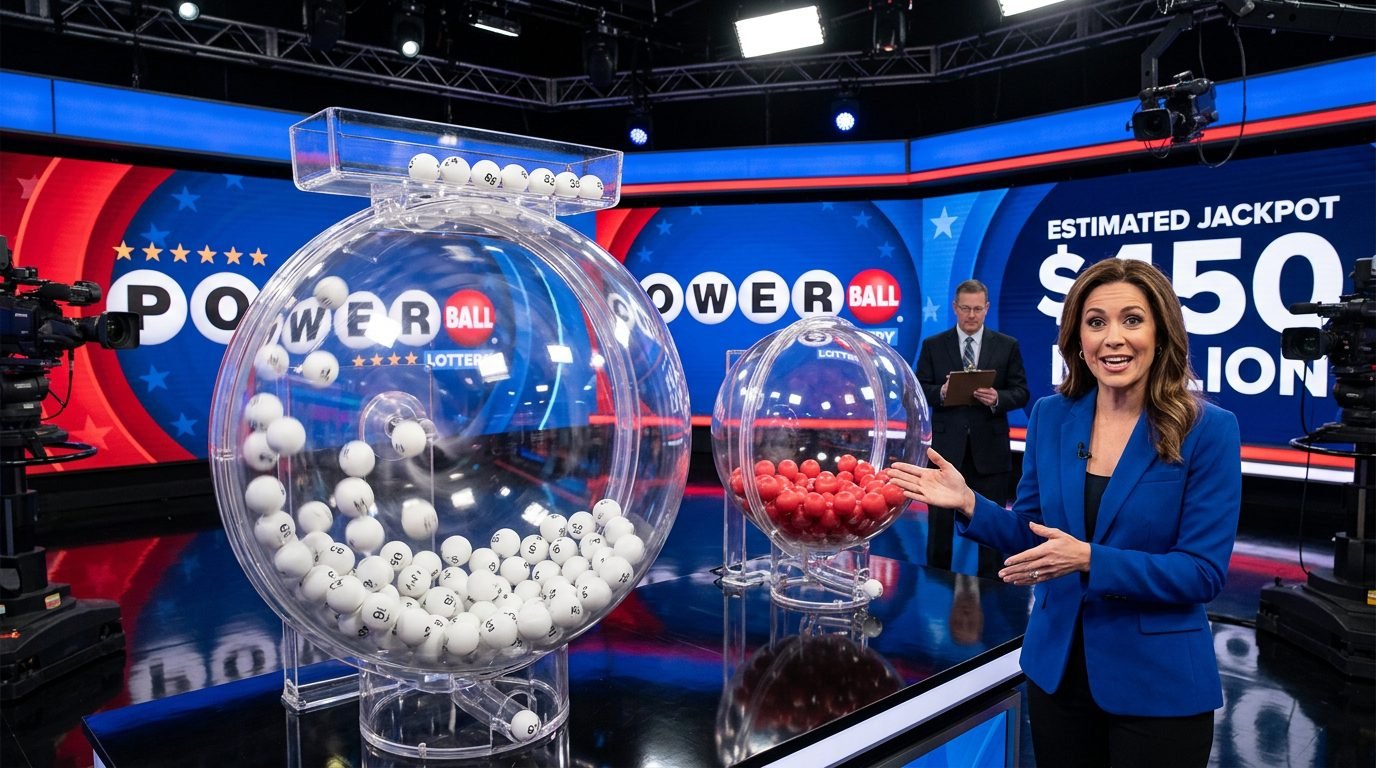
Every few days, six small balls decide whether someone’s life changes overnight. The Powerball drawing has produced the largest lottery jackpots in world history — including a record $2.04 billion prize in 2022. This guide explains exactly when the drawing happens, how it works behind the scenes, how to play, what your real odds are, how prizes and taxes work, and what to do if you ever hold a winning ticket.
What Is the Powerball Drawing?
The Powerball drawing is the official, televised event in which the winning numbers for the Powerball lottery are selected. During each drawing, two machines select five white balls (numbered 1 through 69) and one red Powerball (numbered 1 through 26). A ticket that matches all six numbers wins the jackpot.
Powerball is run by the Multi-State Lottery Association (MUSL), an organization of state lotteries. Tickets are sold in 45 U.S. states plus Washington, D.C., Puerto Rico, and the U.S. Virgin Islands — and since July 2026, also in the United Kingdom through The National Lottery. Powerball is not sold in Alabama, Alaska, Hawaii, Nevada, or Utah.
Every drawing is independent. The odds never change, whether the jackpot is $20 million or $2 billion, and no number is “due” to appear.
When Is the Next Powerball Drawing?
Powerball drawings are held three times a week — every Monday, Wednesday, and Saturday — at approximately 10:59 p.m. Eastern Time. Monday drawings were added in 2021; before that, drawings took place only on Wednesdays and Saturdays.
How to watch or check results:
- Live stream: powerball.com streams each drawing live.
- YouTube: Powerball posts drawing videos on its official YouTube channel.
- Local TV: Many TV stations air the drawing; check local listings.
Drawings happen on holidays too. For reference, the most recent drawing at the time of writing (Monday, October 12, 2026) produced the numbers 22, 28, 38, 51, 69 with Powerball 9 and a Power Play multiplier of 3x. Nobody matched all six numbers, so the jackpot rolled over.
Ticket cutoff times: Sales close before the drawing, and the cutoff varies by state — for example, 9:59 p.m. in New Jersey, 10 p.m. in New York, and 9:45 p.m. in Michigan. Don’t wait until the last minute; check your own state’s lottery for its cutoff.
How the Powerball Drawing Actually Works
The drawing looks simple on screen — balls tumble, numbers pop out — but behind it sits one of the most tightly controlled processes in American gaming.
The venue. Drawings are conducted at the Florida Lottery’s draw studio in Tallahassee, Florida. The equipment and ball sets are stored in an alarmed, double-locked vault. Opening that vault requires a minimum of three people: a Florida Lottery security officer, a MUSL draw official, and a representative of an independent accounting firm — and the entire process is recorded on video and audio.
The machines and balls. MUSL uses gravity-pick drawing machines. Four machines are kept available, and the machines used for any given drawing are selected at random. There are multiple sealed ball sets for both the white balls and the red Powerballs; the sets used each night are also chosen randomly, and the unique numbered seals on each set are verified before the drawing.
Testing. Before any ball set enters service, the balls are measured, weighed, and density-tested — even X-rayed — to confirm they are uniform. Annual re-testing continues while a set is in use, and sets are retired after roughly two to four years. Pre-draw tests are also run before each drawing to confirm the machines are operating randomly.
The draw itself. Two machines run simultaneously: one mixes the 69 white balls, the other the 26 red Powerballs. The selected balls drop into a display rack, and the numbers are verified by draw officials before they become official. A separate pre-draw also selects the Power Play multiplier for that night.
The drawing is monitored by officials at MUSL headquarters in Clive, Iowa, in addition to the on-site auditors in Tallahassee.
How to Play Powerball
Playing takes about a minute at any authorized lottery retailer:
- Get a playslip. Pick one up at a licensed retailer — gas stations, convenience stores, and supermarkets in participating states.
- Choose five white-ball numbers from 1 to 69.
- Choose one Powerball number from 1 to 26.
- Or mark Quick Pick and let the lottery terminal choose random numbers for you. Statistically, Quick Pick tickets win just as often as self-picked ones, since every combination has identical odds.
- Add extras if you want (see Power Play and Double Play below).
- Pay $2 per play. Hand the slip to the retailer, receive your printed ticket, and store it somewhere safe — the ticket is a bearer instrument, and you’ll need it to claim a prize.
!Hand marking numbers on a Powerball playslip next to a printed lottery ticket
Power Play: Multiply Your Non-Jackpot Prizes
For an additional $1 per play, Power Play multiplies any non-jackpot prize by 2x, 3x, 4x, 5x, or 10x, depending on the multiplier drawn that night. The 10x multiplier only comes into play when the advertised jackpot is $150 million or less. With Power Play, matching all five white balls (without the Powerball) pays $2 million instead of $1 million. The jackpot itself is never multiplied.
Double Play: A Second Chance on the Same Numbers
In participating jurisdictions, an extra $1 per play enters your same numbers into a separate drawing held after the main one, with its own prize table. Availability varies by state, so check with your local lottery.
Powerball Prizes and Odds
There are nine ways to win. You need to match only the Powerball — one number — to win the smallest prize of $4.
|
Numbers matched |
Prize |
Approximate odds |
|---|---|---|
|
5 white balls + Powerball |
Jackpot |
1 in 292,201,338 |
|
5 white balls |
$1,000,000 ($2M with Power Play) |
1 in 11,688,054 |
|
4 white balls + Powerball |
$50,000 |
1 in 913,129 |
|
4 white balls |
$100 |
1 in 36,525 |
|
3 white balls + Powerball |
$100 |
1 in 14,494 |
|
3 white balls |
$7 |
1 in 580 |
|
2 white balls + Powerball |
$7 |
1 in 701 |
|
1 white ball + Powerball |
$4 |
1 in 92 |
|
Powerball only |
$4 |
1 in 38 |
The overall odds of winning any prize are about 1 in 24.9. Two things worth knowing: in California, prizes are paid on a pari-mutuel basis and can differ from the amounts above, and the jackpot keeps rolling over to the next drawing whenever nobody matches all six numbers — that’s how prizes climb into the hundreds of millions.
Jackpot: Cash or Annuity?
The advertised jackpot is the annuity value — the total paid out as 30 graduated annual payments over 29 years. Winners can instead take the cash option: a single lump-sum payment, which is always substantially less. For example, the October 12, 2026 jackpot was advertised at $538 million, with a cash option of $220.6 million.
Jackpot winners generally have a limited window (often around 60 days, though it varies by state) to choose between the two. When a jackpot is won, the prize for the next drawing resets to a starting amount of $20 million.
Taxes on Powerball Winnings
Lottery winnings count as taxable income in the United States. A few practical points:
- Federal tax: The IRS withholds 24% of prizes over $5,000, and the actual federal tax owed can reach the top marginal rate (currently 37%) depending on total income.
- State tax: This varies widely — some states tax lottery winnings heavily, while states like California, Florida, and Texas do not tax them at all.
- Get professional help: Anyone facing a large win should speak with a tax professional and an attorney before claiming, since the decisions made in the first days (lump sum vs. annuity, claiming as an individual vs. a trust) have long-term consequences.
The Biggest Powerball Jackpots Ever Won
These are the largest jackpots in Powerball history, all verified through official lottery reporting:
- $2.040 billion — November 7, 2022, California (the largest lottery jackpot ever won worldwide)
- $1.817 billion — December 24, 2025, Arkansas
- $1.787 billion — September 6, 2025, Missouri and Texas (split)
- $1.765 billion — October 11, 2023, California
- $1.586 billion — January 13, 2016, California, Florida, and Tennessee (split)
- $1.326 billion — April 6, 2024, Oregon
- $1.080 billion — July 19, 2023, California
- $1.04 billion — August 12, 2026, Illinois ($450.5 million cash option)
- $842.4 million — January 1, 2024, Michigan
- $768.4 million — March 27, 2019, Wisconsin
How to Check Powerball Results
!A lottery player checking Powerball numbers on TV while holding a ticket and phone at night
After each drawing, verify your ticket against an official source — never rely on a screenshot or a friend’s text:
- powerball.com — the official site posts winning numbers, the Power Play multiplier, and prize breakdowns shortly after each drawing.
- Your state lottery’s website or app — most offer ticket checkers.
- In-store scanners — retailers can scan your ticket to check for a win.
- Official drawing videos — Powerball’s YouTube channel.
Sign the back of your ticket immediately. A lottery ticket is a bearer instrument in most states, meaning whoever holds it can claim the prize. Signing it is the simplest protection you have.
What to Do If You Win
- Sign the ticket and store it somewhere secure, like a safe deposit box. Make copies or photos of both sides.
- Don’t rush to claim. Take time to assemble a team: a tax professional, a financial advisor, and an attorney experienced with lottery winners.
- Check the claim deadline. Claim periods vary by state — for example, Florida allows 180 days from the drawing date. Small prizes (typically up to $599.99) can be claimed at any retailer; larger prizes must be claimed at a lottery office or by mail, with a claim form and government-issued ID.
- Understand anonymity rules. Some states let winners claim anonymously or through a trust; many require the winner’s name to be public record. Know your state’s rules before you come forward.
- Decide cash vs. annuity within your state’s deadline, with professional advice.
Common Mistakes and Myths
- “The jackpot is overdue, so it’s more likely to hit.” Every drawing is independent. The balls have no memory, and the odds are identical every time.
- “A bigger jackpot means better odds.” It doesn’t. A $500 million jackpot has exactly the same 1-in-292.2-million odds as a $20 million one.
- “Lucky numbers improve my chances.” They don’t — but popular numbers (birthdays, 7, 11) increase the chance of splitting a prize if you do win, since many people pick them.
- “Buying 10 tickets makes a real difference.” Ten tickets turn 1-in-292-million into 10-in-292-million — still effectively zero. Budget accordingly.
- “I only need to check the jackpot.” Plenty of $50,000 and $1 million prizes go unclaimed because players never check the lower tiers. Check every line.
Play Responsibly
Powerball is entertainment, not a financial plan. The overwhelming likelihood is that any ticket loses, and no system or strategy changes the math. Set a strict budget, never spend money you need for essentials, and never chase losses. If gambling stops being fun, help is available in the U.S. at 1-800-GAMBLER, which is free and confidential.
Frequently Asked Questions
What time is the Powerball drawing tonight?
The Powerball drawing takes place at approximately 10:59 p.m. ET on drawing nights — every Monday, Wednesday, and Saturday. Ticket sales close earlier, and cutoff times vary by state.
What channel is the Powerball drawing on?
There is no single national channel. The drawing is streamed live on powerball.com and posted on Powerball’s official YouTube channel, and many local TV stations broadcast it. Check your local listings.
How many numbers do you need to win a Powerball prize?
Just one — the Powerball itself. Matching only the red Powerball wins $4. Matching all five white balls plus the Powerball wins the jackpot.
How much does it cost to play Powerball?
A standard play costs $2. Adding Power Play costs an extra $1 per play, and Double Play (where available) costs another $1 per play.
What states sell Powerball tickets?
Powerball is sold in 45 states, Washington, D.C., Puerto Rico, and the U.S. Virgin Islands, and since July 2026 in the United Kingdom. It is not sold in Alabama, Alaska, Hawaii, Nevada, or Utah.
Can you buy Powerball tickets online?
In some states, yes — through official state lottery websites/apps or authorized courier services. Rules vary by state, and you must be physically located in a participating jurisdiction to buy legally.
How long do you have to claim a Powerball prize?
It depends on the state — claim windows range from 90 days to a full year. Florida, for example, allows 180 days from the drawing date. Check your state’s lottery rules and don’t delay.
Is the Powerball drawing rigged?
There is no evidence of that. The drawing uses randomly selected machines and sealed, laboratory-tested ball sets, stored in a double-locked vault that requires three authorized people to open, with pre-draw testing and independent auditors watching every step.
Conclusion
The Powerball drawing happens three nights a week — Monday, Wednesday, and Saturday at about 10:59 p.m. ET — and turns six randomly selected numbers into jackpots that have topped $2 billion. Understanding how the drawing works, what the real odds are (1 in 292.2 million for the jackpot, 1 in 24.9 for any prize), and how prizes, taxes, and claims work puts you ahead of most players. Buy your ticket before your state’s cutoff, check it against an official source, sign it if you win — and keep the whole thing in perspective: it’s a $2 thrill, not a retirement plan.
Read Also: Singing Lessons: Everything You Need to Know Before You Start
Related Stories

Singing Lessons: Everything You Need to Know Before You Start
Singing lessons are structured coaching sessions that teach you how to use your voice with healthy technique. In…

Ana Hills: A Complete Guide to Orange County’s Hidden Gem Community
When I first heard about Ana Hills, I thought people were talking about Anaheim Hills, that more popular…