How to Read Reviews of Competitors (2026): Complete Step-by-Step Guide
Your competitors' customers are telling you exactly what the market wants — in public, for free. Here's a step-by-step method to read reviews of competitors and turn them into better products, sharper positioning, and more customers.
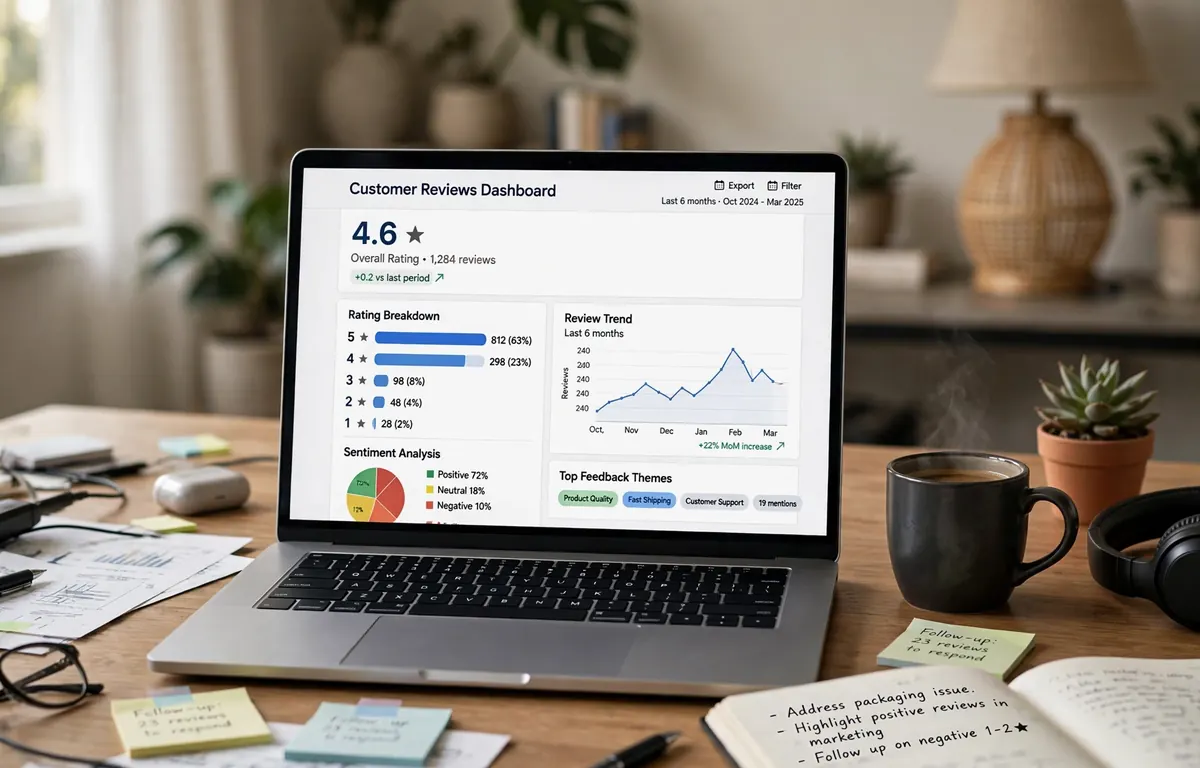
Every day, your competitors’ customers write brutally honest reports about what’s working and what isn’t — and they publish them for free on Google, Trustpilot, Amazon, and a dozen other platforms. Reading reviews of competitors is one of the cheapest forms of market research that exists, and most businesses never do it systematically. This guide gives you a step-by-step method to find those reviews, read them like an analyst, and turn what you learn into decisions that win customers.
How to Read Reviews of Competitors, Exactly
The short version: list your real competitors, gather their public reviews from the platforms where customers actually talk, sort the feedback into themes, look for patterns in complaints and praise, and convert those patterns into specific changes to your product, pricing, or messaging.
This isn’t about spying. Every technique here uses public information that anyone with a browser can see. It’s about being the business in your market that actually listens — not just to its own customers, but to everyone else’s too. A competitor’s one-star review is a gift: it tells you exactly where the bar is set and where it’s falling short.
Done well, this exercise answers questions that normally cost thousands in research: What do customers in my market complain about most? Which features do they actually value? Where is the pricing pain point? What words do they use to describe a good experience? Let’s work through it step by step.
Step 1: Identify Your Real Competitors and Where Their Reviews Live
The short version: list the 3–5 businesses your customers would seriously consider instead of you, then find where each one’s customers leave reviews.
Start with direct competitors — businesses selling essentially what you sell to the same audience. Then add one or two indirect ones: the alternative your customers pick when they don’t buy from anyone in your category at all. A local bakery’s indirect competitor might be the supermarket’s bakery aisle; a SaaS tool’s might be a spreadsheet.
Where reviews live depends on the industry. Use this map:
| Review source | Best for | What you’ll find there |
|---|---|---|
| Google Business Profile | Local businesses, restaurants, services | Volume and recency; service-experience detail |
| Trustpilot | E-commerce, services, brands | Verified-purchase reviews across industries |
| Yelp | Restaurants, local services (US-heavy) | Detailed service narratives |
| Amazon | Physical products | Feature-level product feedback, durability reports |
| G2 / Capterra | B2B software | Structured pros/cons from verified users |
| App Store / Google Play | Mobile apps | Bug reports, UX complaints, feature requests |
| Social media comments | Consumer brands | Unfiltered, emotional, real-time reactions |
| Better Business Bureau | US service businesses | Complaint patterns and resolution behavior |
For each competitor, write down the 2–3 platforms where they have the most reviews. That’s your reading list. Skip platforms where a competitor has five reviews from 2019 — you’re looking for volume, because volume is what reveals patterns instead of one-off gripes.

Step 2: Collect Enough Reviews to See Patterns
The short version: gather at least 50 reviews per competitor per platform before drawing conclusions, and organize them in a spreadsheet.
Sample size matters. With ten reviews, one angry outlier can look like a trend. With fifty or more per competitor per platform, real patterns emerge and noise fades — for high-volume categories like consumer electronics or popular software, a hundred or two gives even cleaner signal. You don’t need fancy tools to start: a spreadsheet with columns for date, rating, review text, and your theme tags is enough for a first pass.
Sort and filter as you collect. Group by rating first (1–2 stars, 3 stars, 4–5 stars), then by date so you can see whether problems are getting better or worse over time. A complaint that appears in 2022 reviews but disappears in 2025 reviews tells you the competitor already fixed it — that’s useful intelligence about their trajectory, not a current weakness.
Set a cadence. Markets move, and a one-time analysis goes stale. A quarterly review of your top three competitors is the standard rhythm for most businesses; fast-moving markets like SaaS or consumer tech justify a lighter monthly spot-check. Put it on the calendar or it won’t happen. For a wider lens on how businesses research their markets, the business explainers at themodernpost.co.uk are a solid companion read.

Step 3: Sort Reviews by Theme, Not by Stars
The short version: tag every review with what it’s actually about — price, quality, service, delivery, features, support — and count the themes.
Star ratings tell you how people feel; themes tell you why. Read each review and assign it one or two theme tags. After fifty reviews, count the tags. You’ll typically find that 60–70 percent of all feedback clusters around just three or four themes. Those are the themes that decide purchases in your market.
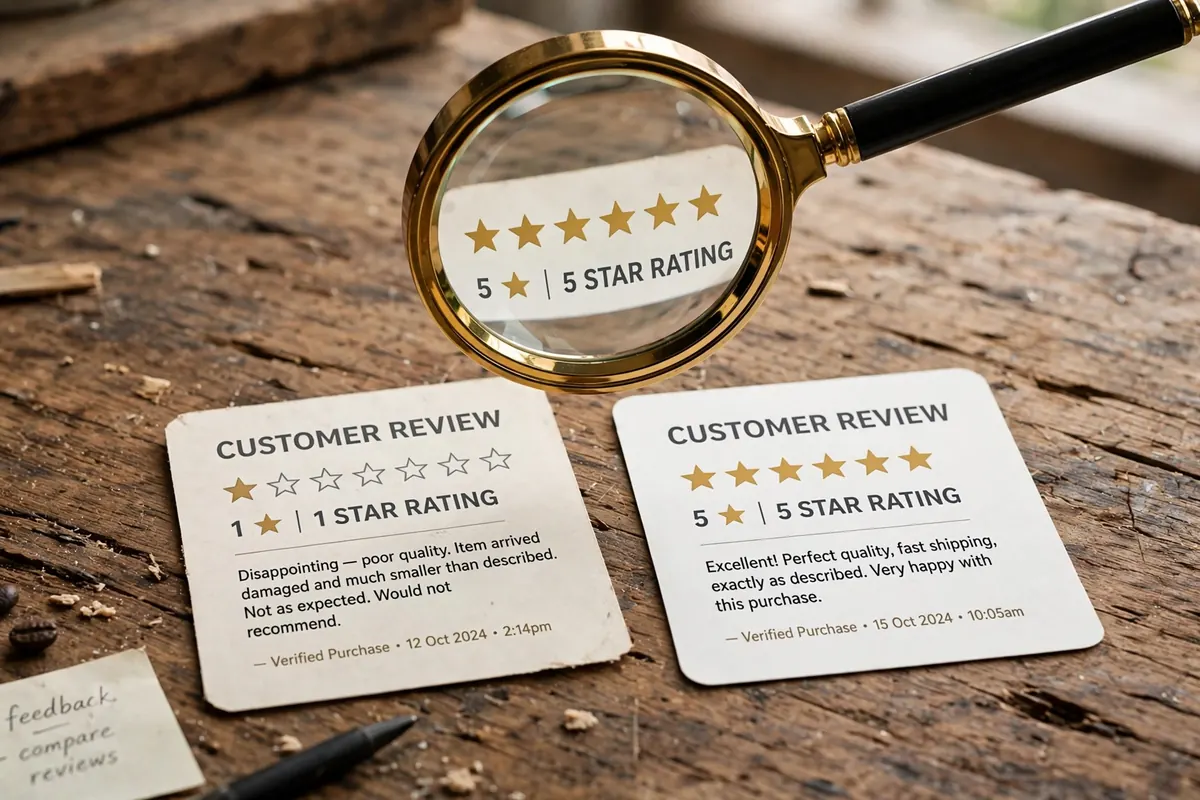
Keep a separate eye on three-star reviews. One-star reviewers are venting and five-star reviewers are celebrating, but three-star reviewers are doing something more valuable: calmly explaining what was almost good enough. “Great product, but shipping took three weeks” is a roadmap in a single sentence.
Also note the exact words customers use. If ten reviewers say a competitor’s onboarding was “confusing,” that word — confusing — belongs in your marketing as the problem you solve: “onboarding so simple you’ll never call it confusing.” Customer language is free copywriting.
Step 4: Read the Complaints Twice
The short version: complaints reveal market gaps; praise reveals the standard you must beat. Study both, but weight complaints higher.
Recurring complaints are the single most valuable output of this exercise. When several customers independently mention the same issue — slow refunds, pushy sales calls, a missing feature, rude delivery drivers — you’ve found a gap the market is practically begging someone to fill. The fix is often embarrassingly simple: the competitor’s customers aren’t asking for innovation, they’re asking for the basics done right.
Praise matters too, but differently. When customers consistently love something about a competitor — their packaging, their response time, their loyalty program — that’s the baseline expectation in your market now. You don’t get points for matching it; you lose points for missing it. Your differentiation has to live somewhere else.
Look specifically for these high-value signals in the text:
- Comparison mentions: “switched from X because…” — this tells you why customers leave competitors, in their own words.
- Price sensitivity: “good but overpriced” or “worth every penny” — maps the market’s sense of fair value.
- Workarounds: “I have to export to Excel to do X” — a missing feature described as a daily annoyance.
- Service moments: stories about support interactions, good or bad — service is where small businesses most often beat big ones.
- Expectation gaps: “the photos looked better than the real thing” — marketing promises the product can’t keep.
Step 5: Turn Patterns Into Decisions
The short version: every pattern you found should map to one concrete action — a product fix, a message, a policy, or a deliberate decision to ignore it.
Analysis without action is trivia. Take your top themes and run each through a simple decision table:
| Pattern you found | What to do about it | Example |
|---|---|---|
| Repeated complaints about a missing feature | Build it, or say clearly why you won’t | Competitor’s app lacks offline mode; you ship it and say so |
| Praise for competitor’s fast support | Match the standard, then exceed it | Advertise a response-time guarantee they don’t offer |
| Price complaints (“overpriced for what it is”) | Position on value, not price | Your landing page leads with total cost of ownership |
| Confusing onboarding or setup | Make simplicity your headline benefit | “Set up in 10 minutes, no manual required” |
| Delivery/shipping grievances | Fix logistics and make it a selling point | Free tracked shipping with a delivery promise |
| Customers praising a competitor’s community | Invest in your own community touchpoints | Active user group, responsive social presence |
Prioritize ruthlessly. You cannot fix everything, and trying to is how businesses end up with a laundry list of half-done improvements. Pick the three patterns with the most review volume behind them, assign each an owner and a deadline, and measure whether the change moves your own reviews in the right direction. Then run the analysis again next quarter and pick the next three.
One pattern deserves special handling: if customers keep saying they wish a competitor offered something, say it plainly in your marketing. “Tired of waiting three weeks for delivery? We ship in 48 hours.” You’re not attacking the competitor — you’re answering a wish their own customers expressed in public. Broader market explainers like the ones on dailyscope67.com often show how this kind of positioning plays out across industries.

Step 6: Spot Fake and Manipulated Reviews
The short version: not every review is real. Learn the tells, discount suspicious clusters, and never fake reviews yourself.
Competitor review sets are sometimes polluted — by the competitor’s own cheerleaders, by paid review farms, or by coordinated attacks from rivals. Watch for clusters of five-star reviews posted within days of each other with vague, interchangeable language (“great service, highly recommend!”), and for one-star reviews that attack the business rather than describing an experience. A sudden rating spike or crater with no corresponding business event is worth skepticism.
When you find suspicious clusters, exclude them from your theme counts rather than trying to interpret them. And the ethics here are absolute: never post fake reviews about competitors, never pay for reviews of your own business, and never respond to competitor reviews pretending to be a customer. Beyond being dishonest, review fraud is illegal in many jurisdictions and trivially easy to trace. The whole point of this exercise is learning from genuine feedback — fake data poisons it.
The Ethics Rules (Don’t Skip These)
Everything in this guide uses public information, and it should stay that way. Don’t scrape private data, don’t harass reviewers, don’t contact a competitor’s unhappy customers to poach them aggressively, and don’t misrepresent who you are anywhere in the process. Read reviews, learn from them, improve your business — that’s the entire playbook. The moment you start manipulating the system, you’ve traded a durable advantage (actually being better) for a fragile one (looking better).
There’s also a line around competitive intelligence tools. Reading public reviews is fine. Using tools that violate a platform’s terms of service to harvest data at scale is not — always check the platform’s current terms if you’re automating collection. When in doubt, read manually. It’s slower, but you’ll absorb more nuance anyway.
Mistakes That Waste the Whole Exercise
The most common failure is analyzing once and never again. Markets shift quarterly; a competitor that was weak on support last year may have rebuilt its whole team. The second is confirmation bias — cherry-picking the reviews that confirm what you already believed and ignoring the ones that don’t. Force yourself to log the praise too, especially the praise that stings.
Third: copying instead of learning. If a competitor’s loyalty program gets rave reviews, the lesson isn’t “build the same program” — it’s “customers in this market value being recognized.” Your version should fit your business, not clone theirs. And finally, don’t ignore indirect competitors. The business stealing your customers is sometimes the one you never thought to analyze.
FAQs
How many competitor reviews do I need to read?
Aim for at least 50 reviews per competitor per platform before drawing conclusions — fewer than that and individual outliers skew the picture. For high-volume categories like consumer electronics or popular software, 100 to 200 reviews per competitor gives statistically meaningful patterns.
Where can I find reviews of competitors?
It depends on the industry: Google Business Profile and Yelp for local businesses, Trustpilot for e-commerce and services, Amazon for products, G2 and Capterra for B2B software, app stores for mobile apps, and social media comments for consumer brands. Start where each competitor has the most review volume.
How often should I analyze competitor reviews?
Quarterly is the standard cadence for most businesses — it keeps the intelligence current without becoming a full-time job. In fast-moving markets like SaaS or consumer electronics, add lighter monthly spot-checks on your closest rivals.
Is it legal to read and analyze competitors’ reviews?
Yes. Reviews published on public platforms are public information, and reading them for market research is standard competitive intelligence. What’s not okay: posting fake reviews, scraping data in violation of a platform’s terms, or misrepresenting your identity.
What should I do with negative reviews of my competitors?
Treat them as a map of market gaps. Repeated complaints point to unmet needs you can address in your product, service, or messaging. Use the insight to improve — not to attack the competitor publicly, which tends to backfire.
Can small businesses do this without expensive tools?
Absolutely. A spreadsheet, a few hours, and a systematic method will get you 80 percent of the value. Paid tools help at scale — sentiment analysis, automated monitoring, larger datasets — but they’re an upgrade, not a prerequisite.
Your competitors’ customers are already doing your market research for you, one review at a time. The businesses that win aren’t the ones with the most data — they’re the ones that actually read it, take it seriously, and act on it before the next quarter’s reviews come in. Start with one competitor and fifty reviews this week. You’ll be surprised how much you learn.
Read Also: What Is a Smart Plug (2026): The Complete Guide to How It Works
Related Stories

MSU SIS Student Portal Guide for Michigan State (2026 Guide)
A plain-English guide to Michigan State University's Student Information System — what it covers, how students use it…

PDF to Word Converter Complete Guide (2026 Guide)
Converting a PDF to Word is easy when you pick the right method, but formatting, scanned pages, and…

Alternative Learning System Meaning Explained (2026)
The Alternative Learning System, or ALS, is a parallel learning system that offers a flexible route to basic…