What Does Matcha Taste Like? A Complete Flavor Guide for Beginners (2026)
What does matcha taste like? Good matcha is savory, sweet, and creamy with fresh green notes — this guide breaks down the full flavor profile for beginners.

What Does Matcha Taste Like? A Complete Flavor Guide for Beginners
You have seen the photos — that vivid green powder, the frothy bowl, the lattes all over your feed. Maybe you have even tried it once, at a café, and thought: bitter. Grassy. Not for me. Here is the thing most first-timers never hear: there is a good chance you never actually tasted matcha. You tasted old powder, or cheap powder, or powder murdered by boiling water.
Real matcha — fresh, well-made, whisked properly — tastes like almost nothing else in the tea world. It is savory and sweet at the same time, creamy in texture, green and fresh in the middle, with a clean finish that fades instead of lingering. This guide walks through the full flavor profile piece by piece, explains what changes it, and tells you how to tell good matcha from bad before you ever take a sip.
What Does Matcha Taste Like? The Short Version
The short version: good matcha tastes savory-sweet, creamy, and green, with a short clean finish. The first thing you notice is umami — a deep, rounded savoriness, almost like a light broth. Then comes a natural, gentle sweetness and a velvety body. Underneath sits a fresh green note, somewhere between young spring greens and sea air. At the very end, a faint, clean bitterness that fades quickly.
Bad matcha tastes like only the last part: bitter, astringent, flat, sometimes dusty. The gap between good and bad matcha is wider than in almost any other tea, which is why so many people who tried it once and disliked it simply met a bad bowl.
The Five Flavor Notes, One by One
Matcha’s flavor is layered — it arrives in sequence rather than all at once. Here is each layer, what causes it, and what it should feel like in a good bowl.
1. Umami: the signature
Umami hits first. It is the savory depth that makes matcha taste fundamentally different from steeped green tea — broad, rounded, almost broth-like. The source is the amino acid L-theanine, which builds up in the tea leaf during the shading process (more on that below). In a good bowl, umami is the dominant note; it is what experienced drinkers mean when they call matcha “rich.”
2. Sweetness: quiet but real
After the umami comes a natural sweetness — mild, not sugary. Think fresh cream, young peas, or sweet almond rather than anything dessert-like. It follows the savoriness instead of leading, which is why matcha never tastes like a sweet drink even though sweetness is genuinely there. The same amino acids responsible for umami contribute here, which is why the two notes arrive as a pair.
3. Bitterness: a whisper, not a shout
There is bitterness in matcha — from catechins and caffeine — but in a good bowl it is faint, clean, and brief. It shows up at the very end of the sip and fades fast. Strong, lingering bitterness is not a feature of matcha; it is a symptom. It means the powder was low grade, old, or prepared with water that was too hot. If your matcha is aggressively bitter, something went wrong before it reached your mouth.
4. Green and marine notes: the fresh middle
The middle of the sip carries the “green” character: fresh-cut grass, young spinach, a nori-like sea note. In good matcha this feels clean and bright — like spring greens, not like a lawn. If the green notes taste earthy, hay-like, or dull, the powder has likely aged past its prime. Freshness shows up here first.
5. Texture: the note you drink
Flavor is only half the experience. Because you drink the whole powdered leaf rather than an infusion, properly whisked matcha feels slightly thick and smooth, with a fine foam that rounds off every edge. That creamy, full body is part of why matcha reads as rich even before you analyze the taste. Graininess or chalky residue means it was not whisked well enough — or the powder was low quality to begin with.
| Note | What it tastes like | What causes it |
|---|---|---|
| Umami | Savory, broth-like depth | L-theanine from shade-grown leaves |
| Sweetness | Mild, like cream or young peas | Amino acids in the leaf |
| Bitterness | Faint and clean (in good matcha) | Catechins and caffeine |
| Green/marine | Fresh spinach, nori, spring greens | Chlorophyll and fresh leaf character |
| Texture | Thick, smooth, fine foam | Drinking the whole powdered leaf |

Why Shade-Growing Shapes the Flavor
None of this happens by accident. Matcha’s flavor starts weeks before harvest, when farmers cover the tea bushes with straw or dark netting. This shading period runs roughly 20 to 30 days, and it fundamentally changes the leaf’s chemistry: reduced sunlight boosts chlorophyll and L-theanine production while holding back the bitter catechins.
That is the entire flavor story in one agricultural decision. More theanine means more umami and sweetness; fewer catechins means less bitterness and astringency. The vivid, almost neon green color comes from the same process — the extra chlorophyll. When you taste that savory-sweet depth in a good bowl, you are tasting shade.
After harvest, the leaves are processed into tencha and then stone-ground into the fine powder. The grinding matters too: genuine matcha is milled slowly to avoid heating the leaf, which would dull the flavor. A talc-fine texture is one of the visible signs of careful processing.
How Grade Changes the Taste
This is where most beginners get tripped up, because “matcha” on a label covers a wide range of quality — and the taste difference between grades is enormous.
Ceremonial grade is made from the youngest, most tender leaves and is meant to be drunk straight, whisked with hot water. Good ceremonial matcha tastes strongly umami, noticeably sweet, velvety in texture, with very low bitterness and a pleasant finish that lingers without astringency. This is the matcha the flavor descriptions above describe.
Culinary grade comes from more mature leaves and is designed for lattes, smoothies, and baking — situations where milk, sweetener, and other ingredients carry the drink. On its own, it is significantly more bitter, sometimes a little sour or chalky, and it lacks the umami depth of ceremonial powder. That is not a defect; it is the design. But it means you should never judge matcha’s taste from a culinary-grade powder whisked plain.
You can read a lot before tasting. Good matcha is a vivid, almost glowing green — dull, yellowish, or brownish powder signals oxidation and lower quality. The aroma should be fresh, grassy, and slightly sweet; dusty, stale, or fishy smells mean it is past its prime or was never good. Fine, talc-like texture beats coarse and gritty every time.

How Preparation Changes the Taste
Even excellent powder can be ruined in the bowl. Preparation shifts the flavor more than most beginners expect.
Water temperature is the big one. Water that is too hot scorches the delicate compounds and amplifies bitterness dramatically. Slightly cooler water — the commonly cited range is around 70–80°C — emphasizes sweetness and aroma instead. If your matcha tastes harsh, check the kettle before blaming the powder: boiling water is the most common preparation mistake.
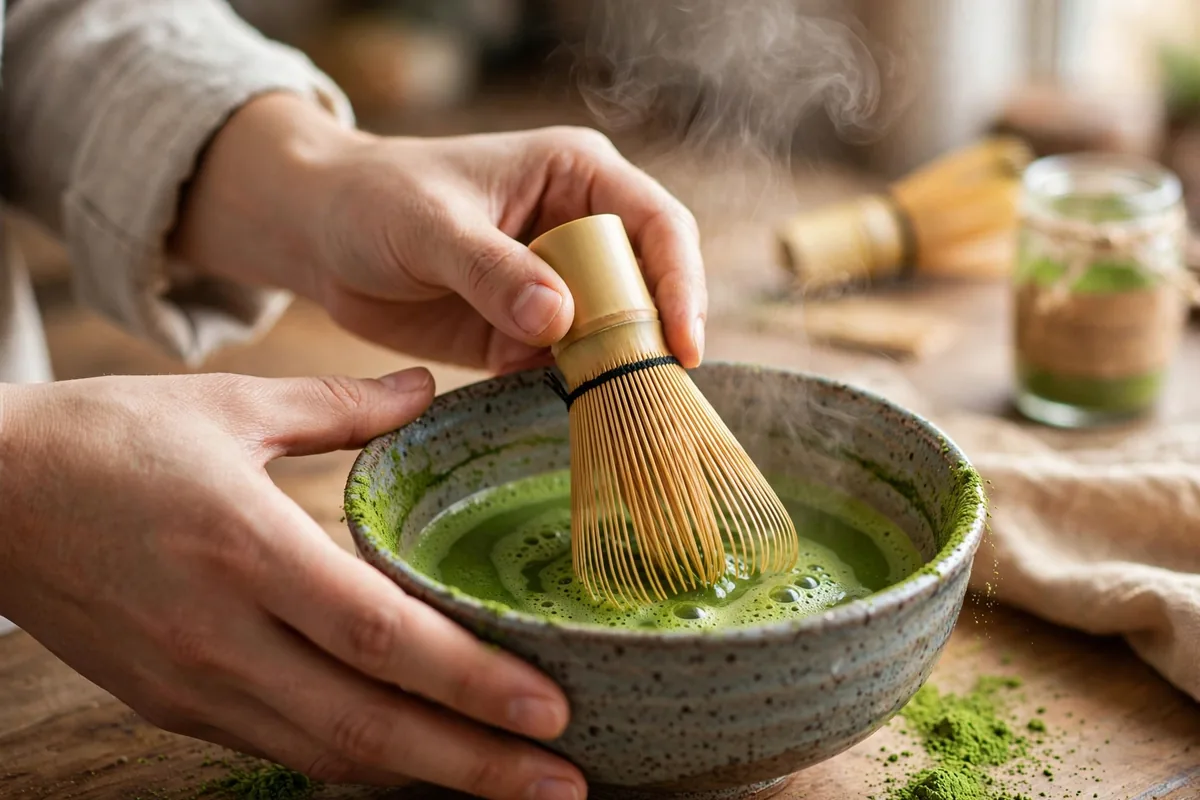
Whisking matters. A bamboo whisk (chasen) suspends the fine powder evenly through the water, creating the smooth texture and fine foam that carry the flavor. Without proper whisking, the powder clumps or settles, and you get grainy sips alternating with weak ones. An electric frother works in a pinch, but the traditional whisk exists for a reason.
Ratio changes intensity. More powder per water makes a thicker, more intense bowl (koicha-style); less makes a lighter, frothier one (usucha-style). Neither is wrong — but if your first bowl tastes overwhelming, try a lighter ratio before concluding matcha is not for you.
Freshness of the powder. Matcha is extremely exposed to air, light, and heat once opened. Store it in an airtight, opaque container, ideally refrigerated, and aim to use it within weeks to a couple of months of opening for peak character. Powder that has sat open for months tastes flat, grassy, and harsh — and that staleness is probably the single most common reason beginners decide they dislike the drink. They met an old tin, not a bad tea.
Matcha Latte vs Straight Matcha
Most people meet matcha as a latte before they ever taste it whisked plain in water, and the two are genuinely different drinks.
A matcha latte is milk (dairy or plant-based), usually sweetened, with matcha as the flavoring. It is creamy, mild, sweet, and approachable — the milk rounds off every edge and the sweetener covers any bitterness. It is a lovely drink, but it tells you almost nothing about what matcha itself tastes like, because the matcha is a background note.
Straight matcha — powder whisked with hot water — is the full experience: the umami front, the vegetal middle, the sweet finish, the texture. It is more intense, more savory, and more surprising. If you have only had lattes, you have had matcha-flavored milk, not matcha. Both are worth drinking; just know which one you are judging.
One practical note: lattes are the right place for culinary-grade powder. Its stronger, simpler flavor stands up to milk and sweetener, and you are not paying ceremonial prices for nuance that milk would bury anyway. Save the good stuff for the bowl.

How Matcha Compares to Regular Green Tea
Same plant — Camellia sinensis — very different drink. The difference comes down to one fact: with matcha you consume the entire leaf, ground to powder, while brewed green tea is an infusion where most of the leaf ends up in the bin.
| Matcha (whisked) | Steeped green tea | |
|---|---|---|
| Dominant taste | Umami-rich, naturally sweet | Lighter, brisker, more astringent |
| Body | Creamy, full, fine foam | Light, watery |
| Bitterness | Faint when good | More noticeable, can linger |
| Caffeine | Higher per serving (whole leaf) | Lower (partial extraction) |
| Finish | Clean, short | Can be drying or sharp |
If you like green tea but find it thin or sharp, matcha is the richer, rounder version of what you already enjoy. If you dislike green tea’s astringency, good matcha may still win you over — it is a different balance of the same family of flavors.
If Your Matcha Tastes Bitter: A Quick Diagnosis
Bitter matcha is a message, not a verdict. Run through the causes in order:
- Water too hot. The most common cause. Let boiling water cool a minute or two before whisking.
- Low grade powder. Culinary grade whisked straight will always taste assertive. That is what it is for — lattes, not bowls.
- Old powder. Opened months ago, stored badly, or past its best. Flat, harsh, dull.
- Too much powder. An overly strong ratio tastes intense and bitter. Scale back.
- Bad whisking. Clumps and uneven suspension make for harsh, gritty sips.
Fresh ceremonial-grade matcha, whisked with properly heated water, should never be harsh. If yours is, one of the five items above is almost certainly the explanation.
FAQs
What does matcha taste like in one sentence?
Savory-sweet, creamy and green, with a short clean finish — bitter only when the matcha or the preparation is wrong.
Does matcha taste like grass?
Sort of, but in the best possible way when it is done right. The grassy character in quality matcha feels like fresh young spinach, tender peas, or a delicate nori seaweed note — clean and slightly sweet, not like eating a lawn. Aggressively bitter or fishy matcha is a quality or freshness problem, not the true taste.
Is matcha bitter?
Good matcha has only a faint, clean bitterness at the end of the sip. Strong bitterness means low-grade powder, old powder, or water that was too hot. Bitterness is a warning light, not a feature.
What does a matcha latte taste like compared to straight matcha?
A latte tastes creamy, mild, and sweet — the milk and sweetener dominate, with matcha as a background flavor. Straight whisked matcha is more intense, savory, and layered. Try both before deciding what you think of matcha itself.
Does matcha contain caffeine?
Yes. A standard serving of around 2 grams contains roughly 57–64 mg of caffeine — less than most coffee, more than most steeped green tea, since you consume the whole leaf. As with any caffeinated drink, general guidance suggests moderation, and lower limits apply during pregnancy.
How can I tell good matcha from bad before tasting?
Look for vivid, almost neon green color (not dull or brownish), a fine talc-like texture, and a fresh, grassy, slightly sweet aroma. Dusty, stale, or fishy smells and coarse texture are red flags. And check how long the tin has been open — freshness matters enormously.
Can I drink matcha hot or cold?
Both. Whisk a smooth matcha base first, then add hot water, cold water, milk, or ice. The goal is a smooth suspension of the powder, not a specific temperature — though very hot water will make it bitter, so let boiling water cool first.
For more on food, drink, and everyday rituals, 9Bio covers lifestyle topics in depth, and Home Water Insights explores the home and kitchen side of daily life.
Read Also: Reworder: The Complete Step-by-Step Guide to AI Text Rewriting Tools
Related Stories
Rivet: Types, Uses, and How to Choose the Right One
From solid rivets in aircraft and bridges to pop rivets in DIY projects, here is how rivets work,…
Moldavite Crystal Meaning and Real vs Fake Guide
What moldavite is, where it comes from, what collectors mean by its energy, and the practical checks that…

Couples Therapy What to Expect First Session (2026 Guide)
A calm, honest walkthrough of the first couples therapy session — the structure, the questions, the ground rules,…
3 responses