413 Area Code: Complete Western Massachusetts Guide
Area code 413 is the single area code for western Massachusetts, in use since 1947. This guide covers the cities it serves, its history, and what to know before calling or getting a number.
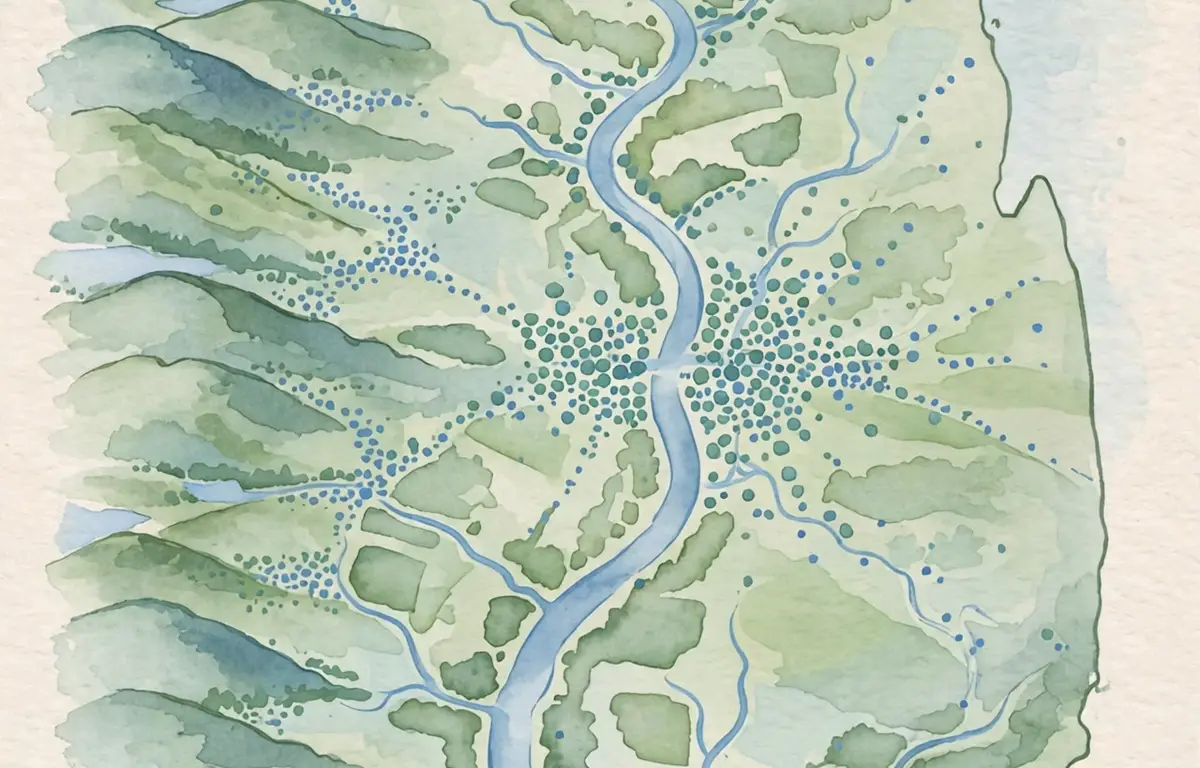
413 Area Code: Complete Western Massachusetts Guide
The short version: the 413 area code covers western Massachusetts — the Pioneer Valley and the Berkshires, from Springfield and Holyoke in the south to Pittsfield, North Adams, and Williamstown in the west, and Greenfield and Amherst in the north. It is one of the original North American area codes, created in 1947, and it has never been split or given an overlay. That makes it one of the most stable area codes in the country: if a number starts with 413, it belongs to western Massachusetts, and that has been true for nearly eighty years.
People usually look up an area code for one of three reasons. They missed a call from an unfamiliar number and want to know where it came from. They are moving to, or doing business in, a place and want a local number. Or they are simply curious about a number they keep seeing. This guide answers all three, with the cities, the history, the time zone, the dialing rules, and the scam warnings that actually matter.
Where Is The 413 Area Code?
Area code 413 serves the western third of Massachusetts. It is the only area code for that whole region, which is unusual in itself. Eastern Massachusetts, by contrast, is carved up among several codes — Boston uses 617 and 857, the north shore and Merrimack Valley use 978 and 351, and the south coast and central region use 508 and 774. Western Massachusetts has just one, and that single-code identity has become part of the region’s character. People in Springfield, Northampton, and Pittsfield share a code in a way that Bostonians, split across overlays, do not.
Geographically, the region runs from the Connecticut state line in the south to the Vermont border in the north, and from the New York state line in the west to the edge of Worcester County in the east. It covers four counties in full — Berkshire, Franklin, Hampden, and Hampshire — plus the towns of Hardwick and Warren in Worcester County. The landscape behind the code is varied: the Connecticut River valley with its small cities and college towns, and the hillier, more rural Berkshires to the west, known for arts, outdoors, and small towns rather than cities.
Its neighbours tell you where the region ends. To the east, 413 gives way to 508 and 774. To the south, across the Connecticut line, you are in 860 and 959 territory. To the north is Vermont’s 802, and to the west, across the New York line, is the Albany region’s 518 and 838. If you see a number from one of those codes, it is not a western Massachusetts number, even if the caller claims otherwise.
Step 1: Know The Time Zone Before You Call
The 413 area code sits entirely in the Eastern Time Zone — Eastern Standard Time (UTC-5) in winter and Eastern Daylight Time (UTC-4) in summer. That is the same time zone as Boston, New York, and Washington, D.C., so if you are calling from anywhere on the East Coast, there is no time difference to calculate. If you are calling from the Midwest, the 413 region is one hour ahead of you; from the Mountain states, two hours ahead; from the Pacific states, three hours ahead.
For practical purposes, business hours in the region run roughly 8 or 9 a.m. to 5 or 6 p.m. Eastern. If you are returning a missed call from a 413 number, the polite window is during those hours on a weekday, unless the caller left a message suggesting otherwise. This sounds like common sense, but area-code lookups often happen precisely because someone is unsure whether a call came from across the country or across town. With 413, the answer is usually a place you could drive to in a few hours from Boston or New York, in the same time zone you are already in.
Step 2: Know The Main Cities

Springfield is the largest city in the 413 region and its commercial anchor. It sits on the Connecticut River in Hampden County, and it is the city most people picture when they think of western Massachusetts: a working city with a long industrial history, a downtown, museums, and a metro area that spills into neighbouring towns like Chicopee, West Springfield, Agawam, and Holyoke. If a business or organisation you are dealing with says it is based in western Massachusetts, there is a good chance it is in or near Springfield.
The Pioneer Valley runs north from Springfield along the river, and it is where much of the region’s distinctive character lives. Holyoke and Chicopee are former mill cities with their own identities. Northampton, further north, is a smaller city known for its downtown, arts scene, and progressive culture. Amherst, nearby, is a college town — home to the University of Massachusetts Amherst and two liberal arts colleges — which gives the whole valley a younger, more academic feel than its size would suggest. Hadley, South Hadley, Easthampton, and Belchertown fill in the valley with a mix of farms, suburbs, and small-town centres.
Greenfield, in Franklin County, is the valley’s northern hub: smaller, quieter, and more rural in feel, and a gateway to the hilltowns. To the west, the Berkshires are a different world again. Pittsfield is the county seat and the largest city in Berkshire County, a former industrial city that has leaned into arts and culture. North Adams, at the north-west corner of the state, is a small city built around a former factory complex turned museum. Williamstown, Great Barrington, Lenox, Stockbridge, and Lee are the towns visitors tend to know — for museums, theatre, music, and the kind of main streets that show up on postcards. Together, these places explain why a single area code can cover both a city of more than 150,000 people and hilltowns of a few hundred: western Massachusetts is a region of contrasts, and 413 holds all of it.
| Area | Key Places In 413 | Character |
|---|---|---|
| Pioneer Valley (south) | Springfield, Chicopee, Holyoke, Westfield, Agawam | Cities, mills, river valley commerce |
| Pioneer Valley (north) | Northampton, Amherst, Hadley, Easthampton, Greenfield | College towns, farms, arts and culture |
| Berkshires | Pittsfield, North Adams, Williamstown, Great Barrington, Lenox | Hills, museums, theatre, small towns |
| Hilltowns and rural towns | Adams, Lee, Stockbridge, Deerfield, Montague | Quiet, rural, historic communities |
Step 3: Understand The History — Why 413 Has Never Changed
Area code 413 dates back to 1947, when the North American Numbering Plan was first established. It was one of the original area codes assigned in the United States, and it has survived intact ever since. That is a remarkable run. Most original codes have been split at least once as populations grew and phone numbers ran short, or they have gained overlay codes that force ten-digit dialing and dilute the local identity. Boston’s 617, for example, now shares its territory with 857. Western Massachusetts never needed that.
The reason is mostly demographic. Western Massachusetts has a relatively stable population and a lower density of phone numbers than the Boston metro area, so the original pool of 413 numbers has lasted. Numbering administrators track this carefully — the North American Numbering Plan Administrator publishes exhaust analyses projecting when a code might run out — and the projections for 413 have consistently shown no shortage on the horizon, with supply expected to last for decades. That is why no overlay has been planned for the region, and why a 413 number still means what it meant in 1947.
There is a small historical footnote worth knowing. Before the final 1947 assignments, 413 was briefly allotted for use in Pennsylvania in a 1946 proposal, but that plan was scrapped and the code went to Massachusetts instead. It is the kind of detail that only matters to numbering enthusiasts, but it explains why you may occasionally see references to 413 and Pennsylvania in old documents. For any practical purpose today, 413 is Massachusetts, and only Massachusetts.
How Dialing Works In 413
Because 413 has no overlay, seven-digit dialing technically still works for local calls in many cases — you can dial just the seven-digit number and reach another 413 phone. In practice, though, the modern standard is ten-digit dialing: 413 plus the seven-digit number, written as 413-XXX-XXXX. Mobile phones, contact lists, and business systems all default to the full ten digits, and using the full number avoids any ambiguity. If you are saving a western Massachusetts contact, save the whole thing, with the area code, even if you live in the region yourself.
For calls from outside the United States, the format is the U.S. country code (+1), then 413, then the seven-digit number: +1 413 XXX XXXX. For calls from elsewhere in the United States, dial 1, then 413, then the number, or simply dial the ten-digit number from a mobile phone, which handles the rest. There is no special prefix, no extra charge inherent to the code itself — 413 is a standard geographic code, not a toll-free or premium code — and any charges depend on your own calling plan, not on the area code.
One thing 413 is not: it is not a toll-free number. Toll-free codes in the United States are 800, 833, 844, 855, 866, 877, and 888. A 413 number is a regular local number for a specific place, which is exactly why businesses value it: it signals a real local presence in western Massachusetts, not a national call centre.
Step 4: Spot Spoofed Calls
Here is the part of the guide that matters most for everyday safety. A call from a 413 number is not automatically legitimate, and it is not automatically a scam either. Most 413 calls are ordinary: businesses, schools, medical offices, local government, and people you know in western Massachusetts. But scammers routinely spoof area codes — they make their calls appear to come from a local number, including 413, to increase the chance you will answer. This is called neighbour spoofing when the number resembles your own, and local spoofing more generally when it borrows a familiar regional code.
The rule is simple and worth memorising: never trust a call based on the area code alone. If a caller creates urgency — a package held, an account about to close, a fine to pay, a relative in trouble — pause. Hang up and call back using a number you find independently, from an official website or the back of a card, not the number that called you. Never give personal information, passwords, or payment details to an incoming caller you did not expect, however plausible they sound. Real banks, government agencies, and utilities do not demand immediate payment over the phone or threaten arrest for non-payment on the spot.
There are a few extra tells. A legitimate western Massachusetts business will usually leave a voicemail identifying itself, and you can verify it with a quick search. A spoofed call often comes from a number that is disconnected or belongs to someone else when you call it back. And if the caller claims to be from a company or agency but cannot answer basic questions about your account without asking you to supply the details first, that is a warning sign. When in doubt, let unknown numbers go to voicemail. A real caller with a real reason will leave a message.
Getting A 413 Number

You do not need to live in Massachusetts to get a 413 number. Virtual phone services and VoIP providers let businesses and individuals anywhere choose a 413 number and route its calls to any device — a mobile phone, a desk phone, or a computer. This is popular with businesses that want to look local to western Massachusetts customers without opening a physical office there, and with people who moved away but want to keep a local identity for family and contacts in the region.
Getting one is usually quick through a virtual provider — often the same day — while porting an existing 413 number from one carrier to another takes longer, typically several business days, because the carriers have to coordinate the transfer. If you are choosing a number for a business, consider whether a memorable or vanity-style number is available, but do not pay a premium for one unless it genuinely helps customers remember you. For most small businesses, any clean 413 number does the job: it tells a caller in Springfield or Pittsfield that you are one of theirs.
There is one caution here, and it applies to any virtual number. A local area code creates an expectation of local presence. If customers in western Massachusetts call expecting someone nearby and discover a call centre on another continent with no knowledge of the region, the local number can backfire. Use a 413 number when you genuinely serve the region — even remotely — and be upfront about where your team actually is. Honesty about that builds more trust than the digits alone ever will.
413 In Everyday Life
For residents, 413 is more than a dialing prefix; it is a small badge of regional identity. You will see it on T-shirts, in business names, and in social media bios, the way Bostonians use 617. It signals “western Mass” in three digits, and in a state where the eastern half dominates politics, media, and population, that shorthand carries a bit of pride. The Berkshires and the Pioneer Valley are different places, but they share a code, and that shared code is one of the few things that ties the whole western region together in everyday conversation.
For visitors, the code is a practical tool. If you are planning a trip to the Berkshires for a museum weekend, or to Amherst for a college visit, recognising 413 numbers helps you tell local businesses from national booking sites. For students and families, it helps to know that a call from 413 is likely a school, a college office, or a local service rather than a random telemarketer — though, as above, that likelihood is never a guarantee. And for anyone doing business in the region, a 413 number remains a simple, credible signal that you are part of the local economy, not just passing through it.
If you want to read more everyday explainers in the same style, you will find them among the practical guides at The Modern Post, which covers a similar mix of useful, plain-language topics.
FAQs
Where is the 413 area code located?
The 413 area code covers western Massachusetts, including Springfield, Holyoke, Chicopee, Northampton, Amherst, Greenfield, Pittsfield, and North Adams, across Berkshire, Franklin, Hampden, and Hampshire counties, plus Hardwick and Warren in Worcester County.
What state is area code 413 in?
Massachusetts. It is the only area code for the western third of the state and does not extend into any other state.
What time zone is the 413 area code in?
The Eastern Time Zone: Eastern Standard Time (UTC-5) in winter and Eastern Daylight Time (UTC-4) in summer, the same as Boston and New York.
When was the 413 area code created?
In 1947, as one of the original North American area codes. It has never been split and has never had an overlay added.
Does 413 have an overlay?
No. It remains a single, standalone area code for western Massachusetts, with no overlay partner and no split in its history.
Do I need to dial 10 digits for local 413 calls?
Not strictly — seven-digit dialing can still work locally because there is no overlay — but ten-digit dialing (413-XXX-XXXX) is the modern standard and the safest habit.
Is a 413 number toll-free?
No. It is a standard geographic number for western Massachusetts. Toll-free codes are 800, 833, 844, 855, 866, 877, and 888.
Can I get a 413 number if I do not live in Massachusetts?
Yes. Virtual phone and VoIP providers let you choose a 413 number from anywhere and route calls to your own device.
Are calls from 413 numbers safe?
Most are legitimate, but scammers do spoof 413 numbers. Never give personal or payment details to an unexpected caller based on the area code alone; hang up and verify through an official channel.
Read Also: Yonopress: Free Multi-Topic News And Guides (2026)
Related Stories
971 Area Code: Portland, Oregon Coverage Guide
The 971 area code serves the Portland, Oregon area as an overlay to 503. Here is what that…
203 Area Code Guide to Southwest Connecticut (2026 Guide)
Everything you need to know about the 203 area code — where it is, which cities it covers,…

Yonopress: Free Multi-Topic News And Guides (2026)
Yonopress is a free, no-signup website offering news and practical guides across business, tech, health, finance, and lifestyle.…
1 response