360 Area Code Washington: Complete Location & Dialing Guide (2026)
The 360 area code covers western Washington outside the Seattle metro — Olympia, Vancouver, Bellingham, and the Olympic Peninsula. Here's where it is, how to dial it, and what changed with the 564 overlay.

360 Area Code Washington: Complete Location & Dialing Guide (2026)
The short version: the 360 area code covers western Washington state — the large stretch of the state outside the Seattle–Tacoma metro core. It serves Olympia, Vancouver, Bellingham, Bremerton, and the Olympic Peninsula, sits in Pacific Time, and has shared its territory with the 564 overlay since 2017. Every local call here requires ten-digit dialing.
If a 360 number just called your phone, or you’re moving, visiting, or doing business in western Washington, this guide answers the questions people actually ask: exactly where 360 is, which cities it covers, how it differs from the 564 code you might also see, how to dial it correctly, and how to tell a legitimate local call from a spoofed one.
Step 1: Find the 360 Area Code on the Map
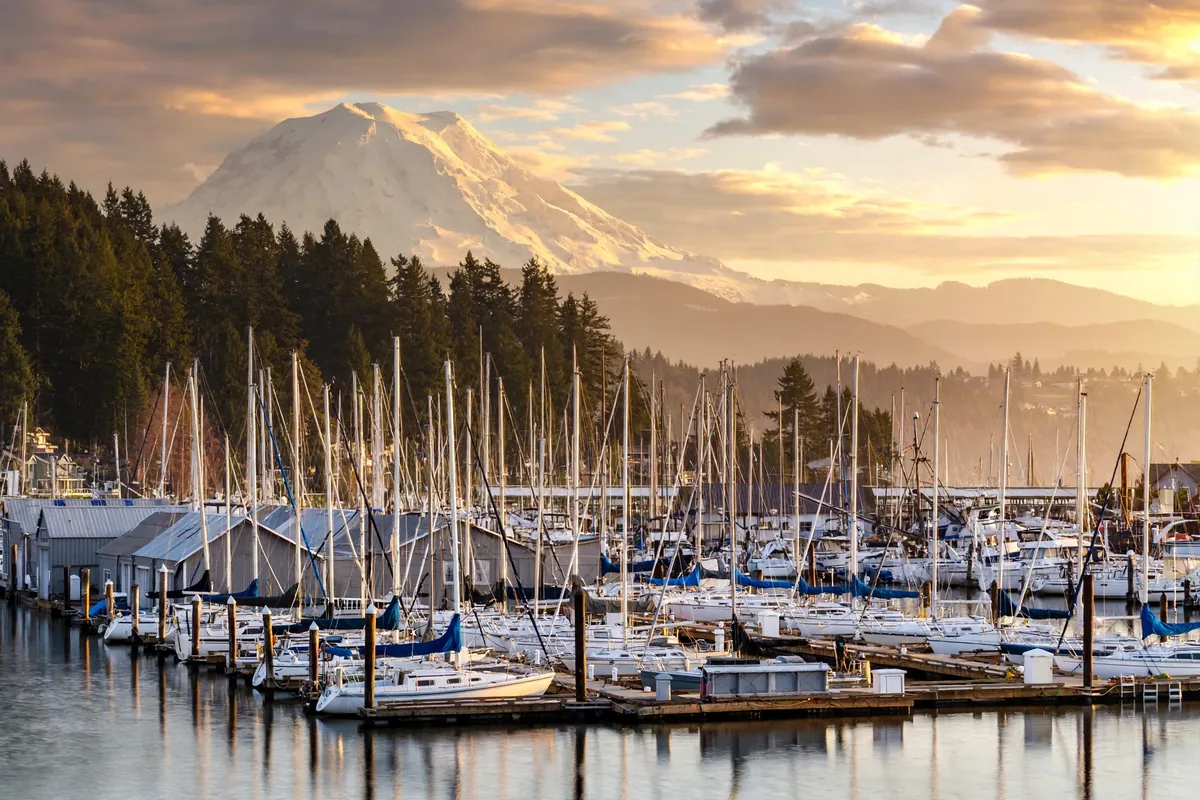
The 360 area code location is western Washington — everything west of the Cascade Mountains that isn’t part of the greater Seattle metropolitan core. Its footprint runs from the Oregon border in the south all the way to the Canadian border in the north, covering roughly 126 cities across 19 counties. The territory wraps around the dense Puget Sound metro, taking in the Olympic Peninsula, the San Juan Islands, Whidbey Island, the southwestern Sound, and the Columbia River border region.
It helps to think of 360 as the ring around Seattle and Tacoma. The big central Puget Sound cities got their own codes in the 1997 splits (206 for Seattle proper, 253 for Tacoma and the South Sound, 425 for Bellevue, Everett, and the Eastside). The 360 area code took everything else — the coast, the islands, the southwest corridor along I-5, and the northern cities toward Canada.
The major cities inside 360
The anchor cities of the 360 territory read like a tour of western Washington:
- Olympia (Thurston County) — Washington’s state capital and the region’s government hub.
- Vancouver (Clark County) — the largest city on the Oregon border, directly across the Columbia River from Portland.
- Bellingham (Whatcom County) — the northern gateway city near Canada, home to Western Washington University.
- Bremerton (Kitsap County) — the naval shipyard city across the Sound from Seattle.
- Longview (Cowlitz County) — a Columbia River port city with deep roots in the timber and paper industries.
- Mount Vernon (Skagit County) — the Skagit Valley hub, famous for its spring tulip fields.
- Aberdeen (Grays Harbor County) — the timber-town city on the Pacific coast.
- Port Angeles (Clallam County) — the Olympic National Park gateway on the Strait of Juan de Fuca.
- Centralia (Lewis County) — a historic I-5 corridor city between Olympia and Vancouver.
- Anacortes (Skagit County) — the ferry terminal city for the San Juan Islands.
- Port Townsend (Jefferson County) — known for its Victorian architecture and arts community.
- Oak Harbor (Island County) — the main town on Whidbey Island.
- Port Orchard (Kitsap County) — across the water from Bremerton on Sinclair Inlet.
Beyond these, dozens of smaller communities — from Ocean Shores and Westport on the coast to Mount St. Helens’ gateway towns in the east of the territory — all sit inside the same code.

Step 2: Know What 360 Does Not Cover
Just as important as knowing where 360 is: knowing where it isn’t. The code stops at the edges of the Puget Sound metro, which is divided among three other area codes:
- 206 — Seattle proper and the close-in Sound: Shoreline, Mercer Island, Bainbridge Island, Burien, SeaTac, Tukwila.
- 253 — Tacoma and the South Sound: Federal Way, Kent, Auburn, Puyallup, Lakewood, Pierce County.
- 425 — the Eastside and the north Sound: Bellevue, Redmond, Kirkland, Everett, Bothell, Lynnwood, Renton.
- 509 — everything east of the Cascades: Spokane, Yakima, the Tri-Cities, Wenatchee, Walla Walla.
And then there is 564, which is not a neighboring code at all — it is an overlay. Since 2017, the 564 area code has shared the exact same geography as 360. A neighbor in Bellingham or Olympia could have either a 360 or a 564 number, and both are equally local. If you see 564 on caller ID from western Washington, that is not a mistake or a scam flag on its own — it is the same territory.
Step 3: Learn the History of the Code
The 360 area code is relatively young, but its roots go back to the very first days of area codes in North America.
In 1947, area code 206 covered the entire state of Washington — every telephone from Seattle to Spokane to the Olympic Peninsula. It was one of the original 86 area codes in the North American Numbering Plan. That lasted for decades: in 1957, area code 509 was split off for eastern Washington, but 206 still served the whole western half of the state.
By the early 1990s, the Seattle region’s growth was straining the 206 numbering supply. On January 15, 1995, area code 360 was carved out of 206 to serve greater western Washington — the Olympia–Bellingham–Vancouver territory plus the peninsula and the islands. Two years later, on April 27, 1997, the remaining 206 was split three ways in a single day: 206 kept Seattle proper, 253 took Tacoma and the South Sound, and 425 took Bellevue, Everett, and the Eastside.
Even the new 360 eventually needed help. In 2017, area code 564 was overlaid on the 360 territory to add numbering capacity. Unlike a split, an overlay doesn’t move anyone’s number — existing 360 users kept theirs, and new lines in the same area could be assigned either 360 or 564. The overlay has since been expanded to cover other parts of western Washington as well.

Step 4: Dial It Right Every Time
Because the 564 overlay shares 360’s territory, ten-digit dialing is mandatory across the entire region. There is no local seven-digit dialing in the 360 area — you must dial the area code plus the number for every call, even to the house next door.
| Call type | Dial this format | Example |
|---|---|---|
| Local call | Area code + 7-digit number | 360-555-0142 |
| U.S. long distance | 1 + area code + number | 1-360-555-0142 |
| International (from abroad) | +1 + area code + number | +1 360 555 0142 |
If you are texting a 360 number, standard messaging formats work the same way — save the contact with the full ten digits and you will never have a failed send.

Step 5: Mind the Clock
The entire 360 area code runs on Pacific Time — PST (UTC-8) in the winter, shifting to PDT (UTC-7) during daylight saving time, which runs from the second Sunday in March to the first Sunday in November. That puts western Washington three hours behind Eastern Time and one hour behind Mountain Time year-round.
The practical takeaway: if you are calling a 360 number from the East Coast, 9 a.m. your time is only 6 a.m. theirs. Business callers from other time zones should plan for a 9 a.m. to 5 p.m. Pacific window.
Step 6: Handle Suspicious Calls the Right Way
One honest caveat about area codes in general: an area code is a routing prefix, not proof of where the caller actually is. Spoofing technology lets callers fake any caller ID, so a call from a 360 number might come from anywhere. Judge the request, not the digits.
If a 360 call feels off — pressure tactics, threats, demands for payment by gift card or wire transfer — don’t engage. Hang up, look up the organization independently, and call back on a number you trust. You can report suspected scam or spoofed calls to the FCC and the FTC, which track abuse patterns and can direct carriers to block confirmed offenders. You can find more phone-and-carrier explainers on 9bio, which covers mobile and telecom topics regularly.
Step 7: Get a 360 Number and Use It Well
For businesses, a local number still matters. A 360 number tells Olympia, Bellingham, or Vancouver customers that you belong in western Washington — and customers answer local numbers more often than unfamiliar out-of-state ones. You don’t need an office in the territory: cloud phone providers can assign a virtual 360 number to a business anywhere, routing calls through the standard telephone network while presenting a local western Washington identity on every outbound call. Signing up takes minutes — pick the number, connect it to your existing phone or app, and the line is live.
A standard 360 number typically costs a few dollars a month through a business phone plan. Memorable or “vanity” sequences — repeating digits, easy patterns — are a different market: number brokers sell them for one-time fees that can run from a few hundred to several thousand dollars depending on demand. For most small businesses, a plain standard number in 360 does the job; what matters is the local prefix, not the pattern.
If you’re moving into the 360 area, two habits save headaches. First, when you hand out your number, always give all ten digits — because your neighbor might have a 564 number, seven digits no longer get the job done even locally. Second, update the places where your phone number is your identity: banks, two-factor authentication apps, delivery services, and the accounts that text you verification codes. Number portability means you can usually keep your old number when you move, but if you’re switching to a 360 line, do the account updates before you decommission the old one.
State government offices in Olympia, healthcare systems, the naval presence in Bremerton, and the tourism trade around the Olympic Peninsula and the San Juan Islands all operate on 360 numbers — so legitimate 360 calls range from state offices to ferry reservations to your kid’s school. And texting works exactly like calling: save 360 contacts with the full ten digits and your messages go through. If your phone offers call screening or spam filtering, turn it on; the first line of defense is always skepticism toward the request, not the number.
360 Area Code at a Glance
| Detail | Fact |
|---|---|
| Area code | 360 |
| State | Washington |
| Coverage | Western Washington outside the Seattle–Tacoma metro core |
| Major cities | Olympia, Vancouver, Bellingham, Bremerton, Longview, Mount Vernon, Aberdeen, Port Angeles, Centralia |
| Approximate reach | About 126 cities across 19 counties |
| Year introduced | January 15, 1995 (split from 206) |
| Overlay | 564 (in service since 2017) |
| Dialing | Ten digits mandatory for all local calls |
| Time zone | Pacific Time (UTC-8 / UTC-7 DST) |
| International format | +1 360 XXX XXXX |
FAQs
What cities does the 360 area code cover?
The 360 area code covers western Washington outside the Seattle–Tacoma metro, including Olympia, Vancouver, Bellingham, Bremerton, Longview, Mount Vernon, Aberdeen, Port Angeles, Centralia, Anacortes, Port Townsend, and Oak Harbor — about 126 cities across 19 counties.
Is 360 in Washington or Oregon?
It is in Washington. Vancouver, Washington sits right on the Oregon border across the Columbia River from Portland, which is why the question comes up — but 360 is a Washington area code, entirely within the state.
Is 564 the same as 360?
Not exactly, but they share identical geography. The 564 area code is an overlay on the 360 territory, added in 2017. Either code can be assigned to new lines anywhere in the same region, and ten-digit dialing is required for every local call.
What time zone is area code 360?
Pacific Time — PST (UTC-8) in winter and PDT (UTC-7) during daylight saving time, from the second Sunday in March to the first Sunday in November.
Do I have to dial the area code for local 360 calls?
Yes. Ten-digit dialing (area code + number) is mandatory for all local calls in the 360/564 region, because the overlay means seven digits alone no longer identify a unique line.
How do I call a 360 number from outside the U.S.?
Dial your country’s international exit code, then 1 (the U.S. country code), then 360 and the seven-digit number — for example, +1 360 555 0142.
Can I get a 360 number if I don’t live in Washington?
Yes. Cloud phone providers can assign virtual 360 numbers to businesses and individuals anywhere, routing calls through the standard telephone network while showing a local western Washington identity to callers.
The 360 area code is one of those codes that rewards a closer look: it looks like a backwater on a map, but it holds a state capital, a border city of a quarter-million people, a university town, and some of the most visited national park land in the country. Whether you’re dialing in, moving there, or just trying to place a missed call, the essentials never change — western Washington, ten digits, Pacific Time, and a 564 overlay sharing the same ground.
Read Also: 801 Area Code Utah: Complete Location & Dialing Guide (2026)
Related Stories
971 Area Code: Portland, Oregon Coverage Guide
The 971 area code serves the Portland, Oregon area as an overlay to 503. Here is what that…
203 Area Code Guide to Southwest Connecticut (2026 Guide)
Everything you need to know about the 203 area code — where it is, which cities it covers,…

413 Area Code: Complete Western Massachusetts Guide
Area code 413 is the single area code for western Massachusetts, in use since 1947. This guide covers…