Woodworking Television Shows Worth Watching in 2026
Woodworking television has taught millions of people to build with confidence. Here is how to find the shows that match your skill level, your shop, and the projects you actually want to make.
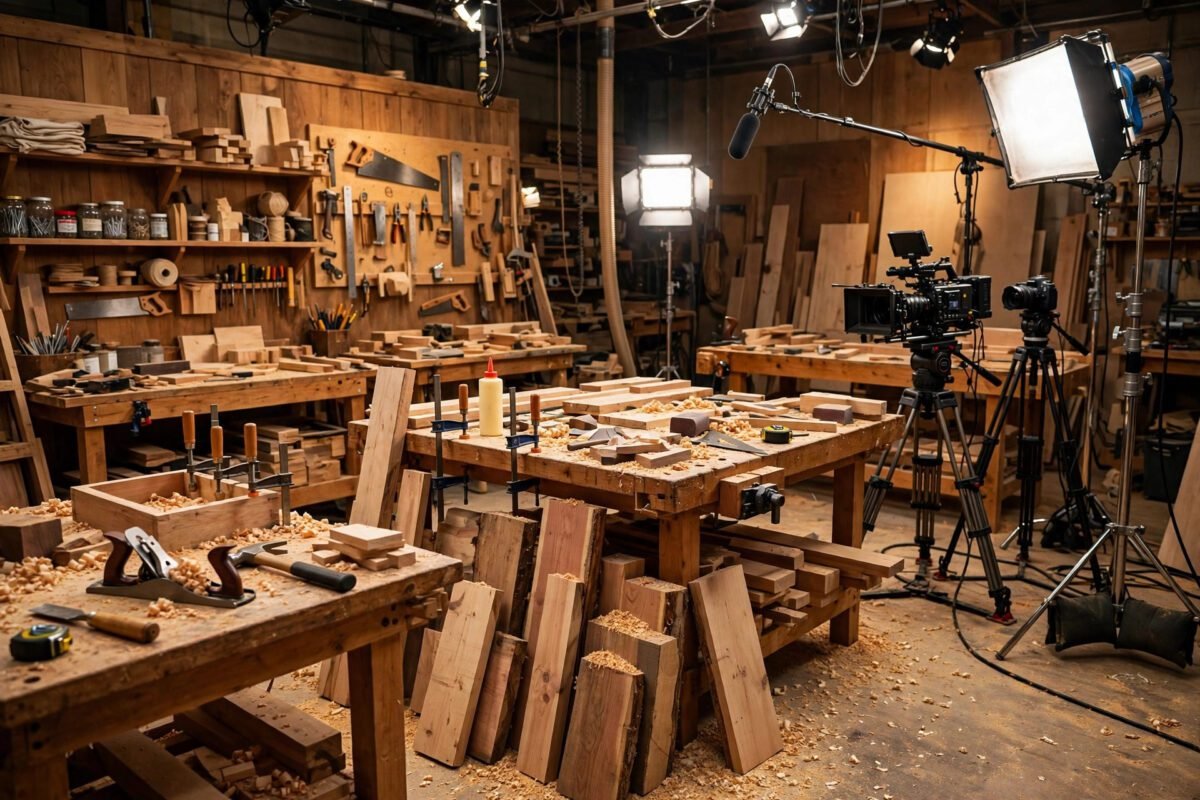
Woodworking television is one of the easiest ways to learn the craft without leaving your living room. A good show does more than entertain. It shows you how a cut is made, why a joint holds, and what a finished project should look like at each stage. If you have ever watched someone turn rough lumber into a bookshelf in under half an hour and thought, “I could try that,” you already understand the appeal.
The short version: start with a show that matches your current skill level, watch a full project from start to finish before you buy any lumber, and treat the first project you attempt as practice rather than furniture. The shows that teach best are the ones that slow down for the tricky parts, explain their mistakes, and show real measurements instead of skipping ahead.
Woodworking Television Shows Worth Watching in 2026
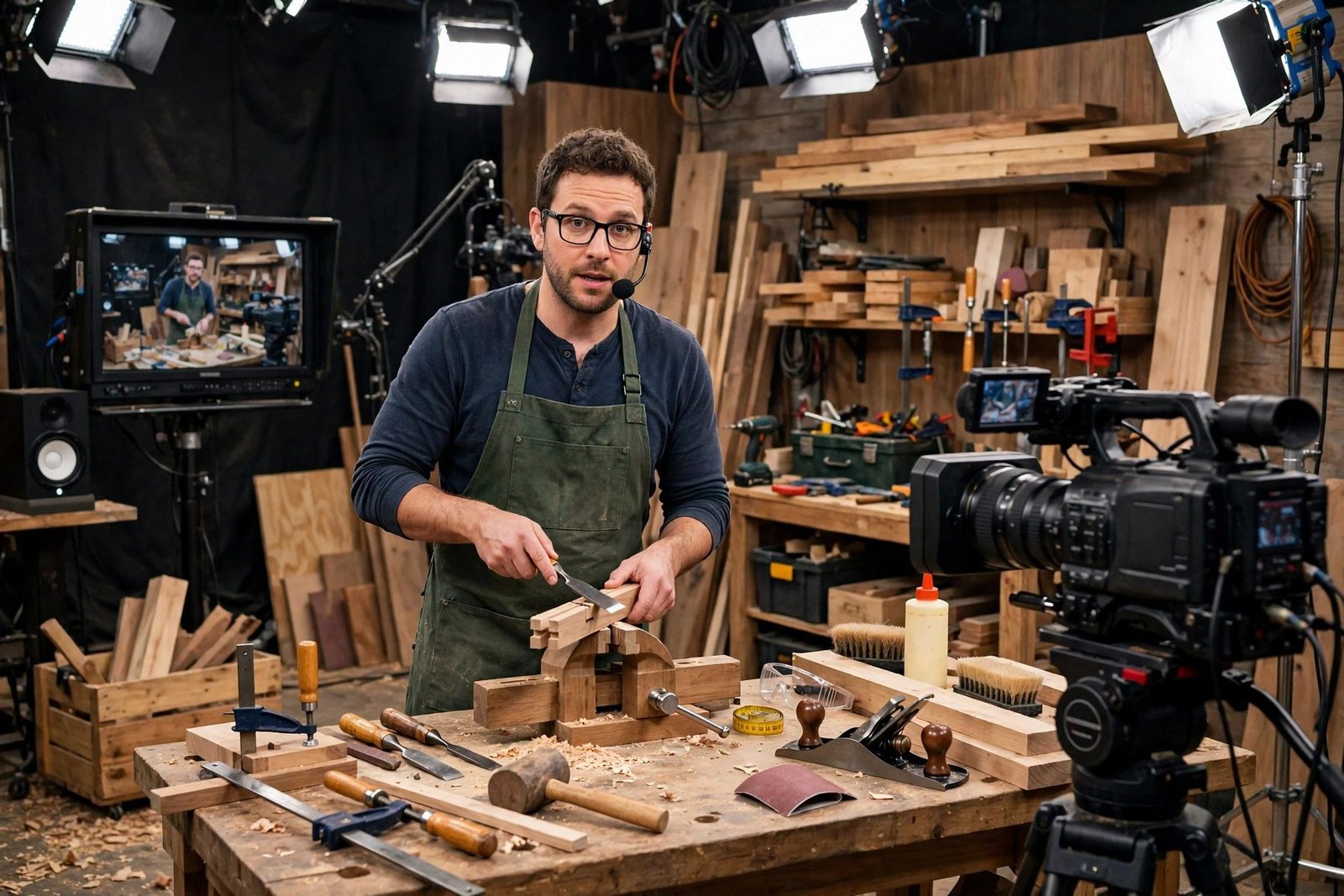
There is a surprising amount of woodworking on television and streaming services right now, and the quality varies a lot. Some programs are aimed at complete beginners who have never held a chisel. Others assume you already own a table saw and know your way around a router table. A few are closer to competitions or home makeover shows, where the woodworking is real but the timeline is compressed for drama. Knowing which kind of show you are watching matters, because it changes what you should take away from it.
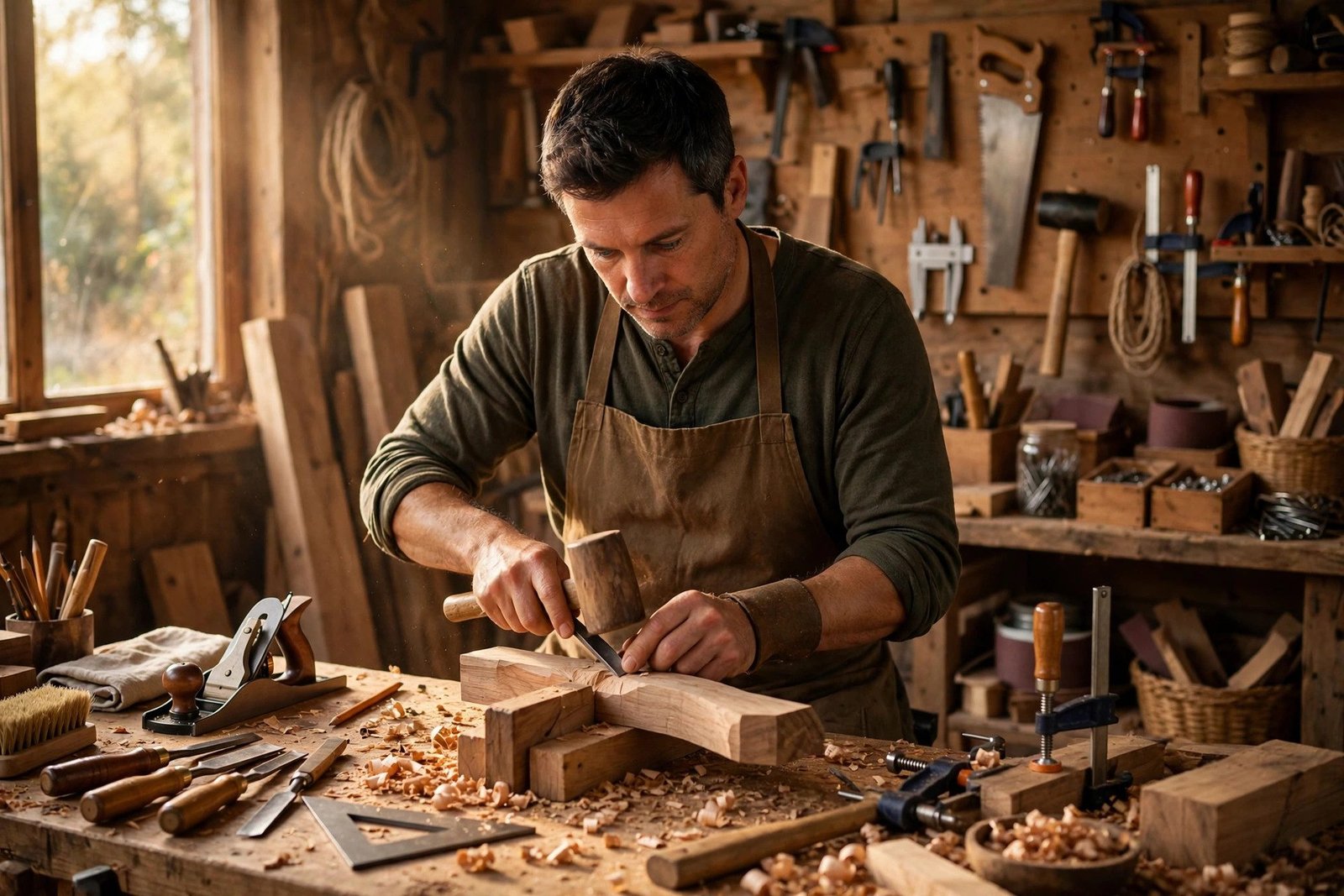
The classic workshop show is still the backbone of the genre. One host, one shop, one project at a time. These shows tend to move slowly, explain each tool before it is used, and repeat the safety basics every episode. That pace can feel old-fashioned, but it is exactly what a beginner needs. When a host spends three minutes showing how to set a fence on a table saw, that is not filler. That is the difference between a clean cut and a ruined board.
Then there are the build-along shows, where the host works on a single project across an episode or a short series of episodes. These are great once you have a few simple projects under your belt, because they show the whole arc of a build: choosing lumber, milling it square, cutting joints, gluing up panels, sanding, and finishing. Watching the full arc teaches you something a single tip never will, which is how long each stage actually takes and where beginners usually rush.
Competition shows are a different animal. They are fun, and they can introduce you to techniques you have never seen, but they are not the best teachers. Contestants work under time pressure with tools most home shops do not have, and the editing hides most of the measuring, test fitting, and fixing. Enjoy them for inspiration, but do not judge your own pace against theirs.
Finally, there are the project-focused online series that now sit alongside traditional television. Many of these are produced by working woodworkers in their own shops, and the best of them are as good as anything that ever aired on a broadcast channel. The trade-off is that there is no editor or network checking their advice, so you need to be a little more careful about whose methods you copy.
Why Watching Beats Reading When You Are Starting Out
Woodworking is a physical skill, and some things are genuinely hard to learn from text alone. A written description of a hand plane taking a shaving sounds simple. Watching the shaving curl off the board, hearing the sound it makes, and seeing how much pressure the woodworker applies tells you ten times as much. The same goes for sharpening, for feeding a board through a planer, and for knowing when glue has been spread evenly enough.
Television also teaches workshop habits that books tend to skip. You see where the host stands when making a cut. You see how they hold a workpiece against a fence. You see them check a measurement twice, cut once, and still test the fit before gluing. These small habits are what separate a frustrating afternoon from a satisfying one, and they sink in faster when you watch them than when you read a list of rules.
That said, watching alone will not make you a woodworker. The learning happens when you go to the shop and try the thing you just watched. A good rule is to watch one project all the way through, then attempt a simpler version of it yourself before moving on to the next show. Your first version will not look like the one on screen, and that is fine. The point is to get the feel of the tools in your hands.
Step 1: Pick Shows That Match Your Skill Level
Start by being honest about where you are. If you have never used a power saw, look for shows that say “beginner” in the description and mean it. The host should explain terms like rip cut, crosscut, and dado instead of assuming you know them. The projects should use a short list of tools, ideally ones you already own or can borrow.
If you have built a few things already, you can move up to shows that assume basic tool knowledge and spend their time on joinery, design choices, and finishing. These shows will frustrate a beginner and bore no one else, which is why matching matters. There is nothing wrong with watching above your level for inspiration, but do your actual learning from shows aimed at your level.
A practical way to sort shows is to watch the first ten minutes of an episode. If the host explains every tool and every cut, it is a beginner show. If they mention a tool by name and move on, it is intermediate. If they skip the measuring entirely and jump to assembly, it is entertainment first and instruction second. All three have a place. Just know which one you are watching.
Step 2: Watch a Full Project Before You Buy Anything
This step saves more money than any tool discount ever will. Before you buy lumber or a new tool for a project you saw on television, watch the entire episode or series first. Pay attention to the full tool list, the size of the boards, and the finishing supplies. Many projects that look simple on screen turn out to need a specific jig, a particular router bit, or a finish that takes days to cure.
Watching first also lets you spot the parts you are not ready for. If a project involves cutting dovetails by hand and you have never cut a dovetail, you have two sensible options: practice dovetails on scrap wood first, or pick a different project that uses joints you already know. What you should not do is buy expensive hardwood and discover the hard joint halfway through.
Keep a small notebook or a note on your phone while you watch. Write down the project name, the key techniques, the tools used, and anything the host warns against. These notes become your shopping list and your build plan, and they keep you from rewatching the same episode three times trying to remember one measurement.
Step 3: Set Up a Safe Place to Practice
You do not need a large shop to start woodworking, but you do need a safe one. A sturdy workbench or a solid table, good lighting, and enough room to move around the workpiece without bumping into things will cover most beginner projects. A garage, a basement corner, or even a driveway on a dry day can work, as long as you can clamp your work down and keep the area clear of clutter.
Safety gear is not optional, and every reputable woodworking show will say so. Eye protection, hearing protection for loud power tools, and a dust mask for sanding are the basics. Keep loose clothing, jewelry, and long hair away from spinning tools. Unplug a tool before changing a blade or bit. These rules sound obvious until you are tired at the end of a long build, which is exactly when they matter most.
One habit worth copying from television hosts: they clean up between steps. Sawdust on the floor is a slipping hazard, and offcuts piled on the bench get in the way of the next cut. A quick sweep and a clear bench take two minutes and prevent a surprising number of mistakes.
Step 4: Build the Project, Then Watch the Episode Again
Here is a trick that experienced woodworkers use with instructional shows. Build the project once, accepting that it will be imperfect. Then watch the episode again. The second viewing is completely different, because now you know which parts were hard, which steps you rushed, and where your result differs from the host’s. You will notice details you missed the first time: the order they sanded in, the way they supported a long board, the pause they took before a glue-up.
This second viewing is also when you should think about what you would change. Maybe the project would suit your home better in a different size, or with a different finish, or with simpler joinery. That kind of thinking is the beginning of designing your own projects, which is where woodworking gets really satisfying.
Do not be discouraged if your first few projects look rough. Every woodworker you see on television made rough projects once. The difference is that they kept going, and they learned from each one. A bookshelf that wobbles slightly still holds books, and the next one will be better.
Types of Woodworking Television Shows at a Glance
| Show type | Best for | What to watch out for |
|---|---|---|
| Classic workshop show | Complete beginners | Slow pace, older tools and styles |
| Build-along series | Learning full project arcs | Projects may need tools you do not own yet |
| Competition show | Inspiration and new ideas | Compressed timelines, unrealistic pace |
| Shop tour and technique show | Intermediate skills | Assumes you know the basics already |
| Online workshop series | Specific techniques | Quality varies, no network fact-checking |
Use this table when you are choosing what to watch next. If you are new, start at the top and work down. If you already have a few projects done, jump to the rows that match the skill you want to build next.
Getting the Most From a Show You Love
Once you find a host whose teaching style clicks for you, stick with them for a while. Following one teacher through several projects builds your skills in a sensible order, because good hosts design their projects to build on each other. The first project teaches measuring and straight cuts. The next adds a simple joint. The one after that adds a finish. That progression is worth more than jumping between ten different shows at random.
Many shows also publish project plans, cut lists, and tool lists on their websites. These are worth downloading before you build, because they let you check measurements at your own pace instead of pausing the video every few seconds. If a show offers plans, use them. If it does not, your notes from watching become your plan, and writing them out carefully is good practice in itself.
It also helps to watch with other woodworkers when you can. A local woodworking club, an online forum, or even a friend who builds can turn a show into a conversation. Someone else will notice a detail you missed, or will have tried the same project and can tell you what went wrong for them. Woodworking has always been a social craft, passed from one person to another, and television is just the newest version of that tradition.
Common Mistakes New Viewers Make
The most common mistake is buying tools before building anything. A show makes a tool look essential because the host uses it in every episode, but hosts build every day and you do not. Start with a small set of basic tools, build a few projects, and let your actual experience tell you what you need next. Your second tool purchase will be much smarter than your first if you wait.
Another mistake is copying a project exactly when your space or budget is different. Television shops are large, well lit, and stocked. Your shop is not, and that is fine. A project designed for a large dining table can often be scaled down to a side table using the same techniques. The techniques are the lesson. The exact dimensions are just one example.
A third mistake is skipping the finishing step. Finishing is the least glamorous part of woodworking, and it is tempting to call a project done once it is assembled. But an unfinished project looks unfinished, and it will not last as long. Watch the finishing episodes carefully. Sanding in the right order, applying thin coats, and letting each coat dry properly are skills in their own right, and they are what make a project look like it came from a real shop.
Finally, do not compare your first project to a television project. Television projects are built by professionals, often with help, and edited to hide the mistakes and the waiting time. Your project was built by you, in your shop, on your schedule. That is something to be proud of, rough edges and all.
How Woodworking Television Has Changed
Woodworking on television used to mean one host in one shop on a public broadcasting channel, and those shows still have a loyal audience for good reason. They were calm, careful, and genuinely instructional. What has changed is the sheer variety available now. There are shows about restoring old furniture, shows about building with hand tools only, shows about turning bowls on a lathe, and shows about building entire cabins. Whatever corner of woodworking interests you, someone is probably filming it.
Streaming has also changed how people watch. Instead of catching an episode once a week, viewers can now watch a whole series in a weekend, rewatch the tricky parts, and pause on a measurement. That is a real improvement for learning, as long as you resist the urge to binge-watch ten projects without building any of them. Watching feels like progress, but only building is progress.
The other change is who gets to host. Traditional television favored a narrow kind of presenter, but online series have opened the field to a much wider range of woodworkers, including people building in small apartments, people working with reclaimed lumber, and people specializing in one craft like carving or turning. That variety means you are more likely to find a host whose shop looks like yours and whose projects fit your life.
FAQs
What is the best woodworking television show for a complete beginner?
Look for a classic workshop show where the host explains every tool, works slowly, and builds simple projects like boxes, shelves, and small tables. The best beginner show is the one whose pace you can follow without pausing every minute, so try a few episodes from different hosts and stick with the one that feels clearest to you.
Do I need expensive tools to follow along with woodworking shows?
No. Most beginner projects can be built with a small set of basic tools: a saw, a drill, a measuring tape, a square, clamps, and sandpaper. Many shows list the tools for each project, so check the list before you start and skip projects that need tools you do not have yet. Buy new tools as your projects demand them, not before.
Are competition woodworking shows useful for learning?
They are useful for inspiration and for discovering techniques you might not have seen, but they are not the best way to learn a technique properly. The time pressure and heavy editing hide the measuring, fitting, and fixing that real builds involve. Watch them for fun, and learn techniques from slower instructional shows.
Can I learn woodworking just by watching television?
Watching teaches you a great deal, but the real learning happens when you build. Treat shows as your classroom and your shop as your homework. Watch a project fully, then build a simpler version of it, and you will learn faster than by watching alone.
How do I choose my first project from a show?
Pick a project that uses tools you already own, uses joints you have tried or can practice on scrap first, and makes something you actually want in your home. A small shelf, a cutting board, or a simple box are all excellent first projects, and finishing one of them will give you the confidence to tackle something bigger next.
Is it worth paying for a streaming woodworking series?
It can be, if the series teaches a skill you want and the free episodes give you a clear sense of the host’s teaching style. Before paying, watch the free episodes, check whether project plans are included, and make sure the projects match your tools and skill level. A paid series you actually build from is good value. One you only watch is not.
Read Also: Chlor Calcium Explained: Uses, Safety and Practical Guide
Related Stories

Lord of the Rings T Shirt: Styles, Designs and Buying Guide
A Lord of the Rings t shirt is the easiest way to wear Middle-earth. This guide covers the…

Adidas Men’s Trefoil Essentials Oversized Cotton T-Shirt
The adidas men's trefoil essentials oversized cotton t-shirt pairs a relaxed, roomy fit with the classic Trefoil logo.…

Armenian: Language, People, Culture and History Guide
What does Armenian mean? A friendly guide to the Armenian language, its unique alphabet, the Armenian people, and…
1 response