Joh Jos Meaning, Winery And Name Origins (2026 Guide)
Joh Jos explained: the Johann Josef abbreviation behind a famous Mosel winery, plus what Joh and Jos mean as names and how to read the label.
“Joh Jos” looks like a name, but it reads more like a puzzle. Type it into a search engine and you will find wine lovers, baby-name guides, and German abbreviations all pointing in slightly different directions. The good news is that those directions connect. Joh Jos is, above all, a traditional abbreviation: “Joh. Jos.” stands for “Johann Josef,” and its most famous use is on the labels of a renowned German wine estate. The two halves of the abbreviation are also names in their own right, each with its own history and meaning. This guide untangles all three threads, so that whether you found the phrase on a wine bottle, in a family record, or in a list of baby names, you will know what it means.
Joh Jos Meaning, Winery And Name Origins (2026 Guide)
The short version: “Joh. Jos.” is a traditional German abbreviation for the given names Johann Josef. It appears most prominently in the name of Weingut Joh. Jos. Prüm, a German wine grower and producer based in Bernkastel-Wehlen, in the Mosel wine region of Germany. The estate was founded in 1911 by Johann Josef Prüm, and the abbreviated form of his name has stayed on its labels ever since. Separately, Joh is a short form of John, meaning “God is gracious,” and Jos is a Dutch short form of Jozef, or Joseph, meaning “he will add.” So the same two syllables can be an abbreviation, a winery name, or two given names, depending on where you meet them.
That layered meaning explains why the search results feel scattered. A wine drinker meets Joh Jos on a bottle. A genealogist meets it in an old parish register or a business name, where space was short and abbreviations were standard. A parent meets Joh and Jos separately while browsing names. None of these uses is wrong, and each one illuminates the others, because they all trace back to the same European naming tradition in which long, formal names were shortened for daily use.
The Winery Behind the Name: Weingut Joh. Jos. Prüm
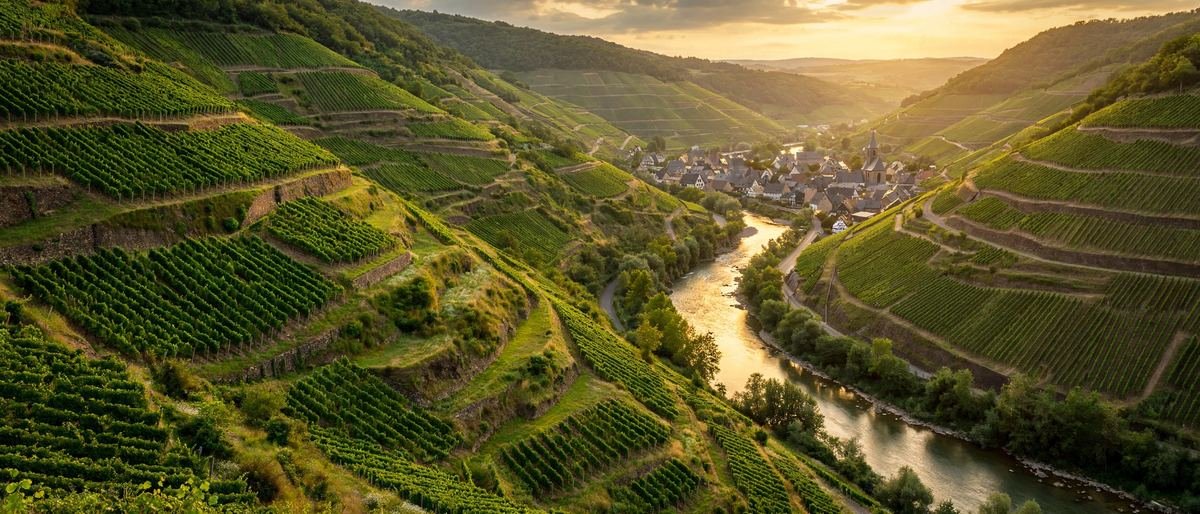
The most prominent use of Joh Jos belongs to wine. Weingut Joh. Jos. Prüm is a German wine estate based in Bernkastel-Wehlen, a village in the Mosel region, one of Germany’s most celebrated wine areas. The Mosel is famous for steep vineyard slopes along a winding river, where vines grow on hillsides so sharp that much of the work must still be done by hand. The region is best known for white wines, and its estates have built reputations over generations rather than seasons.
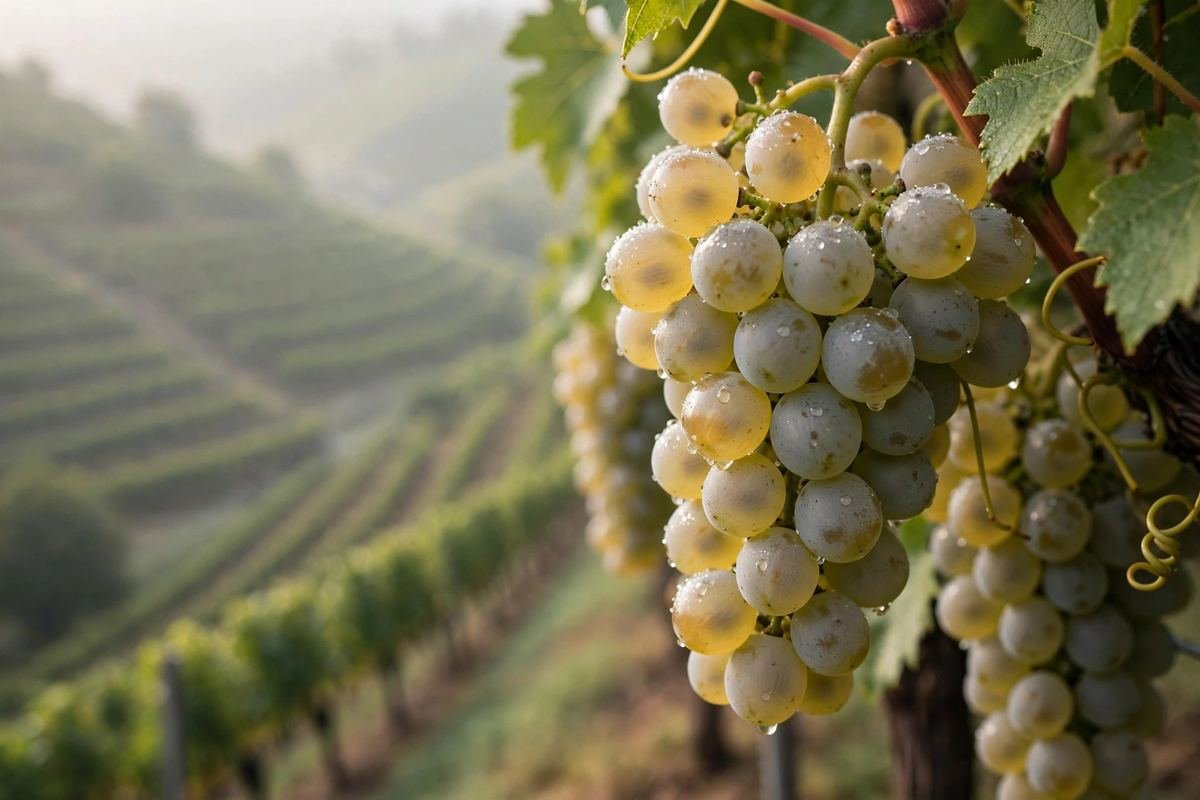
Ripe white wine grapes on a steep Mosel hillside vineyard.
The Prüm family has had a presence in Wehlen for over 400 years, a depth of history that puts the estate’s story in perspective. The estate itself was founded in 1911 by Johann Josef Prüm, after the splitting up of an earlier winery, the S.A. Prum estate. In 1920, his son Sebastian started working for the estate, beginning the family succession that has kept the name alive. When a business carries its founder’s name in abbreviated form, the abbreviation becomes a brand in its own right. Wine lovers who may never have heard the full name Johann Josef recognise “Joh. Jos. Prüm” instantly, and the dots in “Joh. Jos.” signal the old-fashioned, formal style of the label.
That old-fashioned style is part of the appeal. German wine labels are famously detailed, and traditional producers tend to keep their presentation unchanged for decades. The abbreviation is not a modern logo or a marketing invention. It is the way the founder’s name was written in the records and correspondence of his time, preserved on the label as a mark of continuity. When you see it, you are looking at a naming habit from the early twentieth century, still in daily use.
Why German Names Were Abbreviated This Way
Abbreviations like “Joh. Jos.” were once standard practice across German-speaking Europe. Formal given names were long, documents were handwritten, and space on labels, signs, and registers was limited. Shortening Johann to “Joh.” and Josef to “Jos.” saved time and room while remaining perfectly clear to anyone in the community, because everyone knew the conventions. The dots matter: they mark the words as shortened forms, the same way English abbreviations once kept their full stops.
This habit also explains why the same abbreviation can appear in different contexts. A business founded by a man named Johann Josef would naturally be recorded as “Joh. Jos.” followed by the surname. A church register might record a baptism the same way. A wine label follows the same logic, and because labels are printed rather than handwritten, the abbreviation froze in place and became permanent. Understanding that convention turns a confusing label into a readable one: expand each shortened word, and the founder’s full name appears.
Step 1: Read a Joh. Jos. Prüm Label
Start with the producer name itself. On the label, “Weingut” means wine estate, so “Weingut Joh. Jos. Prüm” reads as “the wine estate of Johann Josef Prüm.” The rest of a German wine label usually gives the village, the vineyard site, the grape variety, and the style or ripeness level of the wine. Read those elements one at a time rather than trying to absorb the whole label at once, and the bottle becomes much less intimidating. The producer name tells you who made the wine, the village and vineyard tell you where the grapes grew, and the remaining details describe what is inside the bottle.
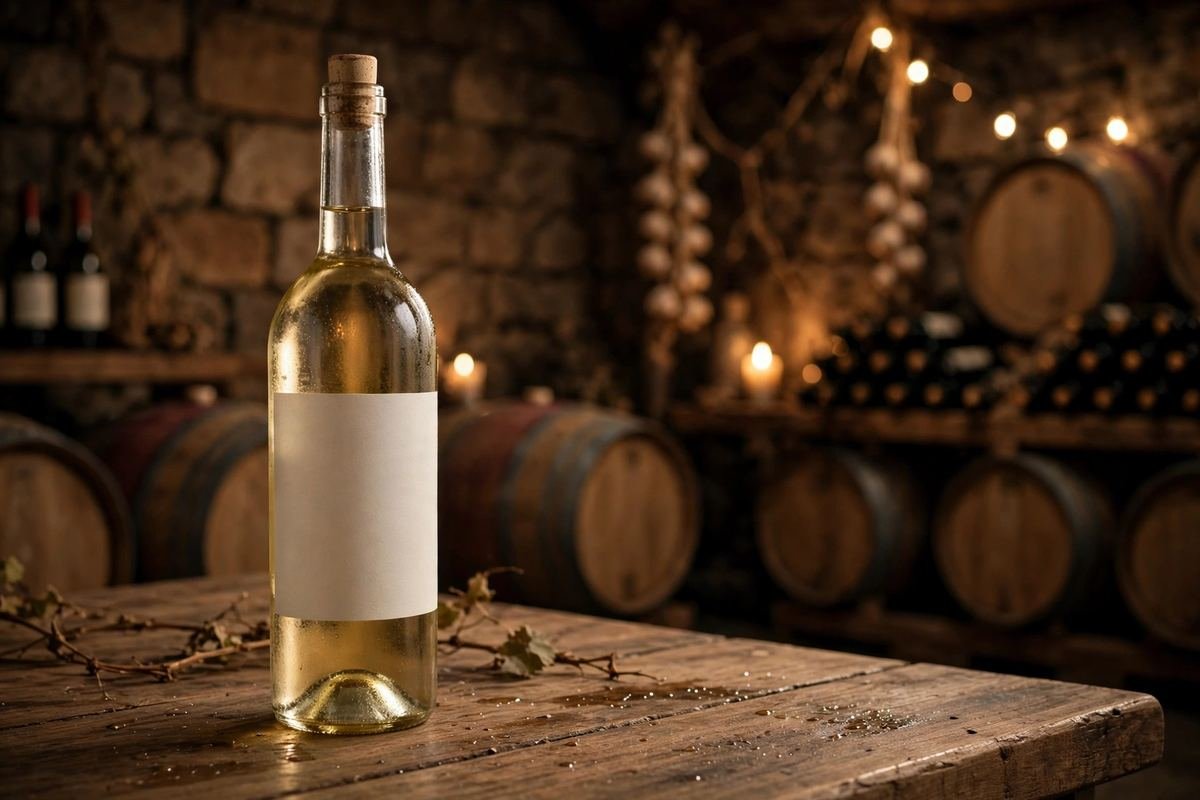
A bottle of white wine with a plain, elegant label in a wine cellar.
Step 2: Place the Wine in the Mosel
Next, place the estate on the map. Bernkastel-Wehlen sits in the Mosel region, where the river loops through steep slate slopes. The Mosel’s climate is cool, its growing season is long, and its wines are known for freshness, fragrance, and a balance between sweetness and acidity. Knowing the region helps you set expectations before you taste. A Mosel white wine will usually feel lighter and more aromatic than a wine from a warmer region, and it will often pair well with foods that carry their own spice or salt.
Step 3: Taste With the History in Mind
Finally, taste with the history in mind, if you are of legal drinking age and choose to try the wine. A bottle from an estate with four centuries of family presence in its village carries a story that a new brand cannot match. That story does not make the wine better by itself, and no honest guide should claim otherwise. But it does explain the price, the presentation, and the care that goes into each vintage. Drink it the way you would visit an old building: appreciate the craftsmanship, notice the details, and judge the result on its own merits.
Joh as a Name: Meaning and Origin
Away from wine, Joh stands on its own as a given name. It is a short form of John, which comes from the Hebrew name Yohanan or Yochanan, meaning “Yahweh is gracious” or “God is gracious.” The name John travelled through Greek, in the form Ioannes, and Latin before reaching the languages of northern Europe, where it was shortened in various ways. Joh is one of those shortenings, used in Scandinavian and other European contexts as a concise, single-syllable form of Johannes or John.

An open old book and pen on a wooden desk, reflecting the history of the names Joh and Jos.
Joh is predominantly used as a name for boys, and it carries the same religious and historical weight as John itself, in a much smaller package. John the Baptist is the most famous bearer of the longer name, and centuries of kings, saints, and ordinary people have carried it since. A parent choosing Joh today usually wants that history without the length, or wants a name that works easily across languages. Its brevity is its charm: one syllable, easy to spell, and instantly recognisable as part of the John family.
Jos as a Name: Meaning and Origin
Jos has a different path. It is a boy’s name of Dutch origin, most often used as the short form of Jozef, which is the Dutch, Slovak, and Albanian form of Joseph. Joseph comes from the Hebrew name Yosef, meaning “he will add.” In Dutch usage, Jos is pronounced roughly like “yaws,” and it has variants including Joop, Joep, Joos, and Joost. Like Joh, it takes a long and weighty biblical name and trims it to a single syllable that suits everyday use.
The meaning, “he will add,” gives Jos a warm, hopeful character that parents often like. It also connects the name to the biblical Joseph, a figure known for wisdom and resilience. In the Netherlands and Belgium, Jos is a familiar, unpretentious name, the kind that belongs to neighbours and colleagues rather than to royalty. Its simplicity is the point. Where Joseph can feel formal, Jos feels friendly, and that friendliness has kept it in use for generations.
Joh and Jos Side by Side
| Name | Origin | Longer form | Meaning |
|---|---|---|---|
| Joh | Hebrew, via John and Johannes | John / Johannes | God is gracious |
| Jos | Dutch, via Jozef | Joseph / Jozef | He will add |
| Joh. Jos. | German abbreviation | Johann Josef | The two names combined |
Seen together, the pair tells a small story about European naming. Both names come from Hebrew roots, both passed through the church and the Bible into everyday European life, and both were shortened by speakers who needed practical, daily forms of formal names. Johann Josef, the full German form, simply combines the German versions of John and Joseph. When a German speaker wrote “Joh. Jos.” in 1911, they were using the same shortening instinct that gives us Joh and Jos as names today. The winery label and the baby-name guides are two branches of one tradition.
Other Places You Might Meet “Joh Jos”
The abbreviation can also appear in historical and business contexts beyond wine. Any German firm founded by a Johann Josef might have used the same shortened form, and old documents, from trade registers to gravestones, use similar abbreviations for many names, not just this one. If you find “Joh Jos” in a family document, the safest reading is to expand it to Johann Josef and look for a surname nearby, which will usually confirm whose name it was.
It is also worth noting what Joh Jos is not. It is not a single first name, and it is not a place. Searches sometimes treat it as one word or one person, but the evidence points the other way: two abbreviated names, joined by the conventions of German business and record-keeping, and made famous by one wine estate. Keeping that distinction in mind prevents confusion when the same phrase appears in unrelated contexts.
A Note on Uncertainty
Search results for an unusual phrase like this one deserve a note of caution. The winery connection is well documented, and the name meanings are consistent across name guides. But the exact query “joh jos” has no single official definition, and different sources emphasise different uses. This guide presents the strongest and best-supported reading: the Johann Josef abbreviation, led by the Prüm estate, with the two names explained on their own terms. If you found the phrase somewhere specific, such as a particular bottle or document, that context remains the best clue to which meaning applies in your case.
FAQs
What does Joh Jos mean?
Joh Jos is short for Johann Josef. “Joh.” is the traditional abbreviation for Johann, and “Jos.” is the traditional abbreviation for Josef. The phrase is best known from the German wine estate Weingut Joh. Jos. Prüm.
What is Weingut Joh. Jos. Prüm?
Weingut Joh. Jos. Prüm is a German wine grower and producer based in Bernkastel-Wehlen, in the Mosel wine region. The estate was founded in 1911 by Johann Josef Prüm, and the Prüm family has had a presence in Wehlen for over 400 years.
What does the name Joh mean?
Joh is a short form of John, from the Hebrew Yohanan, meaning “God is gracious” or “Yahweh is gracious.” It is used as a concise form of Johannes or John, mainly for boys.
What does the name Jos mean?
Jos is a Dutch short form of Jozef, or Joseph, from the Hebrew Yosef, meaning “he will add.” It is pronounced roughly like “yaws” and is most common in the Netherlands and Belgium.
Is Joh Jos a person’s full name?
Not exactly. It is an abbreviated form of the two given names Johann Josef. When it appears with a surname, as in Joh. Jos. Prüm, it identifies a person by their shortened first names plus their family name.
Where is the Mosel wine region?
The Mosel is a wine-growing region in Germany, centred on the Moselle river and its steep vineyard slopes. Bernkastel-Wehlen, home of Weingut Joh. Jos. Prüm, is one of its well-known wine villages.
Joh Jos turns out to be a small phrase with a long history. Expand the abbreviation and you find Johann Josef, a founder whose name has survived on wine labels for more than a century. Split the phrase and you find two names, Joh and Jos, each with a biblical root and a practical, everyday form. Whether you arrived here through wine, genealogy, or baby names, the answer is the same: two short names, one German tradition, and a Mosel estate that keeps them both in use.
Read Also: Weer Natalie Palamides Career And Roles (2026 Guide)
Related Stories

Lord of the Rings T Shirt: Styles, Designs and Buying Guide
A Lord of the Rings t shirt is the easiest way to wear Middle-earth. This guide covers the…

Adidas Men’s Trefoil Essentials Oversized Cotton T-Shirt
The adidas men's trefoil essentials oversized cotton t-shirt pairs a relaxed, roomy fit with the classic Trefoil logo.…
Armenian: Language, People, Culture and History Guide
What does Armenian mean? A friendly guide to the Armenian language, its unique alphabet, the Armenian people, and…
3 responses