King’s Regulations Explained and Their Lasting Impact
King's Regulations were the standing rules that governed army life, discipline, and administration. This guide explains what they covered and why they still matter.
The short version: King’s Regulations were the official book of standing rules issued in the name of the monarch for the governance of the army. They set out, in one authoritative place, how soldiers were to be organised, disciplined, paid, dressed, and administered, and what officers were responsible for in running a unit day to day. They were not a single law passed on one occasion, but a living body of regulations, revised and reissued over time as the army, warfare, and society changed. Understanding them is a useful way to understand how a large, hierarchical organisation kept order long before modern human-resources manuals and employment law.
That last point is worth holding on to, because it is easy to picture King’s Regulations as a dusty curiosity, interesting only to military historians. In reality, they were a working document. Officers consulted them when questions arose about leave, pay, punishment, courts martial, the care of equipment, or the duties of a commanding officer. Soldiers lived under them, whether or not they had ever read the book itself, because its rules shaped their daily routine, their uniform, their conduct on and off duty, and the consequences when they broke the rules. A regulation book, in other words, was not background reading. It was the framework of army life.
If you have come across the phrase in a family history, a regimental museum, an old service record, or a novel set in an earlier era, you may have wondered what it actually meant in practice. Was it a law? Was it the same as the Articles of War? Did it apply to every soldier, or only to officers? This guide answers those questions in plain language, explains the main areas the regulations covered, and traces how their approach to discipline, administration, and accountability still echoes in the rules that govern armed forces today.
What King’s Regulations Were
At their core, King’s Regulations were the monarch’s regulations for the army, issued under royal authority and published for the guidance of all ranks. The name changed with the monarch: when a king reigned, the book was known as King’s Regulations, and when a queen reigned, the equivalent book was known as Queen’s Regulations. That naming convention is itself a reminder that the armed forces have historically served the Crown, and that their governing rules carried the authority of the sovereign rather than simply that of a government department.
The regulations were administrative and disciplinary in character rather than being a criminal code in the ordinary civilian sense. They sat alongside other sources of military law, including the Army Act and its predecessors, and they provided the detailed working rules that those broader laws required. Where a statute might say that discipline was to be maintained, the regulations explained how: who could order what, what procedures had to be followed, what records had to be kept, and what limits applied to a commanding officer’s authority. That division of labour, between broad law and detailed regulation, is familiar in modern government, and the army was an early and thorough example of it.
It is also important to understand that King’s Regulations were not written for one war or one campaign. They were standing regulations, meant to apply in peacetime and in war, at home and abroad, unless a specific order or a local instruction said otherwise. That generality was both a strength and a challenge. It gave commanders a common standard wherever they served, so that a soldier transferred from one regiment to another would find broadly the same expectations. It also meant that the book had to be general enough to cover very different situations, from a barracks in Britain to a garrison overseas, and that commanders still needed judgement to apply its rules sensibly to the circumstances in front of them.
Why an Army Needs a Book of Regulations
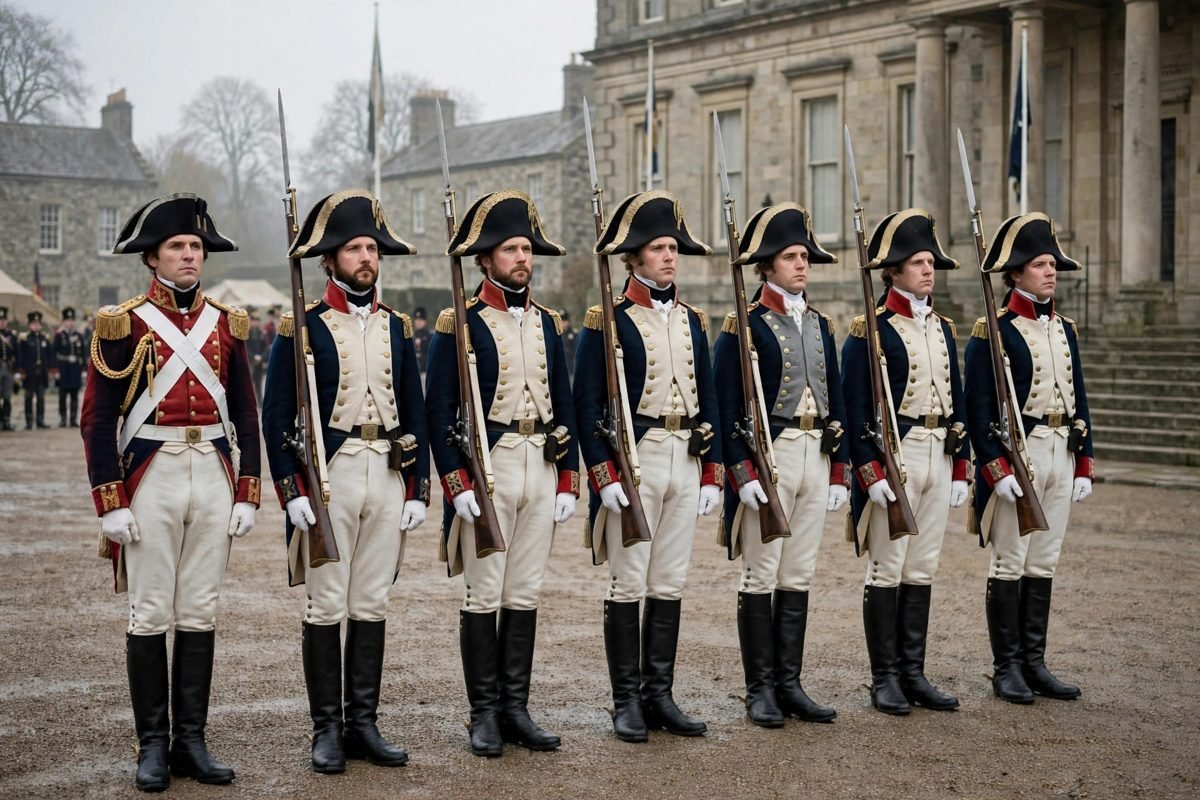
Any organisation with thousands of members, dangerous equipment, and a strict hierarchy needs clear, written rules, but an army needs them more than most. Soldiers are asked to do difficult and sometimes dangerous work, to obey orders promptly, to live closely together, and to represent their country when they are far from home. Without shared standards, that combination would quickly produce confusion, unfairness, and risk. Written regulations gave everyone, from the newest recruit to the most senior officer, a common reference point for what was expected and what would happen when expectations were not met.
Regulations also protected soldiers, not only constrained them. By setting out procedures for complaints, for the handling of pay and allowances, for medical care, and for the conduct of disciplinary proceedings, they placed limits on arbitrary power. A commanding officer could not simply invent a punishment or withhold pay on a whim, because the regulations stated what was permitted and what was not. That protection was imperfect by modern standards, and it reflected the values of its time, but the principle mattered: authority in the army was to be exercised according to published rules, and those rules could be consulted, quoted, and, when necessary, challenged through the proper channels.
There was a practical benefit too. An army is constantly moving people: recruits join, soldiers are posted, units are reorganised, and officers take over new commands. A single book of regulations meant that a new commanding officer did not have to invent a system from scratch, and a soldier posted to a new unit did not have to learn an entirely new way of life. Continuity of that kind is easy to take for granted, but it is one of the reasons large organisations still rely on standing orders, handbooks, and standard operating procedures today, in the military and far beyond it.
The Main Areas the Regulations Covered
The regulations covered a wide range of subjects, and the headings below give a sense of their scope. The exact arrangement changed between editions, as topics were added, reorganised, or removed, but the broad areas remained recognisable across many years.
Organisation and command came first in practical importance, because everything else depended on knowing who was in charge of whom. The regulations dealt with the structure of units, the roles of officers and non-commissioned officers, the chain of command, and the responsibilities that came with each appointment. A commanding officer, for example, carried overall responsibility for the discipline, training, welfare, and administration of the unit, and the regulations spelled out what that responsibility meant in daily practice, from inspecting the unit to ensuring that records were kept properly.
Discipline was the area most people associate with King’s Regulations, and for good reason. The book set out the offences that could be dealt with by a commanding officer, the procedures for hearing a charge, the rights of the soldier accused, and the range of punishments available. It also covered more serious matters that had to be referred to a court martial, and the steps that had to be taken to ensure that such proceedings were fair and properly recorded. The emphasis on procedure, even in an institution built on obedience, is one of the more interesting features of the system, and it reflects a long-standing concern that discipline should be firm but lawful.
Pay, allowances, and conditions of service formed another large part of the regulations. Soldiers needed to know what they would be paid, what deductions might be made, what allowances applied when they were serving away from home or overseas, and what happened to their pay if they were sick, on leave, or under punishment. Officers and administrators needed the same information in order to run the system without constant disputes. By writing these matters down in a single authoritative book, the army reduced the scope for misunderstanding and gave soldiers a basis on which to query an error.
Dress and appearance, often called dress regulations in related publications, were closely connected with King’s Regulations and are sometimes discussed alongside them. Uniform was not a matter of fashion in the army. It identified a soldier’s regiment, rank, and role, it ensured a smart and consistent appearance on parade and on duty, and it carried practical requirements for different kinds of work and climate. The regulations therefore dealt with what was to be worn, when, and how it was to be maintained, and they treated careless or incorrect dress as a disciplinary matter, not merely a personal choice.
Daily life and administration filled much of the rest of the book. The regulations covered the running of barracks, the care and accounting of arms, equipment, and stores, the keeping of records, the arrangements for leave, the handling of correspondence, and the duties of officers in areas such as messing, quarters, and welfare. These topics may sound mundane beside questions of discipline and command, but they were the substance of army life. An army that cannot feed, house, equip, and account for its soldiers cannot fight, and the regulations were, in large part, a manual for keeping that vast logistical and human machine running.
Step 1: Understand the Authority Behind the Rules
The first step in understanding King’s Regulations is to grasp where their authority came from. They were issued in the name of the monarch, and they carried the weight of royal authority, but they operated within the wider framework of military law and parliamentary control. The army itself was governed by statute, and the regulations provided the detailed rules under which that statute was put into practice. That combination, sovereign authority expressed through a published book of rules, gave the regulations both dignity and practical force.
This also explains why the regulations were treated seriously by officers. An officer who ignored them was not merely being untidy or unconventional. The officer was disregarding the standing orders of the service, and could be held to account for doing so. At the same time, an officer who followed the regulations carefully was protected, because the officer could show that a decision had been taken in accordance with the published rules. Authority and accountability, in other words, went together, and the regulations were the document that tied them to each other.
Step 2: See How Discipline Was Meant to Work
Discipline under King’s Regulations was meant to be prompt, fair, and proportionate, even though modern readers may find some of its punishments harsh. The system began with the idea that most offences could and should be dealt with quickly by the commanding officer, so that a unit was not left waiting for weeks while a minor matter was resolved elsewhere. The officer would hear the charge, listen to what the soldier had to say, consider the evidence, and then decide, within the limits set by the regulations, what punishment, if any, was appropriate.
More serious offences, and cases where the punishment available to a commanding officer was not sufficient, were referred to a court martial. The regulations set out how such a court was to be convened, who could sit on it, and what procedures it had to follow. The aim, again, was to combine military efficiency with a recognisable standard of fairness: the accused was to know the charge, to have an opportunity to respond, and to have the proceedings recorded so that they could be reviewed. Historians still debate how well that aim was achieved in practice, and practice certainly varied, but the written standard itself tells us a great deal about what the army claimed to value.
It is also worth noting what discipline was for. It was not punishment for its own sake, and it was not simply about keeping soldiers in line. Discipline was understood as the foundation of reliability under pressure. A unit that obeyed orders, looked after its equipment, and trusted its officers in barracks was more likely to hold together under the stress of active service. That belief shaped the whole approach: small lapses were corrected early, standards were maintained consistently, and officers were expected to lead by example as well as by order.
Step 3: Look at the Officer’s Responsibilities
King’s Regulations placed heavy responsibilities on officers, and particularly on commanding officers, and it is a mistake to read the book as if it were only a list of rules for ordinary soldiers. An officer was responsible not only for giving orders, but for the welfare of the soldiers under command, for the proper use of public money and stores, for the accuracy of records, and for the training and readiness of the unit. Neglect of those duties was itself a serious matter, and the regulations provided for officers to be held to account when they failed in them.
That breadth of responsibility helps explain why officers were expected to know the regulations well. A young officer learning the profession was not simply learning tactics or drill. The officer was learning how to run a unit as an organisation: how to handle pay and leave, how to deal with a disciplinary case, how to inspect stores, how to write a report, and how to look after soldiers who were sick, in trouble, or far from home. The regulations were, in effect, part of an officer’s professional education, and competence in administration was treated as part of competence in command.
Step 4: Trace How the Regulations Changed Over Time
King’s Regulations were not frozen in a single form. They were revised and reissued as the army changed, as new weapons and organisations appeared, as experience in war revealed problems, and as society’s expectations of fairness and welfare evolved. An edition from one era therefore cannot be treated as identical to an edition from another, and researchers who work with service records or regimental histories need to be careful about which edition applied at the time they are studying.
Those changes also tell a broader story. Over time, the regulations reflected a gradual shift towards more formal protections for soldiers, clearer procedures, and greater attention to welfare, education, and conditions of service. That shift did not happen all at once, and it did not happen in isolation from wider social change, but it is visible in the way successive editions treated topics such as complaints, medical care, and the limits of punishment. The book, in that sense, is a record of the army’s own changing understanding of what good command looked like.
King’s Regulations and the Articles of War
Readers often confuse King’s Regulations with the Articles of War, and the distinction is worth making clearly. The Articles of War were an earlier form of military law, setting out offences and punishments in a statutory framework. King’s Regulations, by contrast, were the detailed administrative and disciplinary rules issued under royal authority to govern the day-to-day running of the army. The two worked together, but they were not the same document, and they did not do the same job.
A useful comparison is with a modern workplace. A statute might establish that an organisation must maintain discipline and look after its staff, while a staff handbook explains the procedures, entitlements, and standards that give effect to that requirement. King’s Regulations played the handbook role, but with far greater authority than an ordinary handbook, because they were issued in the sovereign’s name and because they governed an institution in which obedience and discipline carried special importance. Keeping that distinction in mind prevents a common misunderstanding and makes the historical sources much easier to read.
What Replaced King’s Regulations
As military law was modernised, the old system of separate regulations and articles gave way to more unified codes. In Britain, the Army Act and later the Armed Forces Act brought military law into a modern statutory form, and the detailed rules are now found in Queen’s or King’s Regulations for the modern armed forces, together with service-specific publications and joint service regulations. The name, in other words, has survived in a modernised form, even though the contents and the legal framework around them have changed a great deal.
That continuity is significant. Modern regulations still cover many of the same subjects: command, discipline, pay and allowances, dress, administration, and welfare. They still aim to give commanders a single authoritative reference, to protect service personnel through published procedures, and to ensure that authority is exercised lawfully. The language is more modern, the protections are stronger, and the context is very different, but the underlying purpose, a disciplined force governed by clear and lawful rules, would have been recognisable to an officer of an earlier generation.
Other countries with a monarch as head of state, and with armed forces historically modelled on the British pattern, have had their own equivalents, sometimes using similar names. The phrase “King’s Regulations” is therefore most strongly associated with the British Army, but the idea it represents, standing regulations issued in the sovereign’s name for the governance of the armed forces, has a wider history. When you meet the phrase in a Commonwealth context, it is worth checking which country’s forces and which period are meant, because the details will differ even where the name sounds familiar.
Why King’s Regulations Still Interest Researchers
For family historians, King’s Regulations help explain the documents left behind by a soldier ancestor. A service record that notes a punishment, a period of detention, a forfeiture of pay, or a court martial becomes easier to understand once you know the procedure that produced it and the limits that applied to it. A researcher who understands the regulations can ask better questions: was this a summary punishment by a commanding officer, or a more serious matter? What records should exist? Where might they be held? The regulations do not answer every question, but they provide the framework within which the answers make sense.
For military historians, the regulations are a source for the history of command, discipline, and army life, not just for battles and campaigns. They show what the army officially expected of its officers and soldiers, and, when read alongside diaries, letters, and memoirs, they reveal the gap between official expectation and everyday reality. That gap is often where the most interesting history lies, because it shows how rules were interpreted, bent, or resisted by real people in real circumstances.
For anyone interested in organisations and law, King’s Regulations are an early example of a problem that every large institution still faces: how to write rules that are clear enough to be followed, flexible enough to cover different situations, and fair enough to command respect. The army’s answer, a single authoritative book, revised over time, backed by the sovereign’s authority, and covering everything from discipline to dress, was influential, and its echoes can be seen in the standing orders, manuals, and codes of conduct used by armed forces, police services, and other uniformed organisations today.

King’s Regulations at a Glance
| Question | Short answer |
|---|---|
| What were they? | Standing regulations issued in the monarch’s name for governing the army |
| Who did they apply to? | Officers and soldiers, with particular responsibilities for commanding officers |
| What did they cover? | Command, discipline, pay, dress, administration, welfare, and stores |
| How did they relate to military law? | They provided detailed working rules within the wider statutory framework |
| Why did the name change? | It followed the monarch: King’s Regulations under a king, Queen’s Regulations under a queen |
| What survives today? | Modern regulations for the armed forces covering similar subjects in updated form |
FAQs
Were King’s Regulations a law?
They were official regulations issued under royal authority and operating within the framework of military law, rather than a single Act of Parliament on their own. They provided the detailed rules that put broader military law into practice, and officers and soldiers were required to follow them.
Did King’s Regulations apply to ordinary soldiers or only to officers?
They applied to the army as a whole, but they placed particular duties on officers, especially commanding officers. Ordinary soldiers lived under the rules on discipline, dress, pay, and conduct, while officers carried the responsibility for applying and enforcing them fairly.
What is the difference between King’s Regulations and Queen’s Regulations?
There is no difference in kind. The name simply follows the reigning monarch. The same type of book was called King’s Regulations during the reign of a king and Queen’s Regulations during the reign of a queen.
Are King’s Regulations still in force today?
Not in their historic form. Modern armed forces are governed by modern statutes and by current regulations that carry a similar name in updated form. The historic editions are now sources for research rather than working rule books.
Where can I find historic King’s Regulations?
Historic editions are held in national archives, military libraries, and regimental museums, and some have been digitised. A researcher should identify the edition that applied to the period being studied, because contents changed between editions.
Why should a family historian care about King’s Regulations?
Because they explain the procedures behind entries in a service record, such as punishments, courts martial, and pay deductions, and they help a researcher understand what records should exist and what the rules at the time actually allowed.
Read Also: Rivet: Types, Uses, and How to Choose the Right One
Related Stories

971 Area Code: Portland, Oregon Coverage Guide
The 971 area code serves the Portland, Oregon area as an overlay to 503. Here is what that…

203 Area Code Guide to Southwest Connecticut (2026 Guide)
Everything you need to know about the 203 area code — where it is, which cities it covers,…

413 Area Code: Complete Western Massachusetts Guide
Area code 413 is the single area code for western Massachusetts, in use since 1947. This guide covers…
1 response