Bombardier Global 7500 Business Jet (2026 Guide)
The Bombardier Global 7500 is a long-range business jet built for nonstop intercontinental travel, with a four-zone cabin and a range of around 7,700 nautical miles.
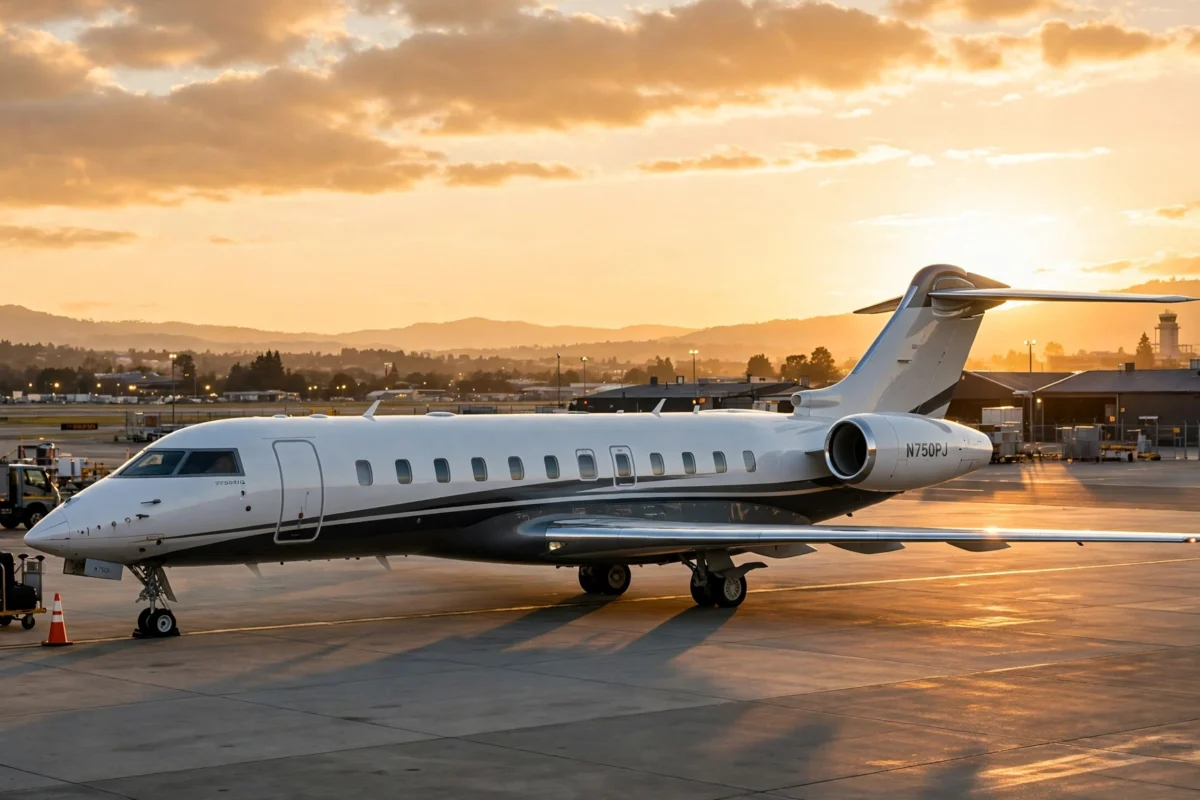
Bombardier Global 7500 Business Jet (2026 Guide)
The short version: the Bombardier Global 7500 is built for people who need to cross oceans without stopping, work comfortably in the air, and arrive rested. It offers a published range of around 7,700 nautical miles, a top speed close to Mach 0.925, and a cabin divided into four distinct living areas. That combination puts it at the top end of the business jet market, alongside a small group of other ultra-long-range aircraft. It is not a jet for short hops or small budgets. It earns its place on routes where time, privacy, and comfort matter more than ticket price, and where a single nonstop flight can replace a day of connections, layovers, and airport queues.
If you are researching this aircraft, you probably fall into one of three groups. You may be considering a purchase or a fractional share. You may be looking to charter it for a specific trip. Or you may simply be curious about what makes one business jet stand out from another when the brochures all promise luxury. This guide speaks to all three, but it focuses on practical questions: how far it really flies, what the cabin feels like on a long flight, what it costs to run, and who it genuinely suits. Where a figure depends on payload, weather, or configuration, this guide says so rather than presenting a best-case number as a promise.
Bombardier is a Canadian aerospace manufacturer with a long history in business aviation, and the Global family is its flagship line. The Global 7500 entered service in late 2018, after a development programme that included extensive flight testing. Since then it has become a familiar sight at major business aviation airports, from London and New York to Dubai and Singapore. Its reputation rests less on a single headline feature and more on the way range, cabin size, speed, and ride quality come together. Plenty of jets are fast. Plenty are comfortable. Few do both over distances that cover most city pairs on earth.
What the Bombardier Global 7500 Is
At its simplest, the Global 7500 is a large-cabin, ultra-long-range business jet. It is powered by two GE Passport engines, carries a crew of two pilots plus cabin crew on longer trips, and typically seats between eight and nineteen passengers depending on how the owner configures the cabin. Most owners settle somewhere in the middle, with seating for around twelve to fourteen people, because that leaves room for a proper bed, a dining area, and space to move around without the cabin feeling crowded.
The aircraft is about 111 feet long with a wingspan of roughly 104 feet, and it can cruise at altitudes up to 51,000 feet. Flying that high matters for two reasons. First, it gets the jet above most weather and much of the commercial traffic, which usually means a smoother ride and more direct routing. Second, thinner air at altitude helps fuel efficiency on long sectors, which is part of how the aircraft achieves its range. Passengers notice the altitude in another way too: the cabin is pressurised to a relatively low altitude, which helps reduce fatigue on a fourteen-hour flight.
One feature that gets a lot of attention is the wing. Bombardier designed a new, highly flexible wing for this aircraft, and the result is a notably smooth ride in turbulence compared with older designs. Anyone who has flown commercially through rough air will understand why that matters. On a long flight, a smoother ride is not a luxury detail. It is the difference between arriving able to work and arriving exhausted. The aircraft also has a well-regarded approach and landing performance for its size, which opens up a wider choice of airports than some large jets can use, although it still needs a proper runway and is not a small-airfield aircraft.
Range and Performance in Plain Terms
Range figures in aviation always come with conditions, so it helps to know what the headline number means. The Global 7500’s published range of around 7,700 nautical miles assumes a typical passenger load, favourable winds, and standard reserves. In practice, that translates into nonstop flights such as New York to Hong Kong, London to Los Angeles, or Singapore to San Francisco, depending on winds on the day. Headwinds, a full cabin, extra baggage, or a need for an alternate airport can all trim the practical range, and a good flight planning team will work those factors in before promising a nonstop sector.
Speed is the other half of the equation. The aircraft cruises comfortably in the Mach 0.85 region, with a maximum operating speed near Mach 0.925. On a long flight, even a small speed advantage adds up: over fourteen hours, it can be the difference between landing before dinner and landing after it. That said, operators rarely fly at maximum speed all the way, because fuel burn rises sharply at the top end. The usual trade-off is between arriving sooner and carrying enough reserve fuel for a comfortable margin, and professional crews manage that balance on every flight.
| Feature | Bombardier Global 7500 (typical) |
|---|---|
| Published range | Around 7,700 nautical miles |
| Maximum speed | Close to Mach 0.925 |
| Typical cruise | Around Mach 0.85 |
| Maximum altitude | 51,000 feet |
| Typical seating | 12 to 14 passengers in most layouts |
| Cabin zones | Four distinct living areas |
| Engines | Two GE Passport turbofans |
For charter passengers, the practical question is simpler: can it fly my route nonstop, and how long will it take? A charter operator will answer that with a specific flight plan, including departure and arrival airports, expected flight time, and any fuel stop if one is needed. If a route is right at the edge of the aircraft’s range, it is worth asking what happens if winds are worse than forecast. A reputable operator will have a clear answer, and a fuel stop planned in advance is far better than a surprise diversion.
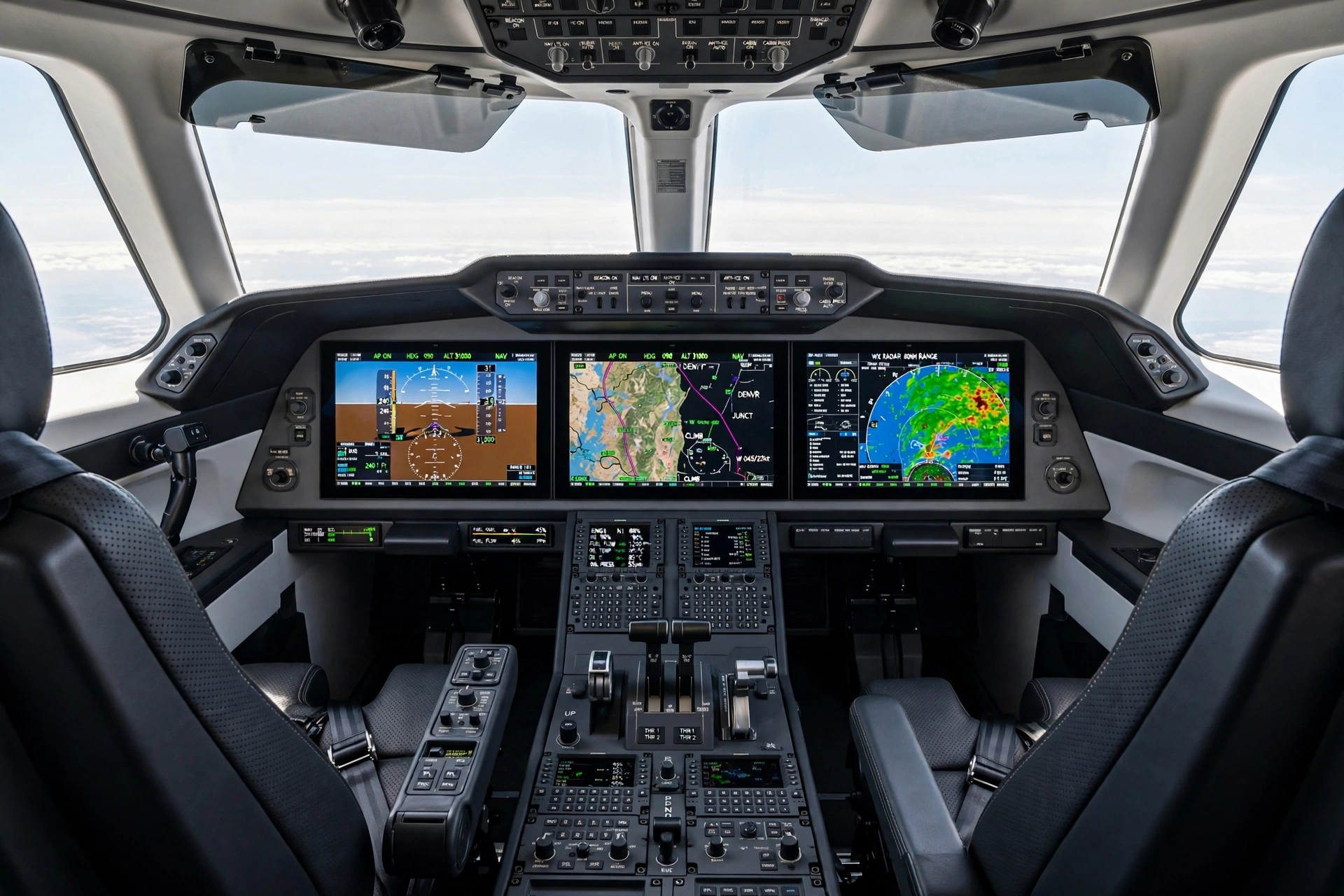
Inside the Cabin: Four Rooms in the Sky
The cabin is where the Global 7500 most clearly justifies its size. At roughly 54 feet long, 8 feet wide, and over 6 feet of headroom, it is large enough to divide into four zones without any of them feeling cramped. A typical layout runs from front to back as a club seating area, a conference and dining area, a private stateroom with a bed, and an aft lounge or crew rest area, though owners rearrange these zones to suit their own needs. The point of the zones is that different things can happen at once: one group can hold a meeting while another sleeps, and neither disturbs the other.
Two cabin features deserve a mention because passengers actually notice them. The first is the Nuage seat, Bombardier’s own design, which tilts and reclines in a way that keeps the body better supported over many hours than a conventional recliner. On a short flight any seat feels fine. On a fourteen-hour flight, the difference between a good seat and a great one is real. The second is the lighting system, which can mimic the time of day at the destination and help passengers adjust to a new time zone. It sounds like a small detail, but on long-haul travel, anything that eases jet lag is welcome.
Connectivity is now a basic expectation rather than a luxury. The Global 7500 offers high-speed Ka-band satellite internet, which supports video calls, large file transfers, and streaming for most of the flight. Speeds vary with coverage and the number of users, and satellite internet at 45,000 feet will never feel exactly like office broadband, but for business travellers it is usually good enough to work properly. The galley is also large for a business jet, with enough space to prepare proper meals rather than simply reheat them, and the baggage hold is accessible during flight, which is handy on long trips when someone needs something from a suitcase mid-flight.
Noise levels are another quiet advantage. The cabin is well insulated, and conversation at normal volume is easy even during climb. Combined with the smooth ride, the result is a cabin where people can sleep, which is arguably the most valuable feature of all. A business jet that lets its passengers arrive rested is doing its main job well, whatever else it offers.

Step 1: Decide Whether You Need This Much Range
Start with your real routes, not the brochure. List the city pairs you fly most often, and note which ones currently require a stop. If most of your flying is under three hours, an ultra-long-range jet is more aircraft than you need, and a smaller jet will be cheaper to buy, fuel, and maintain. If you regularly fly eight hours or more, or you fly routes where a fuel stop wastes half a day, the Global 7500’s range starts to pay for itself in time saved and in the ability to schedule departures around your day rather than around an airline timetable.
Step 2: Choose Between Buying, Sharing, and Chartering
Buying outright suits organisations that fly several hundred hours a year and want full control over the aircraft, crew, and schedule. Fractional ownership, where you buy a share of an aircraft and a set number of hours, suits regular but less intensive users who want guaranteed availability without running a flight department. Chartering suits occasional users, one-off trips, and anyone who wants to try the aircraft before committing. Each route has very different costs, so compare them on the same basis: total annual cost for the hours you actually fly, including positioning flights, crew, maintenance, and hangarage where they apply.
Step 3: Check the Cabin Layout Against Your Trips
Ask to see the specific aircraft you would fly, not just a generic brochure layout. Count the proper beds, not just seats that recline. Check whether the dining table seats your usual group. If you travel with children, ask about a layout that keeps them comfortable without taking over the whole cabin. If you work on board, check power outlets, table space, and internet performance. A cabin that looks impressive in photographs can still be wrong for your group if the layout prioritises looks over usable space.
Step 4: Get Real Operating Numbers Before You Commit
Ask any seller, fractional provider, or charter operator for realistic figures for your routes: flight time, fuel, landing and handling fees, catering, and crew costs. Charter prices vary widely with route, season, aircraft availability, and positioning, so a single quoted figure for one trip tells you little about the next. For buyers, the larger costs are crew salaries, scheduled maintenance, insurance, and hangarage, and these continue whether the aircraft flies or not. A good advisor or management company will lay these out before you sign anything, and if the numbers are vague, treat that as a warning sign.
Step 5: Fly It Before You Buy It
Whenever possible, charter the same model for a real trip before buying or taking a share. A demonstration flight around the local area will not tell you how the cabin feels after ten hours, how the internet holds up mid-ocean, or whether the bed works for you. One genuine long flight answers more questions than a week of brochures. If you are chartering rather than buying, the same advice applies in smaller form: confirm the exact aircraft, its layout, and its age and condition before you pay, because two jets of the same model can feel quite different inside.
What It Costs to Own and Operate
Honest cost figures for an aircraft like this are hard to pin down, and any article that quotes a single fixed price for ownership should be read with care. The purchase price of a new Global 7500 is in the tens of millions of dollars, and pre-owned examples trade at prices that depend heavily on age, hours, maintenance history, and interior condition. Annual operating costs for an owner who flies regularly run into several million dollars once crew, fuel, maintenance, insurance, and hangarage are added together. Charter rates are usually quoted per flight hour plus fees, and they move with demand, so the only reliable figure is a written quote for your specific trip.
That said, cost alone is rarely the deciding factor for this class of aircraft. The buyers are usually measuring cost against the value of executive time, the ability to visit several cities in one day, and the privacy of travelling without a public schedule. A chief executive who can hold meetings in three cities in a day, sleep on board, and be home the next morning is buying time as much as transport. For charter users, the comparison is usually against first-class commercial travel plus hotels and lost working days, and on some routes the private jet wins that comparison even before comfort is counted.
There are also costs that surprise first-time buyers. Maintenance on a large jet is scheduled in detail, and major inspections take the aircraft out of service for weeks. Crew training, regulatory compliance, and record-keeping all need professional management. Most owners therefore use a management company to run the aircraft day to day, which adds a fee but removes a large administrative burden. Anyone considering ownership should budget for that management from the start rather than discovering it later.
For readers weighing the wider costs of travel and time, it is worth comparing notes across different kinds of guides. The travel and lifestyle coverage at 9bio and the general interest articles at adailyinsight360 take a similar practical approach to working out what a big purchase or a long journey really involves.
Who Flies the Bombardier Global 7500
The typical users fall into a few clear groups. Large companies use it for senior executives who need to reach distant operations quickly and privately. Governments and heads of state use it for official travel where security and schedule control matter. Charter operators fly it for clients who need intercontinental range on short notice, including business teams, entertainers on tour, and families travelling together. Fractional providers offer it to clients who fly long-haul regularly but not enough to justify full ownership.
It is also popular with people who simply value their time above all else. A family flying from the east coast of the United States to Europe for a holiday can leave after school or work, sleep on board, and arrive in the morning without an overnight hotel at a hub airport. A medical team can move equipment and personnel across continents in a single flight. A film crew can carry gear that would be difficult to check commercially. In each case, the aircraft is a tool rather than a status symbol, even if it is an expensive one.
Who it does not suit is equally clear. If you fly short domestic routes, a light or midsize jet will do the job for far less money. If you fly rarely, chartering on the occasions you need it will almost always beat owning. If your group is small and your routes are served well by commercial airlines, the time saved may not justify the cost. Being honest about that is part of choosing well: the best aircraft is the one that fits your actual travel, not the most impressive one in the brochure.

How It Compares With Its Rivals
The Global 7500’s closest rivals are other ultra-long-range jets, notably Gulfstream’s G700 and Dassault’s Falcon 10X. Each has its own strengths, and the differences are often a matter of cabin layout, delivery timing, service network, and personal preference rather than a single decisive advantage. Gulfstream has a long record in this segment and a wide support network. Dassault’s offering emphasises cabin size and a different design philosophy. Bombardier competes on range, ride quality, and the flexibility of its four-zone cabin.
| Question to ask | Why it matters |
|---|---|
| Can it fly my longest route nonstop? | A fuel stop can add hours and disrupt a schedule. |
| Does the cabin sleep my group properly? | Real beds matter more than seat count on overnight flights. |
| How good is the support network where I fly? | Maintenance access affects reliability and downtime. |
| What is the true hourly cost for my usage? | Fixed costs dominate at low utilisation. |
| How soon can I actually get one? | Delivery slots for new large jets are often booked well ahead. |
For most buyers, the sensible approach is to shortlist two or three models, fly each one if possible, and compare them on the routes you actually fly with the cabin layout you actually need. Brochure comparisons are a starting point, not a decision. A good broker or aviation consultant can arrange demonstrations and provide operating data, and their fee is small compared with the cost of choosing the wrong aircraft.
Common Mistakes to Avoid
- Judging the jet by seat count alone, rather than by beds, table space, and room to move on a long flight.
- Assuming the headline range applies on every route in every season, regardless of winds and payload.
- Budgeting only for fuel and charter rates, and forgetting crew, maintenance, hangarage, and management costs.
- Choosing a cabin layout that photographs well but does not suit the people who will actually fly in it.
- Skipping a real long flight in the aircraft before committing to a purchase or a fractional share.
- Ignoring the service network in the regions you fly to most, which affects how quickly problems get fixed.
FAQs
How far can the Bombardier Global 7500 fly nonstop?
Its published range is around 7,700 nautical miles, which covers most intercontinental city pairs. The practical nonstop range on a given day depends on winds, passenger and baggage load, and the need for an alternate airport, so a flight planner should confirm each specific route.
How many passengers does it carry?
It can be configured for up to nineteen passengers, but most layouts seat twelve to fourteen in comfort, with proper beds and dining space. The best layout depends on whether you prioritise meetings, sleeping, or carrying a larger group.
How fast is the Global 7500?
It cruises at around Mach 0.85 and can reach close to Mach 0.925 at maximum speed. Operators usually cruise below maximum speed to balance fuel burn and arrival time.
Can I charter a Global 7500 for one trip?
Yes, charter operators offer it by the trip, subject to availability and positioning. Prices vary widely with route, season, and demand, so get a written quote for your exact itinerary before committing.
Is it worth buying one?
Ownership makes sense mainly for organisations or individuals flying several hundred hours a year who need guaranteed availability and schedule control. For occasional use, chartering or a fractional share is usually far more cost-effective.
What makes the cabin different from other business jets?
Its size allows four separate zones, so people can work, eat, and sleep at the same time without disturbing each other. The dedicated bed, large galley, and in-flight baggage access are practical advantages on long flights, not just cosmetic ones.
The Bottom Line
The Bombardier Global 7500 is not the right jet for everyone, and it does not pretend to be. It is a specialised tool for long-distance travel, built around a simple idea: that a flight of twelve hours or more should be productive, restful, and scheduled around the passenger rather than the airline. If your travel fits that description, few aircraft do the job better. If it does not, a smaller jet or a charter arrangement will serve you just as well for far less money. Either way, the decision should rest on your real routes, your real group, and real operating numbers, not on the brochure.
Read Also: Alternative Learning System Meaning Explained (2026)
Related Stories

2025 Lincoln Corsair Complete SUV Review (2026 Guide)
The 2025 Lincoln Corsair is a compact luxury SUV that pairs a quiet, comfortable cabin with a choice…

Transfer Case Transfer Case: Your 4WD Guide (2026)
A transfer case is the gearbox in a four-wheel-drive vehicle that splits engine power between the front and…

How to Lease a Toyota Tacoma (2026): Complete Guide to Deals, Costs & Terms
Leasing a Toyota Tacoma can cost less per month than you expect — but only if you understand…
1 response