DJI Action 5 Action Camera Buying Guide (2026 Guide)
The DJI Action 5 is a compact, waterproof action camera built for sports, travel, and vlogging, with strong stabilisation and a bright dual-screen design.
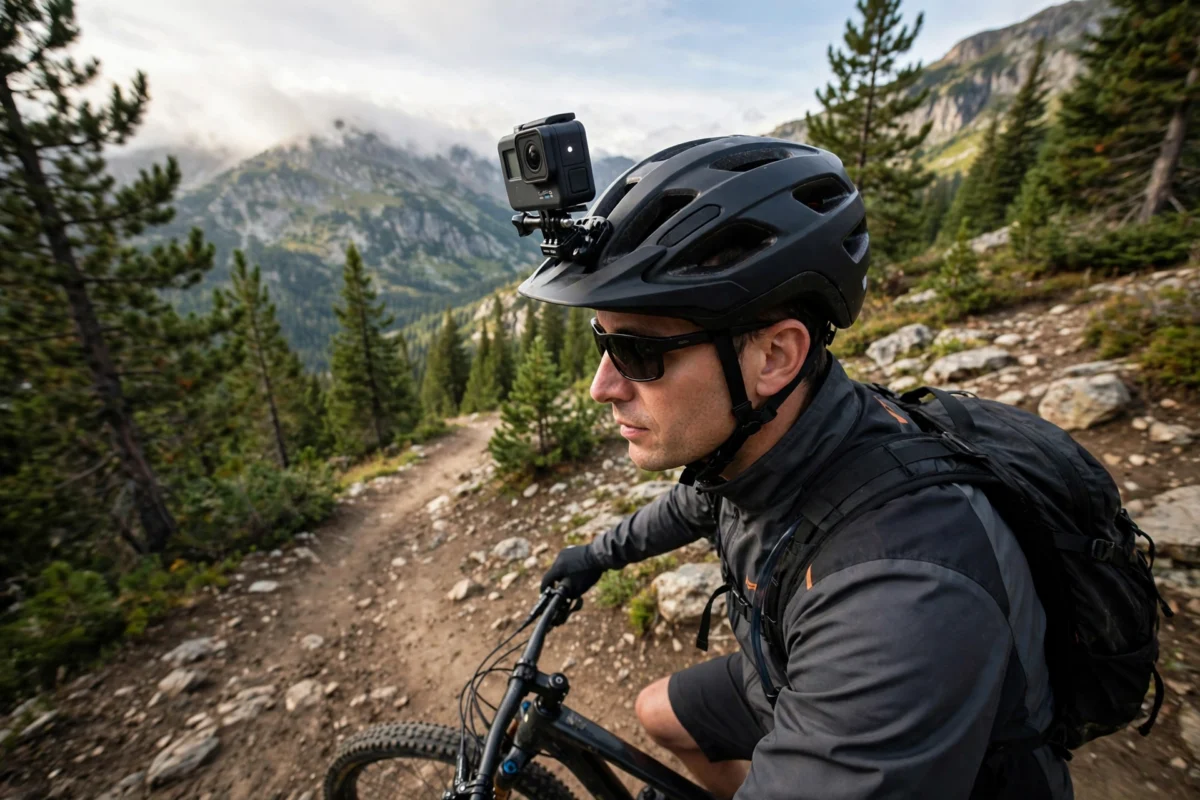
DJI Action 5 Action Camera Buying Guide (2026 Guide)
The short version: the DJI Action 5 is a small, tough camera made for people who want good video without carrying a big setup. It shoots sharp 4K footage, keeps it steady while you move, survives water and knocks, and is easy enough that you can hand it to a friend and get usable clips straight away. If you film sports, travel, cycling, surfing, or everyday vlogs, it covers most of what you need in a pocket-sized package. If you mainly film in very dark rooms or want the shallow depth of field of a large-sensor camera, a different kind of camera will serve you better, and this guide explains where that line sits.
Action cameras have changed a lot in the last few years. Early models were mainly for strapping to a helmet and hoping for the best. Modern ones are closer to small production tools, with touchscreens on both sides, voice control, magnetic mounts, and stabilisation that used to require a separate gimbal. The DJI Action 5 sits in that modern group. DJI is best known for drones, but its action camera line has become a serious rival to the established names, and the Action 5 is the model most buyers will compare first. This guide looks at what it actually does well, where it falls short, and who should buy it.
One note before the details: specifications for cameras like this are often quoted in ideal conditions, and real results depend on light, settings, and how you hold the camera. This guide sticks to what matters in everyday use and flags where a claim depends on conditions. Prices also move with bundles, sales, and accessories, so treat any price you see as a snapshot and check current listings before buying rather than relying on a figure quoted months ago.
What You Get in the Box and How It Feels
The DJI Action 5 is a small rectangular camera, roughly the size of a matchbox but thicker, with a large touchscreen on the back and a smaller selfie screen on the front. It feels solid without being heavy, and the buttons are large enough to use with gloves or wet hands, which matters when you are on a bike or in the sea. The lens is protected by a removable cover, so a scratch does not mean replacing the whole camera, and the mount system uses magnets plus a clip, which makes swapping between a helmet, handlebar, or chest mount much quicker than screwing and unscrewing mounts each time.
In the standard box you typically get the camera, a battery, a protective frame, a quick-release mount, and a USB-C cable. Adventure or creator bundles add extra batteries, a charging case, selfie sticks, and mounts, and for most buyers a bundle with at least one spare battery is worth the extra cost. Action camera batteries drain faster than phone batteries, especially when shooting 4K with stabilisation on, and a second battery changes a day of filming from frustrating to relaxed. Memory cards are usually sold separately, so budget for a fast microSD card from a reputable brand, since slow cards can cause recording to stop unexpectedly.
Image Quality: Sharp, Colourful, and Forgiving
In good daylight, the DJI Action 5 produces clean, detailed 4K video with natural colours and plenty of dynamic range for a camera this size. It handles bright skies and shaded subjects better than older action cameras, which tended to blow out the sky or crush shadows. The footage looks good straight out of the camera, which is what most people want: you can cut it, post it, and move on without spending an evening colour grading. If you do want more control, the camera offers a flatter colour profile that keeps more detail for editing, plus manual exposure controls for those who know how to use them.
Photos are solid for a camera of this type, though they will not replace a good phone or mirrorless camera for stills. The wide lens is great for landscapes and group shots but distorts faces close to the edges, so it is not the best choice for portraits. For social media, travel snaps, and thumbnails, the quality is more than enough. The front screen helps here too: you can frame yourself properly for selfies and vlogs without guessing, which is a bigger deal than it sounds when you are filming alone.
Stabilisation is one of the strongest reasons to choose this camera. Electronic stabilisation smooths out walking, running, and cycling footage to a degree that looks almost gimbal-like in most situations. It crops the image slightly, as all electronic stabilisation does, and very violent shaking will still show, but for normal action it transforms shaky handheld clips into watchable footage. There is also a horizon lock mode that keeps the horizon level even when the camera tilts, which is excellent for mountain biking and skiing, though it crops further and is best used when you know you need it.
Step 1: Decide What You Will Film Most
Before comparing specs, write down your three most common uses. A surfer needs waterproofing and a floaty mount. A cyclist needs a secure handlebar mount and long battery life. A travel vlogger needs good audio, a front screen, and easy transfers to a phone. The DJI Action 5 covers all three reasonably well, but your priorities decide which accessories matter and whether a rival with a particular strength, such as better low-light video or a larger sensor, would suit you better.
Step 2: Choose Your Bundle, Not Just the Camera
Compare the total cost of camera plus the accessories you will actually use. A cheap body with three separately bought batteries and mounts often costs more than a bundle. If you film all day, get the multi-battery charging case. If you film in water, get a float grip so a dropped camera does not sink. If you vlog, consider a small microphone or the wireless mic option where available, because audio makes more difference to perceived quality than a small jump in resolution.
Step 3: Set It Up Before Your First Real Shoot
Charge the batteries, format the memory card in the camera, update the firmware, and test the settings at home. Shoot a short clip in daylight and indoors, play it back, and check the audio. Learn where the record button is by feel, because you will often press it without looking. Pair the camera with the phone app before you need it, so transferring a clip on location takes seconds rather than a troubleshooting session.
Step 4: Learn the Settings That Matter
Most users only need a handful of settings: resolution and frame rate, stabilisation mode, and field of view. Shoot 4K at 30 frames per second for general use, and switch to 60 or 120 frames per second when you want smooth slow motion. Use the wide field of view for action and the narrower option when distortion bothers you. Leave exposure on auto until you have a reason to change it, and only switch to the flat colour profile if you plan to edit the footage afterwards.
Waterproofing, Battery Life, and Toughness
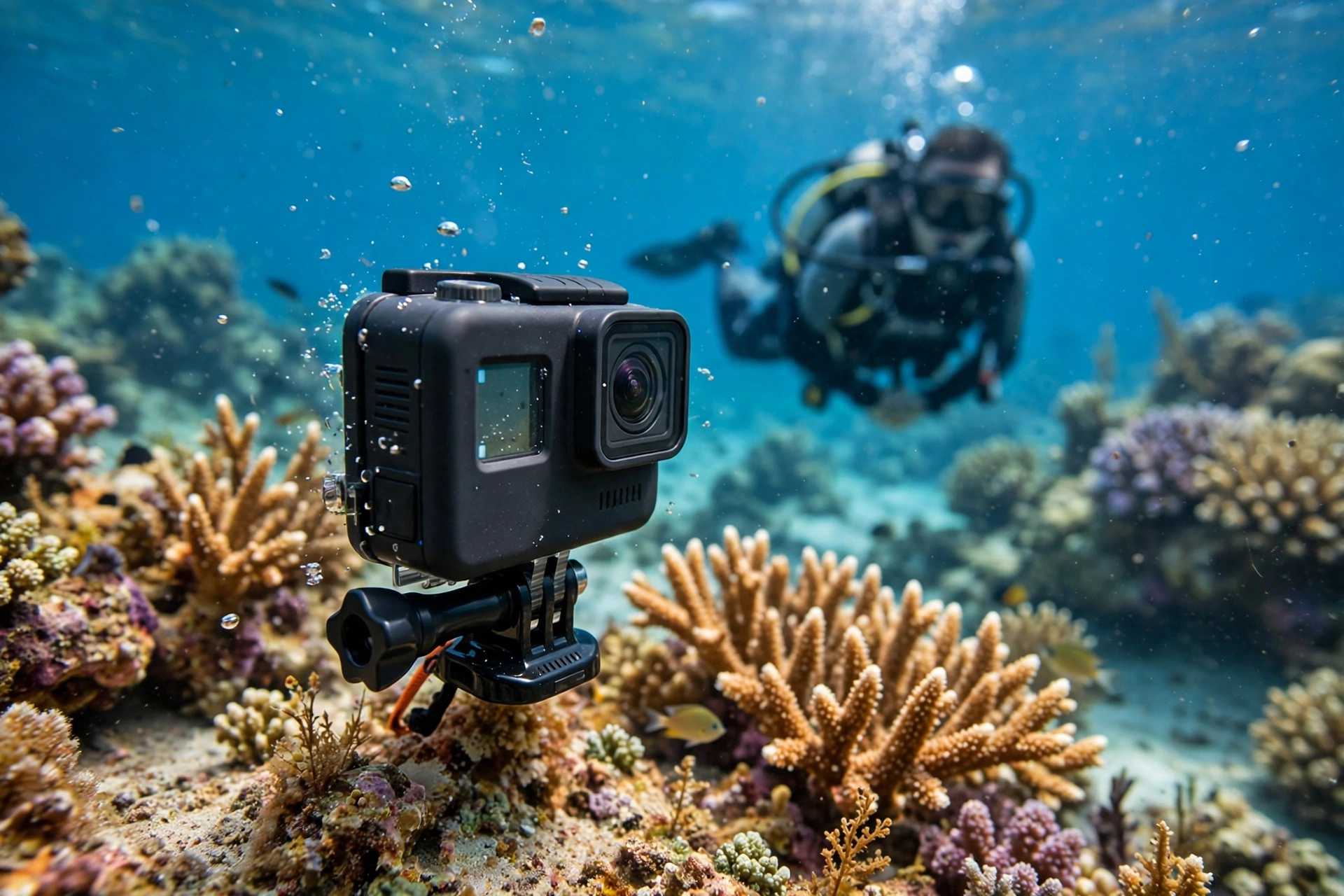
The DJI Action 5 is waterproof without an extra case to a depth that covers swimming, surfing, snorkelling, and rain without worry. For deeper diving, a dedicated dive case is the safe choice, and it is worth checking the depth rating of the exact model you buy, since ratings can differ between generations. After salt water, rinse the camera in fresh water and dry it before opening any covers, which is a simple habit that prevents most water-related problems. The touchscreen works when wet, though not as precisely as when dry, so for important shots underwater, start recording before you go in and use the physical button to stop.
Battery life is respectable for an action camera but still limited by physics: a small battery powering 4K video and stabilisation will not last all day. Expect a bit over an hour and a half of continuous 4K recording per battery in normal conditions, less in cold weather or with the screens at full brightness. That is why spare batteries matter more than any other accessory. The magnetic charging setup makes swapping fast, and a charging case that tops up several batteries at once is a genuine convenience on multi-day trips.
Toughness is good rather than indestructible. The camera survives drops onto grass and sand and bumps against handlebars, but a hard fall onto rock can still crack a screen or lens cover. The replaceable lens cover helps, and a protective frame adds peace of mind for rough sports. Cold weather deserves a mention too: like all small cameras, battery performance drops in freezing conditions, so keep spare batteries warm in a pocket and swap them in as needed.
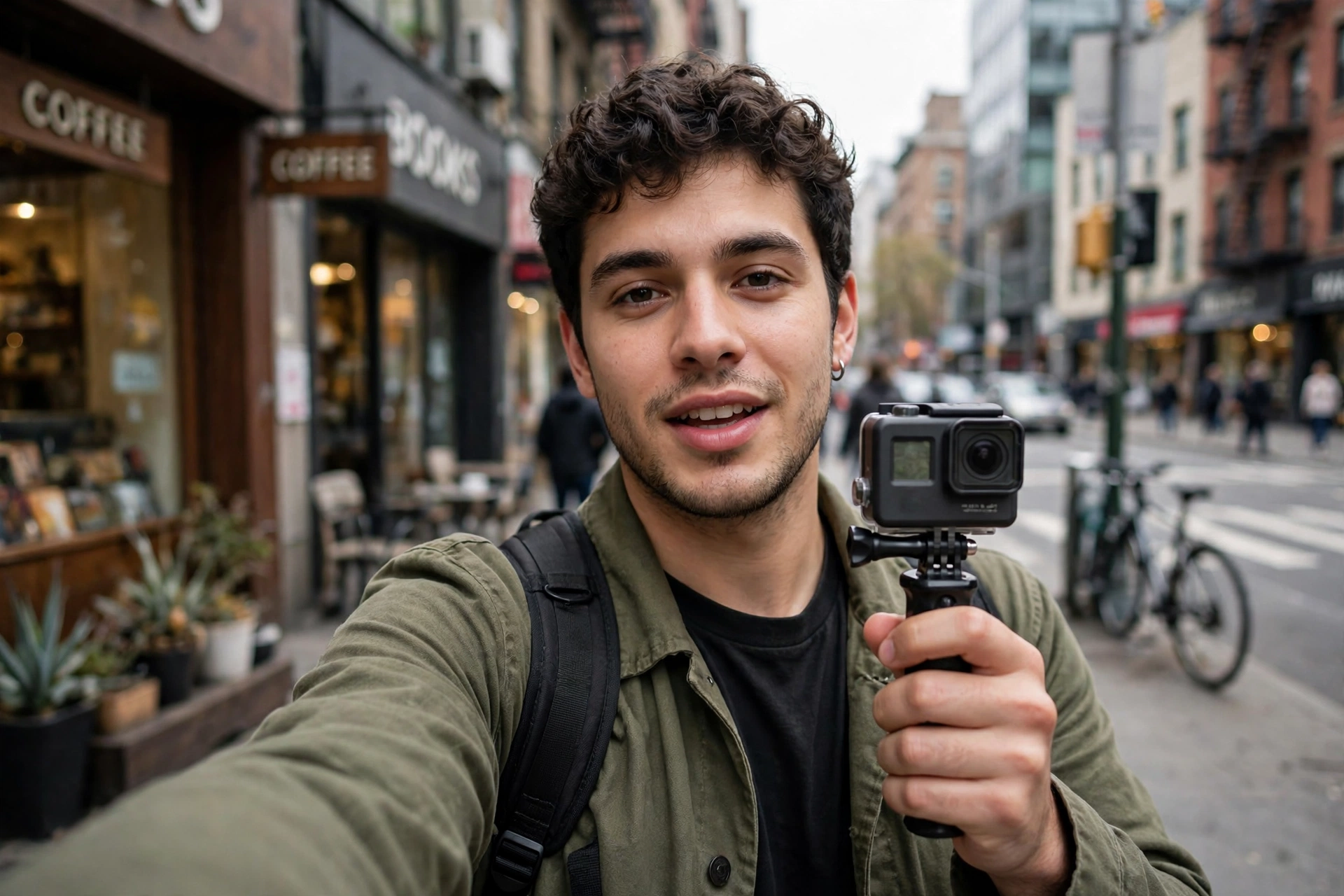
Using the DJI Action 5 for Vlogging
For vlogging, the front screen, compact size, and decent built-in microphones make the Action 5 a strong choice, especially for creators who film outdoors. You can hold it at arm’s length, see yourself clearly, and talk naturally without a bulky rig. Audio outdoors is usable in calm conditions, but wind is the enemy of every small camera microphone. A wind cover or an external microphone makes a noticeable difference, and it is the single upgrade most vloggers should prioritise after spare batteries.
Transferring footage is straightforward through the phone app over Wi-Fi, though large 4K files take time and phone storage fills quickly. For longer projects, transferring via USB-C to a computer is faster and more reliable. Editing on a phone works for short social clips, while a computer editor gives more control for longer videos. Whichever route you take, back up your cards before formatting them: action camera footage is often irreplaceable, and a formatted card has ended more than one holiday film.
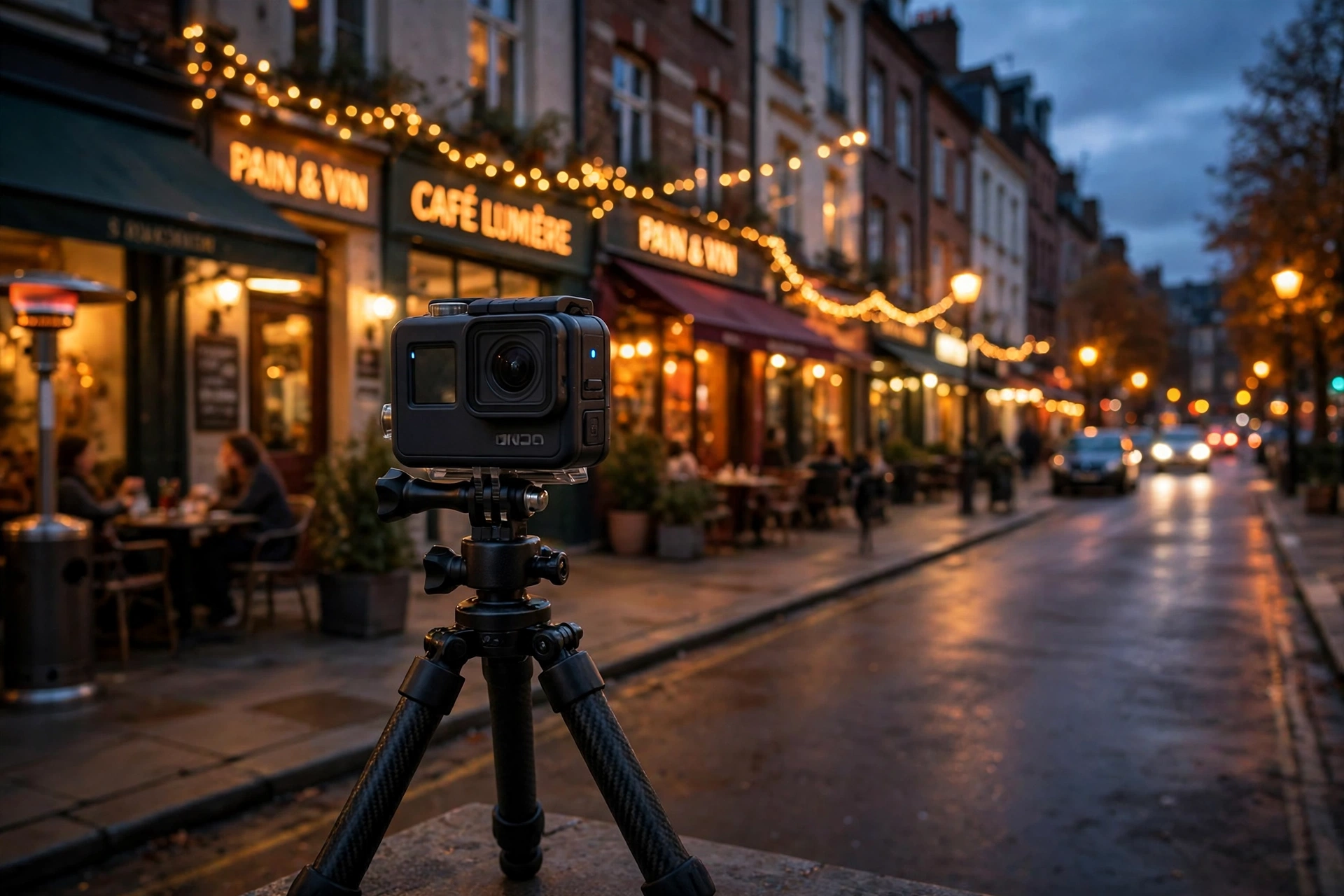
Low Light and Night Footage
Low light is where small-sensor cameras show their limits, and the DJI Action 5 is no exception. In a well-lit street or a room with lamps on, footage is usable and often better than expected, thanks to noise reduction and a sensor tuned for this purpose. In truly dark scenes, such as a campfire or a dim bar, expect softer detail and visible grain, and colours may shift. That is normal for this class of camera, not a fault in this model.
A few habits improve night results a lot. Keep the camera as still as possible, since stabilisation and low light together strain the sensor. Avoid pointing it at a single bright light in an otherwise dark scene, which forces harsh exposure choices. If you film at night often, consider a small video light, which transforms results for close subjects such as vlogging or cooking videos. For night landscapes or city skylines, a phone or larger camera will usually do better, and there is no shame in using the right tool for the job.
How It Compares With Rival Action Cameras
| What to compare | DJI Action 5 strengths | Where rivals may win |
|---|---|---|
| Daylight video | Sharp, natural colour, good dynamic range | Some rivals offer higher resolution options |
| Stabilisation | Very smooth for walking, running, cycling | Dedicated gimbals still beat any electronic stabilisation |
| Low light | Usable in lit streets and rooms | Larger-sensor cameras do better in real darkness |
| Ease of use | Dual screens, magnetic mounts, simple app | Some users prefer a rival’s menu layout or ecosystem |
| Waterproofing | Swim and surf ready without a case | Deep diving needs a case on any action camera |
| Price and bundles | Competitive, strong bundle options | Older models from any brand can be cheaper on sale |
The honest way to choose is to decide which strength matters most to you and check recent sample footage shot in conditions like yours. Spec sheets hide as much as they reveal, and two cameras with similar numbers can look quite different in practice. If you already own mounts or accessories for another brand, factor in the cost of switching, since mounts are not always cross-compatible. For readers comparing cameras with other kinds of everyday tech, the practical buying guides at homewaterinsights and 9bio follow the same approach of weighing real use over headline specs.
Who the DJI Action 5 Suits Best
- Outdoor sports enthusiasts: cyclists, runners, surfers, skiers, and hikers who want durable, waterproof, stabilised footage.
- Travel vloggers: creators who need a pocket camera with a front screen, good audio options, and quick phone transfers.
- Families: parents filming holidays, beach days, and kids’ activities without worrying about splashes or drops.
- First-time action camera buyers: anyone who wants a camera that works well out of the box without a steep learning curve.
- Content creators on a budget: people who need reliable 4K footage without paying for a full camera rig.
It suits less well if you film mainly in darkness, need shallow depth of field portraits, or want long continuous recording without swapping batteries. In those cases, a larger camera or a dedicated low-light setup is the better buy, and buying the Action 5 anyway will leave you fighting its limits instead of enjoying its strengths.
Common Mistakes to Avoid
- Buying a slow memory card that stops recording during 4K clips.
- Filming a whole holiday on one battery and missing the best moments.
- Forgetting wind protection for audio, then discovering the vlog is unusable.
- Leaving the camera in the default wide view for close-up talking shots, which distorts faces.
- Formatting a card before backing up footage that cannot be re-shot.
- Opening the battery or port covers while the camera is still wet after swimming.
FAQs
Is the DJI Action 5 waterproof?
Yes, it is waterproof without an extra case to a depth suitable for swimming, surfing, and snorkelling. For deeper diving, use a dedicated dive case and check the rating for your exact model.
How long does the battery last?
Expect roughly an hour and a half or more of continuous 4K recording per battery in normal conditions, less in cold weather or with screens at full brightness. Carry at least one spare battery for a full day of filming.
Can I use it for vlogging?
Yes. The front screen, compact size, and good stabilisation make it well suited to vlogging, especially outdoors. Add wind protection or an external microphone for the best audio.
Does it shoot slow motion?
Yes, it offers higher frame rates for smooth slow motion, including 120 frames per second at suitable resolutions. Slow motion looks best in bright light, where the camera can use a fast shutter speed.
Is it good in low light?
It performs well in lit streets and rooms, but like all small-sensor action cameras it struggles in true darkness, producing softer, grainier footage. A small video light helps a lot for close subjects.
Do I need extra accessories?
At minimum, a fast microSD card and a spare battery. Beyond that, choose accessories for your activity: a float grip for water, a secure mount for your sport, and wind protection if you record speech outdoors.
The Bottom Line
The DJI Action 5 earns its place as a go-to action camera because it gets the fundamentals right: sharp daylight video, excellent stabilisation, genuine waterproofing, and an easy-to-use design, all in a camera you can carry anywhere. It will not replace a large camera in darkness or for portraits, and its battery life demands spares, but for sports, travel, and everyday vlogging it is a dependable choice that most buyers will be happy with. Buy the bundle that matches your activity, learn the handful of settings that matter, and spend your energy on filming rather than fiddling with menus.
Related Stories

Chlor Calcium Explained: Uses, Safety and Practical Guide
Chlor calcium usually means calcium chloride, a versatile compound used for de-icing, drying, dust control, and more. Here…

Rivet: Types, Uses, and How to Choose the Right One
From solid rivets in aircraft and bridges to pop rivets in DIY projects, here is how rivets work,…

Moldavite Crystal Meaning and Real vs Fake Guide
What moldavite is, where it comes from, what collectors mean by its energy, and the practical checks that…
1 response