Last Rites in the Catholic Church (2026 Guide)
Last rites are the Catholic sacraments offered to a person near death: confession, anointing of the sick, and Viaticum, the final Holy Communion. Here is what each part means and how families arrange them.
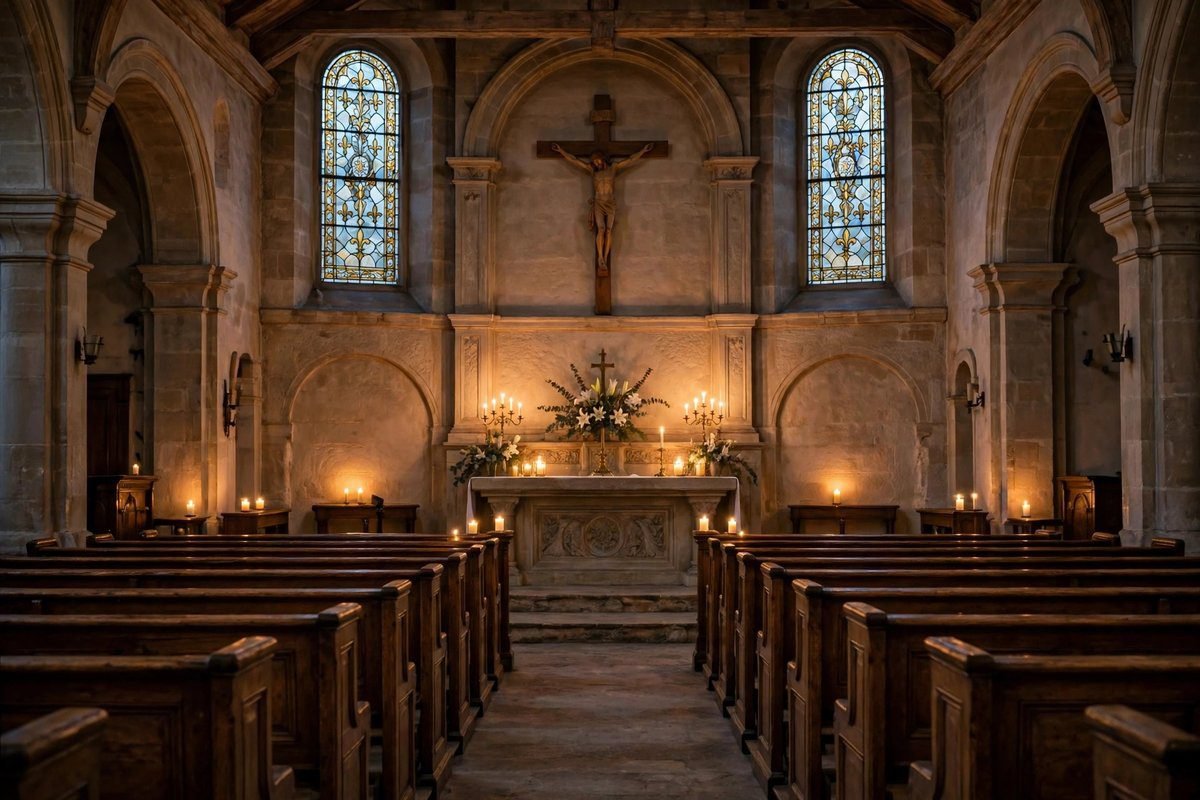
Last Rites in the Catholic Church
Few phrases in the Catholic faith carry as much weight — or as much misunderstanding — as last rites. For many people, the term brings to mind a hurried bedside scene in a film: a priest arriving in the middle of the night, a few whispered prayers, and a family gathered in grief. The reality is quieter, more pastoral, and more hopeful than the dramatic version. Last rites are not a single ritual performed at the final moment. They are a set of sacraments offered to a Catholic who is seriously ill or near death, meant to bring spiritual healing, peace, and communion with God at the end of life.
This guide explains what last rites actually are, the three sacraments they include, when and how to ask for them, what happens during the visit, and what families can do to prepare. It is written for Catholics and their loved ones, and for anyone who wants to understand the practice respectfully and accurately.
The short version: what last rites are
The short version: last rites are the Catholic Church’s sacraments for a person who is dying or in danger of death. Traditionally, they consist of three sacraments received together: Penance (confession), the Anointing of the Sick, and Viaticum, which is Holy Communion given as food for the final journey. In practice, the exact combination depends on the person’s condition — someone who is unconscious, for example, cannot make a confession, but can still be anointed and prayed for.
It helps to understand the word itself. “Viaticum” comes from a Latin word meaning provision for a journey. In the Church’s understanding, death is a passage, and Viaticum is the Eucharist received as strength for that passage. That image — a final meal with Christ before the journey — sits at the heart of what last rites mean. They are not a farewell ceremony imposed on a dying person. They are the Church’s ordinary sacraments, brought to someone who can no longer come to church to receive them.
| Sacrament | What it is | Role in last rites |
|---|---|---|
| Penance | Confession of sins and absolution by a priest | Reconciliation with God and the Church |
| Anointing of the Sick | Anointing with blessed oil, with prayer for healing and strength | Spiritual healing, peace, and preparation |
| Viaticum | Holy Communion received by a person near death | Final communion, food for the journey |
Where the practice comes from
The practice of caring for the dying with sacraments is as old as the Church itself. The Letter of James in the New Testament describes calling the elders of the church to pray over the sick and anoint them with oil, and from the earliest centuries Christians visited the sick and dying to pray with them and share the Eucharist. Over time, these visits took a more defined shape, and by the medieval period the combination of confession, anointing, and final communion had become the recognized pattern for the end of life.
The Church’s teaching on the subject was clarified significantly in the twentieth century. The Second Vatican Council emphasized that the Anointing of the Sick is not only for the moment of death, but for any serious illness, and encouraged the faithful to seek it earlier rather than waiting until the last hours. That shift matters for how families think about last rites today: they are not something to postpone until it is almost too late, but a pastoral care that can be offered while the person is still able to participate.
The three sacraments, explained
Penance: confession and absolution
The first element of last rites is Penance, the sacrament of confession. The dying person confesses their sins to the priest, who offers counsel and then gives absolution, the forgiveness of sins in the name of Christ and the Church. For a person facing death, this is often the most emotionally significant part of the visit. It offers a chance to speak honestly, to make peace, and to hear words of forgiveness spoken aloud.
If the person is unable to speak — because of unconsciousness, a stroke, or advanced illness — confession as a spoken exchange is not possible. The Church teaches that in such cases, a person’s desire for forgiveness, expressed earlier in life or presumed from their faith, is met with God’s mercy, and the priest can still offer prayers and a blessing. Families sometimes worry that a loved one who cannot confess has somehow missed out. Pastoral teaching is clear that they have not been abandoned: the Church prays for them, and the other sacraments can still be given.
Anointing of the Sick: oil, prayer, and peace
The Anointing of the Sick is the sacrament most closely associated with last rites, and also the most misunderstood. A priest anoints the sick person with blessed oil — traditionally on the forehead and the hands — while praying for healing, strength, and forgiveness. The oil used is the Oil of the Sick, blessed by the bishop each year at the Chrism Mass during Holy Week.
It is important to understand what this sacrament is and is not. It is not a guarantee of physical recovery, and it is not a sign that the Church has given up on the person. It is a prayer for the whole person: for healing if that is God’s will, for strength to bear suffering, for peace in the face of fear, and for forgiveness of sins. The same sacrament is given to people facing serious surgery or chronic illness who are expected to recover, which is why priests encourage the faithful not to wait until death is imminent. In the context of last rites, anointing takes on a particular poignancy, as a final strengthening for the journey ahead.
Viaticum: the final Holy Communion
Viaticum is Holy Communion received by a person in danger of death. If the person is able to swallow, the priest gives the consecrated host, often with a short rite that includes prayers and a blessing. The Church places special importance on this final communion: a dying person who has already received Communion that day may receive it again as Viaticum, because of its unique character as food for the final journey.
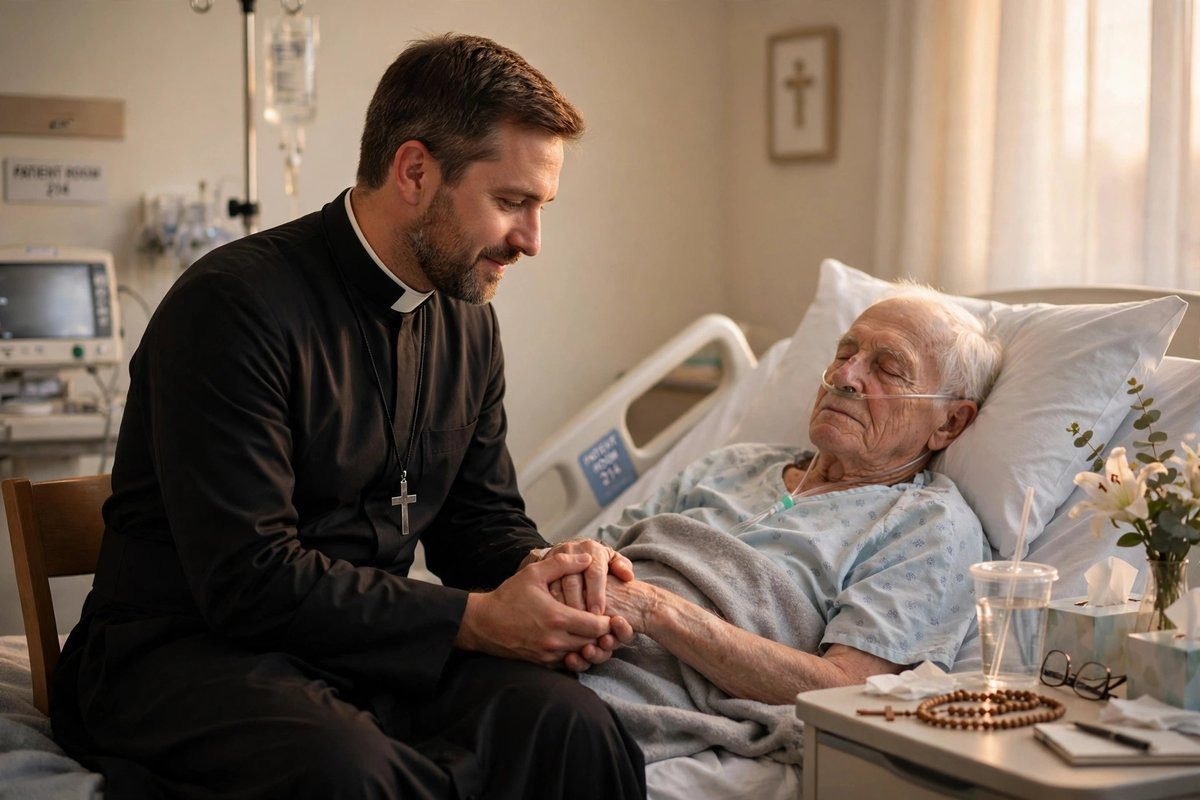
If the person cannot receive the host, the desire for communion and the prayers of those present still have deep meaning for the family, and the priest will pray with them and offer a blessing. The rite can be adapted to the person’s condition and setting — a hospital room, a home bedroom, a hospice — because the sacraments come to the person, wherever they are.
When to call a priest
One of the most practical questions families face is timing. The simple guidance is: call sooner rather than later. If a loved one has been diagnosed with a serious illness, is entering hospice care, is facing a high-risk procedure, or has begun to decline, that is the time to contact the parish. A priest would far rather come while the person is still able to speak, confess, and receive communion than be called in the final hours when those things may no longer be possible.
Many parishes have an emergency number for sick calls, and hospitals usually have a chaplaincy service that can contact a Catholic priest at any hour. If your loved one is in a hospital, ask the nursing staff or the chaplain’s office to arrange a visit. If they are at home or in hospice, call the parish office directly and explain the situation. It helps to say plainly that you are requesting last rites or a sick visit, so the priest understands the urgency.
There is no need to wait for a crisis, and there is no penalty for calling early. If the person recovers, the visit was still a grace, and the sacrament can be received again if illness returns. Families sometimes hesitate because they fear that calling a priest signals giving up. Priests hear this concern often, and their answer is consistent: calling for the sacraments is not giving up. It is asking for the Church’s care at a moment when care is most needed.
Step 1: Contact the parish or hospital chaplain
The first step is a phone call. Contact the parish office, the parish emergency line, or the hospital chaplaincy service, and explain that a Catholic loved one is seriously ill or dying and you are requesting a priest for last rites. Give the person’s name, location, room number if applicable, and a sense of their condition — especially whether they are conscious and able to speak, since that shapes what the priest will prepare.
Step 2: Prepare the space and the family
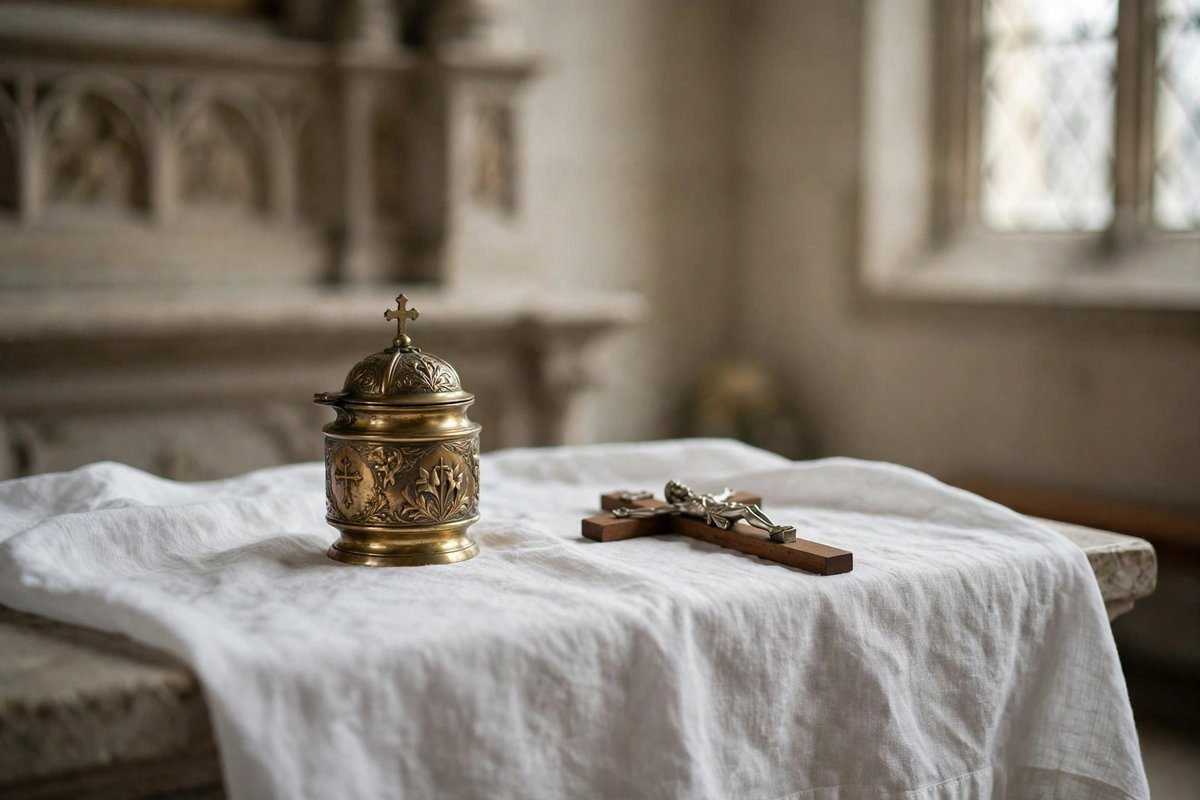
The second step is simple preparation. If the person is at home, tidy the room, make space beside the bed for the priest, and, if the family wishes, set out a small table with a cloth, a candle, and a crucifix. This is a traditional and optional gesture, not a requirement. More important is gathering whoever the person would want present — family members, close friends — and letting the medical staff know a priest is coming so the visit is not interrupted unnecessarily.
Step 3: The priest’s visit and the sacraments
The third step is the visit itself. The priest will usually begin with prayer and a short conversation, then hear the person’s confession if they are able. He will anoint them with the Oil of the Sick, praying for healing and peace, and then offer Viaticum if the person can receive it. The rite is gentle and unhurried, and it adapts to the person’s strength. If the person is weak, the prayers may be brief. If they are alert, there may be time for conversation, a blessing for the family, and shared prayer.
Step 4: After the visit — prayer, presence, and next steps
The fourth step is what follows. The family may wish to pray together, sit quietly with their loved one, or simply rest. If death is near, the priest or parish can also advise about funeral planning, the vigil and funeral Mass, and ongoing support for the grieving family. The sacraments do not end the Church’s care; they are part of a longer accompaniment that continues through burial and beyond, in prayers for the deceased and pastoral support for those left behind.
What families can do
Families often feel helpless at a loved one’s bedside, unsure whether they should speak, pray aloud, or stay quiet. The honest answer is that presence itself is the main thing. Sitting nearby, holding a hand, and praying quietly — aloud or silently — is enough. If the person is conscious and wants to talk, listen. If they want to pray, join them. If they fall asleep during the visit, that is fine too; the sacraments do not depend on the person’s alertness.
It also helps to think ahead about practical matters while there is still time. Know which parish your loved one belongs to and keep its phone number accessible. If they have expressed wishes about funeral arrangements, a particular priest, or prayers they want, write those down and share them with the family. These small acts of preparation spare everyone difficult decisions later, and they honor the person’s faith in a concrete way.
For family members who are not Catholic, or who have drifted from the faith, the visit can still be meaningful. You are welcome to be present, to pray in your own way, and to support your loved one. A priest will not put anyone on the spot or demand participation. The focus is entirely on the dying person and their peace.
Common misunderstandings about last rites
Several misunderstandings about last rites persist, and clearing them up can ease a family’s mind. The first is that last rites are only for the final minutes of life. In fact, they are for anyone in danger of death from serious illness, and the Church encourages receiving them earlier, while the person can still participate fully.
The second is that the Anointing of the Sick is a death sentence — that receiving it means the doctors have given up. It does not. The same sacrament is given before major surgery and during serious illness from which people fully recover. It is a sacrament of healing in the broadest sense, not a marker of hopelessness.
The third is that a person who dies without a priest present has somehow been denied God’s mercy. The Church teaches otherwise. God is not bound by the sacraments, and a person who desired them, or lived a life of faith, is entrusted to God’s mercy. Families who could not get a priest in time should not carry guilt about it; they can still pray, arrange a funeral Mass, and have Masses offered for the deceased.
The fourth misunderstanding is that last rites are a single, fixed ceremony. They are a combination of sacraments, adapted to the person’s condition. A conscious person may receive all three; an unconscious person may be anointed and blessed; a person who recovers may receive the anointing again later. Flexibility is built into the practice, because pastoral care is about the person, not the procedure.
Last rites and the days that follow
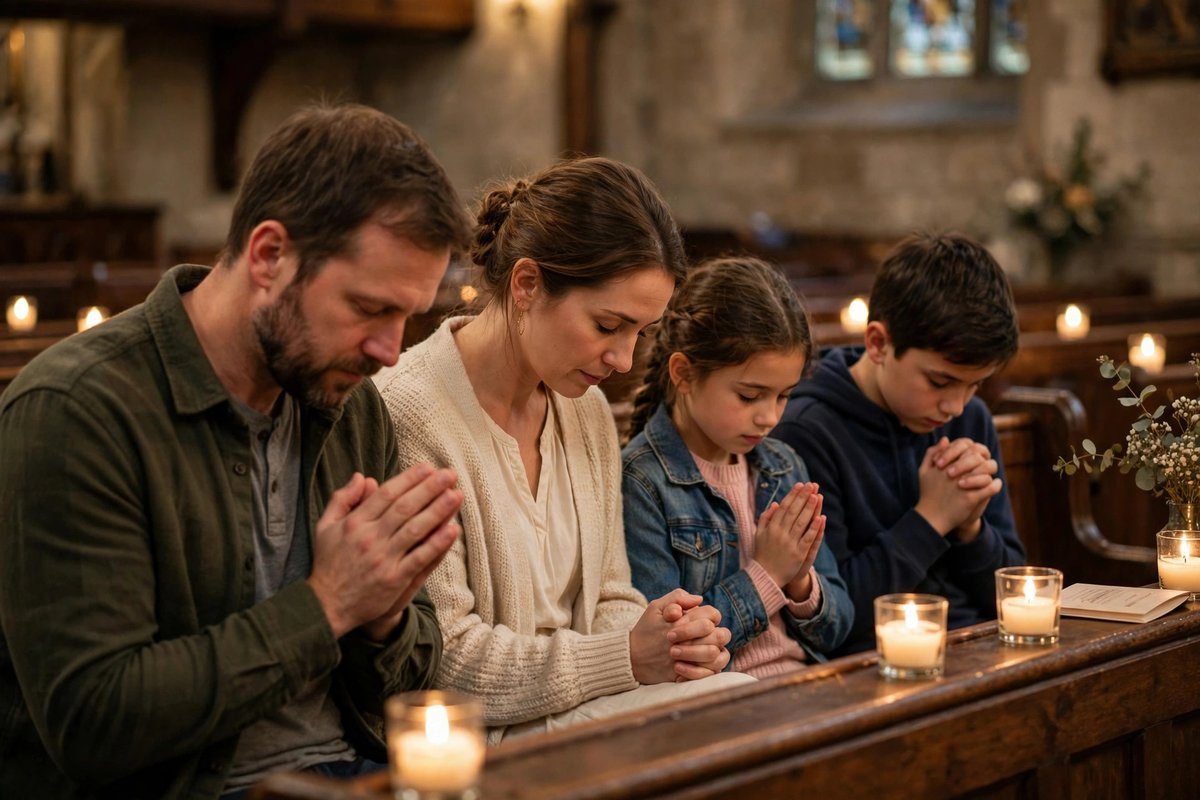
After last rites have been received, the Church’s care continues. If death follows, the parish helps the family plan the funeral rites: the vigil, sometimes called the wake, where family and friends gather in prayer; the funeral Mass, where the community commends the deceased to God; and the committal at the cemetery. These rites are distinct from last rites, but they belong to the same arc of care — the Church accompanying a person from their final days through burial.
For the grieving, the parish remains a resource. Many parishes offer bereavement groups, memorial Masses, and pastoral visits in the months after a death. Grief does not follow a schedule, and the Church’s tradition of praying for the dead — including having Masses offered for a loved one — gives families a concrete, ongoing way to express love and faith after the funeral is over.
A note on respect and sensitivity
Writing about last rites calls for a certain restraint. These are not abstract rituals; they are moments that families remember for the rest of their lives. If you are arranging last rites for someone you love, know that priests are accustomed to these visits and to the emotions around them. There is no need to be embarrassed about tears, about not knowing the prayers, or about asking the priest to explain what is happening. That is part of his ministry.
If you are reading this because you are curious rather than in need, the same respect applies. Last rites are a tender part of Catholic life, and understanding them is a way of understanding how the faith meets people at their most vulnerable — not with fear, but with prayer, forgiveness, and communion.
FAQs
What are last rites in the Catholic Church?
Last rites are the sacraments offered to a Catholic who is near death or in danger of death: Penance (confession), the Anointing of the Sick, and Viaticum, which is Holy Communion received as food for the final journey.
Who can receive last rites?
Any baptized Catholic who is seriously ill or in danger of death can receive last rites. The Anointing of the Sick is also available to those facing serious illness or major surgery, even when death is not imminent.
Can last rites be given more than once?
Yes. A person can receive the Anointing of the Sick multiple times — whenever a serious illness returns, worsens, or a new serious condition arises. There is no limit on receiving the sacraments again when the need returns.
What happens if a person dies before a priest arrives?
The Church teaches that a person who dies without receiving last rites is still entrusted to God’s mercy, especially if they desired the sacraments or lived a life of faith. Families can still arrange a funeral Mass and have Masses offered for the deceased.
How do I arrange last rites for a loved one?
Contact the parish office, the parish emergency sick-call line, or the hospital chaplaincy service and explain that a Catholic loved one is seriously ill or dying. Give the person’s location and condition so the priest can prepare appropriately.
What is Viaticum?
Viaticum is Holy Communion given to a person in danger of death. The word means provision for a journey, and it refers to the Eucharist received as spiritual food and strength for the passage from this life to the next.
Do last rites have to happen in a church?
No. Last rites are brought to the person wherever they are — at home, in a hospital, or in a hospice. The sacraments come to the dying person because they can no longer come to the church.
Wrapping up
Last rites are, in the end, a simple and profound thing: the Church coming to a person’s bedside with confession, anointing, and communion, so that no one has to face the end of life alone or unreconciled. They are not a dramatic final scene, and they are not a last resort to be delayed until the final hour. They are pastoral care at its most essential — forgiveness spoken aloud, oil and prayer for healing and peace, and a final communion to carry a person on their journey. For Catholics and their families, knowing what last rites are, and calling for them in good time, is one of the most loving things that can be done at the end of life.
Read Also: Multi-Source Agreement Explained for Procurement (2026 Guide)
Related Stories

Evil Eye Meaning, Symbols, History and Protection Guide
The evil eye is an ancient belief that a jealous or envious look can bring bad luck. Here…

Understanding Mohmen: A Complete Guide to Islamic Belief and Practice
When I first started learning about Islamic terminology, I found myself genuinely confused about the term "Mohmen." I…
1 response