Multi-Source Agreement Explained for Procurement (2026 Guide)
A multi-source agreement is a procurement arrangement where a buyer sources goods or services from more than one supplier under a shared set of terms. Here is how it works and when it makes sense.

Multi-Source Agreement Explained for Procurement
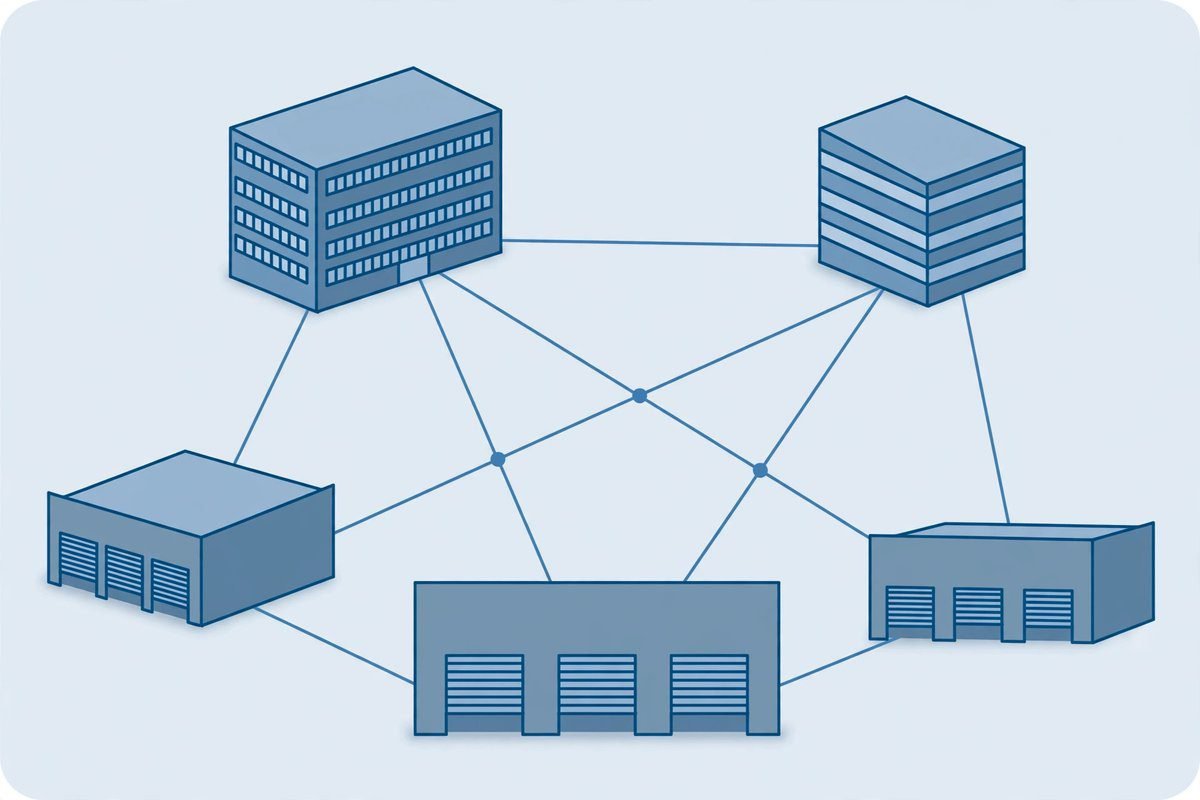
If you have ever heard a procurement manager talk about “not putting all our eggs in one basket,” there is a good chance they were describing a multi-source agreement, even if they did not use the term. A multi-source agreement is a purchasing arrangement in which a buyer sources the same category of goods or services from more than one supplier, under a shared framework of terms, rather than relying on a single vendor for everything.
The idea is simple, but the execution is not. Done well, a multi-source agreement gives a buyer leverage, resilience, and flexibility. Done badly, it turns into a tangle of overlapping contracts, inconsistent quality, and finger-pointing when something goes wrong. This guide explains what a multi-source agreement actually is, how it differs from single sourcing, what belongs in one, how to set one up, and the mistakes that most often undo it.
The short version: what a multi-source agreement is
The short version: a multi-source agreement is a procurement strategy and contract structure where a buyer deliberately splits its demand across two or more suppliers for the same or similar goods or services. The suppliers typically operate under coordinated terms — common pricing mechanisms, service levels, quality standards, and governance — so the buyer can compare performance, shift volume between vendors, and keep supply running if one supplier falters.
It is worth clearing up a common confusion right away. A multi-source agreement is not the same as simply having several vendors. Most companies buy from many suppliers across different categories; that is just normal purchasing. Multi-sourcing is specific: it means multiple suppliers for the same category, by design, so that no single supplier controls the buyer’s supply of that particular thing.
| Concept | What it means |
|---|---|
| Multi-source agreement | Two or more suppliers for the same category, under coordinated terms |
| Single sourcing | One supplier chosen for a category, even though alternatives exist |
| Sole sourcing | Only one supplier exists that can meet the requirement |
| Dual sourcing | A specific form of multi-sourcing with exactly two suppliers |
| Framework agreement | An umbrella arrangement setting terms for future orders |
Why buyers choose a multi-source agreement
The most common reason is resilience. When a single supplier has a factory shutdown, a labor dispute, a shipping disruption, or a financial problem, a buyer with no alternative is stuck. A buyer with a second qualified supplier can shift orders and keep operating. This is not a theoretical risk: supply chains have been disrupted by weather events, port congestion, material shortages, and geopolitical shifts often enough that most procurement teams now treat continuity as a first-order concern rather than an afterthought.
The second reason is competition. When suppliers know the buyer has a credible alternative, they have a reason to keep prices sharp and service levels high. Volume can be steered toward the better performer, which creates an ongoing incentive that a fixed, single-supplier contract cannot replicate. That competitive tension only works if the threat of shifting volume is real, though — suppliers quickly learn when a second source exists only on paper.
A third reason is capacity and capability. Sometimes no single supplier can handle the full volume, cover every geography, or offer every variant a buyer needs. Splitting the work lets each supplier do what it does best. One might serve the East Coast while another serves the West; one might handle standard items while another handles custom work. The arrangement can also support a buyer’s broader goals, such as developing smaller or local suppliers alongside larger ones.
Finally, multi-sourcing can be a negotiating tool. A buyer that can credibly walk away from any one supplier negotiates from a stronger position on price, payment terms, and service commitments. The key word is credibly — the alternative supplier has to be qualified, contracted, and able to take on volume at short notice, or the leverage is imaginary.
How a multi-source agreement differs from single sourcing
Single sourcing has real advantages, and it is important to be honest about them. A single supplier means one relationship to manage, one set of invoices, one quality system to audit, and often better volume pricing because all the spend is concentrated. Administration is simpler, and the supplier, knowing it has the full volume, may invest more in the relationship.
Multi-sourcing trades some of that simplicity for security and leverage. It costs more to manage: more contracts, more performance reviews, more coordination. Quality can vary between suppliers unless standards are enforced tightly. And there is a genuine risk of fragmentation, where each supplier gets too little volume to care much about the account.
The choice between the two is not about which is better in the abstract. It depends on the category. For a low-risk, easily substituted commodity with many suppliers, single sourcing may be perfectly fine. For a critical input where a disruption would halt production, or a service the business cannot function without, the extra management cost of multi-sourcing is usually worth paying. Many buyers land in the middle: a primary supplier handling most of the volume, with one or two secondary suppliers kept active with a smaller share.
| Factor | Single sourcing | Multi-source agreement |
|---|---|---|
| Supply risk | High — one failure stops supply | Lower — volume can shift to another supplier |
| Management effort | Lower — one relationship | Higher — several relationships to govern |
| Price leverage | Weaker over time | Stronger — suppliers compete for share |
| Volume pricing | Often better — spend concentrated | Weaker per supplier — spend split |
| Quality consistency | Easier to control | Needs active standardization |
| Best for | Low-risk, substitutable categories | Critical or high-spend categories |
What a multi-source agreement typically includes
A multi-source agreement is rarely a single document. More often it is a structure: an umbrella or framework that sets the common rules, plus individual arrangements with each supplier that reflect their specific scope. The exact contents vary by industry and category, but several elements show up again and again.
First, scope and allocation. The agreement should define what is covered, how volume is divided, and how that division can change. Some buyers fix percentages; others allocate work order by order, or by geography, or by product line. Whatever the method, it needs to be stated plainly, because ambiguity here is a reliable source of disputes.
Second, common commercial terms. Pricing mechanisms, payment terms, and adjustment rules should be consistent enough that suppliers can be compared fairly. That does not mean identical prices — suppliers have different cost structures — but the basis of comparison should be clear. Service levels and quality standards belong here too, with measurable targets and a defined way of tracking them.
Third, governance. Somebody has to run the arrangement: hold performance reviews, resolve conflicts, manage changes, and decide when volume shifts. Good agreements name the governance structure — who meets, how often, and who has authority to decide what — instead of leaving it to improvisation.
Fourth, exit and transition provisions. Suppliers change, contracts end, and performance sometimes falls short. The agreement should say how a supplier can be added or removed, what notice is required, and how knowledge and data transfer when a supplier leaves. A multi-source arrangement that cannot gracefully drop a failing supplier has lost one of its main advantages.
Step 1: Define the category and the reason for multi-sourcing
The first step is to be specific about what you are buying and why more than one supplier is warranted. Write down the category, the annual spend or volume, the criticality of the supply, and the risk you are trying to reduce. If the honest answer is that a single supplier would do fine, do not build a multi-source structure for its own sake. The arrangement should solve a real problem — continuity, leverage, capacity, or coverage — and the rest of the design should follow from that reason.
Step 2: Qualify at least two capable suppliers
A second supplier that cannot actually deliver is worse than no second supplier at all, because it creates false confidence. Qualification means checking financial stability, production or service capacity, quality systems, references, and the ability to scale up if volume shifts. Each supplier should be able to handle a meaningful share of demand on its own, not just a token order. If the market genuinely has only one capable supplier, that is sole sourcing, and dressing it up as multi-sourcing helps no one.
Step 3: Negotiate common terms, then individual scopes
With qualified suppliers in hand, the buyer negotiates the shared framework: pricing approach, service levels, quality standards, reporting, and governance. Then each supplier gets an individual scope reflecting what it will actually supply — which products, which regions, which volumes. Keeping the common terms genuinely common is what makes performance comparable and volume shifts fair.
Step 4: Set up governance and keep it running
The final step is the one most often neglected: running the arrangement after signature. Schedule regular performance reviews, track the agreed measures, and be willing to shift volume based on what the data shows. Governance is also where problems surface early — a supplier missing delivery windows, a quality drift, a capacity warning — while there is still time to act. An agreement that sits in a drawer until renewal is not a strategy; it is a souvenir.

The benefits, stated honestly
The benefits of a multi-source agreement are real, but they come with a condition: they only materialize if the buyer does the management work. Continuity is the headline benefit — a second source turns a supplier failure from a crisis into a reallocation problem. Competitive pressure is second — suppliers that know volume can move tend to stay sharp on price and service. Flexibility is third — the buyer can scale up with one supplier, test a new one with a small share, or exit a poor performer without starting from scratch.
There are quieter benefits too. Working with multiple suppliers exposes the buyer to different practices and ideas, which can improve its own specifications. It can also reduce dependency in negotiations, since no single supplier can hold the buyer hostage over a price increase or a change of terms. And in some sectors, it supports policy goals around supplier diversity or regional sourcing that a single-supplier model cannot.
The risks and common mistakes
The most common mistake is creating a second source in name only. A supplier that receives a tiny share of orders, never gets invited to planning discussions, and could not absorb more volume at short notice is not a real alternative. When the primary supplier fails, the buyer discovers this at the worst possible moment. The fix is to give secondary suppliers enough live volume to stay warm and capable.
The second mistake is underestimating management cost. Multi-sourcing means more contracts to administer, more performance data to track, and more relationships to maintain. Buyers that do not staff or fund that governance end up with inconsistent quality and suppliers that drift apart in how they interpret the same requirements.
The third mistake is unclear accountability. When two suppliers contribute to the same service or product, and something fails, each may blame the other. Agreements should define boundaries precisely — who owns which part, how hand-offs work, and how joint problems are investigated — or the buyer ends up refereeing disputes instead of receiving a service.
A fourth risk is quality variation. Different suppliers have different processes, and without tight specifications and inspection, the buyer may receive noticeably different outputs under the same contract. Standardization, shared quality targets, and regular audits are not bureaucratic extras; they are what make the arrangement work.

When a multi-source agreement is the wrong choice
Multi-sourcing is not always the answer. For highly specialized goods or services where only one supplier has the expertise, intellectual property, or certification, forcing a second source can mean accepting an inferior substitute. For very low-spend categories, the management overhead can exceed any savings. And in situations where deep integration matters — a supplier embedded in the buyer’s product development, for instance — splitting the work can dilute the partnership and slow innovation.
There is also a strategic case for single sourcing that deserves respect: a supplier that receives all of a buyer’s volume may invest in dedicated capacity, customized tooling, or joint development that it would never offer for a fraction of the business. The right question is never “should we multi-source everything?” but “for this category, does the risk reduction and leverage justify the extra management?”
Managing the arrangement over time
A multi-source agreement is a living arrangement, not a one-time deal. Suppliers’ performance changes, markets shift, and the buyer’s own needs evolve. The buyers who get the most from multi-sourcing treat it as an ongoing practice: quarterly or semi-annual reviews, transparent scorecards shared with suppliers, and volume decisions tied visibly to performance. That transparency matters, because suppliers that understand how volume is earned will work to earn it.
Over time, the mix may change. A secondary supplier may grow into a primary one. A new entrant may displace an incumbent. A category may become less critical and revert to single sourcing. None of that is failure; it is the arrangement doing its job. The point of a multi-source agreement is not to keep a fixed set of suppliers forever, but to keep the buyer in control of its supply.

FAQs
What is a multi-source agreement?
A multi-source agreement is a procurement arrangement where a buyer sources the same category of goods or services from two or more suppliers under coordinated terms, instead of relying on a single supplier.
What is the difference between multi-sourcing and dual sourcing?
Dual sourcing is a specific form of multi-sourcing that uses exactly two suppliers. Multi-sourcing is the broader term and can involve two, three, or more suppliers for the same category.
What are the main benefits of a multi-source agreement?
The main benefits are supply continuity if one supplier fails, competitive pressure that keeps prices and service sharp, flexibility to shift volume, and stronger negotiating leverage for the buyer.
What are the disadvantages of multi-sourcing?
The main disadvantages are higher management effort, the risk of inconsistent quality between suppliers, weaker volume pricing per supplier, and the danger of unclear accountability when suppliers share responsibility.
How many suppliers should a multi-source agreement include?
There is no universal number. Two is the most common starting point and is often enough. More suppliers add resilience but also add management cost, so the right number depends on the category’s risk, spend, and complexity.
Is a multi-source agreement the same as a framework agreement?
Not exactly. A framework agreement is a type of umbrella contract that sets terms for future orders, and it can be used with one supplier or several. A multi-source agreement describes the sourcing strategy of using several suppliers; a framework agreement is one tool that can support it.
When should a buyer avoid multi-sourcing?
A buyer should avoid it when only one supplier can genuinely meet the requirement, when the category spend is too small to justify the management cost, or when deep integration with a single partner matters more than the resilience a second source would add.
Wrapping up
A multi-source agreement is, at its core, a decision to trade simplicity for control. It costs more to run than single sourcing, and it demands real governance to work. In return, it gives a buyer something single sourcing cannot: a supply base that can absorb a failure, suppliers that have a reason to keep performing, and the freedom to shift volume when circumstances change. For critical categories, that trade is usually worth making — provided the second source is real, the terms are comparable, and somebody is actually managing the arrangement after the contracts are signed.
Read Also: Telephone Area Code 231 in Northwestern Michigan (2026 Guide)
Related Stories

Voddler.co.uk: What It Is and How to Use the Site
What is Voddler.co.uk? The honest story of the old Voddler streaming service, what the .co.uk search means today,…

860 Area Code: Location, Cities and How to Dial It
Wondering where the 860 area code is? It covers northern and eastern Connecticut, including Hartford. Learn how to…

Telemetryczny Meaning, Telemetry Explained In English
Telemetryczny is a Polish adjective meaning relating to telemetry, the remote measurement and transmission of data. This guide…
1 response