O’Malley Grace: The Complete Story of Ireland’s Legendary Pirate Queen
Meet O'Malley Grace — Gráinne Ní Mháille — the 16th-century Irish pirate queen who commanded galleys, held castles, and once sailed to England to negotiate with Queen Elizabeth I face to face.

O’Malley Grace: The Pirate Queen Who Ruled the Seas of Ireland
The short version: O’Malley Grace — better known to history as Grace O’Malley, and in her own language as Gráinne Ní Mháille — was a 16th-century Irish sea-lord and clan leader who commanded a fleet of galleys along the west coast of Ireland. Born around 1530 into a seafaring family, she controlled sea routes, levied tolls on shipping, raided rival clans, and defied the English crown for decades. Her legend peaked when she sailed to England and met Queen Elizabeth I face to face at Greenwich, refused to bow, and walked away with a truce. This guide walks through her full life story, the castles she held, the battles she fought, and the facts behind the legend.
The short version: who was O’Malley Grace?
If you only have a minute, here is the essential story. O’Malley Grace — the name as it is often searched today — refers to Grace O’Malley, an Irish chieftain of the Ó Máille clan who lived from roughly 1530 to roughly 1603. At a time when the seas of western Ireland were controlled by men, she built and commanded her own fleet, held several coastal castles, and ran what amounted to a private maritime state: she taxed fishermen, escorted or raided merchant ships, and fought both rival clans and English forces. The English called her a pirate; the Irish remember her as a queen.
What makes her story stand out is not just the piracy. It is the politics. Grace O’Malley operated at the highest level of Tudor-era power — she corresponded with English officials, was recorded in the State Papers of the English crown, and secured a personal audience with Queen Elizabeth I. She was imprisoned, faced execution, won her freedom, and kept her castles and her ships. Few figures of the 1500s, male or female, managed all of that.
Early life: the seafaring world of Clare Island
Grace O’Malley was born around 1530 on Clare Island, County Mayo, into the O’Malley clan — a family with a long tradition of seamanship. Her father was the chieftain of a seafaring clan that controlled the southwest of County Mayo and its coast, with its base on Clare Island. The O’Malleys were established in shipping and trading, and their control of the sea routes along the west coast of Ireland was so complete that they charged tolls to fishermen and traders passing through their waters.
Growing up in this world, Grace would have learned the art of seafaring early. She knew the seas around her home from childhood, understood ships, tides, and navigation, and — unusually for a girl of her time — accompanied her father on his voyages. This was not a sheltered upbringing. It was an apprenticeship in power: in the Gaelic Ireland of the 1500s, authority flowed to those who could hold it, on land and on water.
The family base at Clare Island was both home and fortress. From this island stronghold, the O’Malleys watched the shipping lanes of Clew Bay and beyond, and young Grace absorbed the rhythms of a maritime economy — the trading runs to Spain, the fishing fleets, the constant calculation of who could pass and who would pay. Everything she would later do as a sea-lord was rehearsed here.

The hair story that gave her a name
One of the most repeated stories about O’Malley Grace’s childhood is the one that gave her one of her names. As a girl, she begged to accompany her father on an expedition to Spain and was refused — the excuse being that her long hair was impractical for sailing and would get caught in the ropes.
Grace’s response was immediate and character-defining: she chopped off all her hair. The Irish word “maol” means cropped hair or bald, and from Gráinne Mhaol came the name she carried for the rest of her life — Granuaile, the bald Grace. It is the kind of story that gets better with retelling, and historians treat its details with care, but its core rings true: she was determined, physical, and unwilling to accept a no simply because she was a girl.
First marriage and the birth of a sea captain
At around sixteen, Grace was married to Dónal-an-Chogaidh O’Flaherty, the heir to a powerful neighboring clan, in what was a political alliance between two strong families. The marriage lasted for many years — accounts differ, with some putting it at eleven years and others at nineteen — and produced children. Their home was Bunowen Castle in County Galway.
This marriage turned out to be her naval education. The O’Flahertys commanded their own fleet, and Grace gained real experience commanding ships in her husband’s fleet. She was not a passenger in this marriage; she was learning the trade of a sea commander — how to provision ships, how to lead crews, how to fight at sea.
When her husband was killed in battle, everything changed. Rather than retreating into widowhood, Grace took command of his fleet. This was the moment she stopped being the wife of a sea-lord and became one herself. She sailed the seas around the west of Ireland, trading goods between bouts of piracy, and proved she could hold a crew and a fleet on her own authority.
The Irish coast was rich with opportunity. Unprotected passing ships were easy prey, and Grace took full advantage: she levied tolls on merchant ships, seized what loot she could, and forced fishermen as far away as England to pay for the privilege of working waters she considered hers. She also moved into the mercenary trade, transporting Gallowglass soldiers between Scotland and Ireland — and sometimes raiding the Scottish islands while she was at it.
The Dark Lady of Doona
After her husband’s death, Grace took a lover — and the story of what happened next earned her another name. The lover was murdered by a rival clan, and Grace’s revenge was swift and total: she attacked the family’s seat, Castle Doona, killed her lover’s murderers, and seized the stronghold for herself.
From this episode came the nickname “The Dark Lady of Doona” — a reminder that the pirate queen’s reputation was built on genuinely ruthless actions. Grace O’Malley did not delegate her vengeance. She led it. The capture of Castle Doona added to her growing network of coastal strongholds and sent a message across the west of Ireland: cross her, and she would come for you personally.
Rockfleet Castle and the divorce under Brehon law
Grace’s second marriage was to another powerful local leader, Richard Burke — in Irish, Risdeárd Bourke. The marriage brought her Rockfleet Castle, the tower house near Newport in County Mayo that would become her most famous stronghold and, according to tradition, her final home.
The marriage lasted about a year. Under the old Brehon Laws of Gaelic Ireland, divorce was available to her, and she used it — in the most dramatic fashion. According to the story, she barred Burke from the castle, leaned out of a window, and shouted “I dismiss you!” Then she kept Rockfleet Castle. Whether or not the window-shouting happened exactly as told, the outcome is consistent across accounts: the divorce stood, and she held the castle.
Rockfleet was perfectly placed for her operations — a tower house on a tidal inlet, defensible, and right on the water she ruled. It would remain her base through her long conflict with the English, and it is where tradition says she died.
Piracy, tolls, and war with the English
By the 1560s and 1570s, O’Malley Grace was one of the dominant forces on the Irish west coast, and her relationship with England was complicated. She was accused of piracy multiple times by the English, but she was not simply England’s enemy. She was useful — she assisted the English in coastal attacks on southern Ireland at one point, and she earned the respect of Sir Henry Sidney, the Lord Deputy of Ireland. Grace played the great powers against each other, as any small-state ruler must.
Her maritime state ran on tolls and plunder. She controlled the sea roads of the west, taxed fishing fleets, and raided at will. When the expedition from Galway attacked her at Clare Island, she retaliated by turning to outright piracy — blockading the port of Galway and attacking English ships in Galway Bay. This was open war with one of Ireland’s great trading cities.
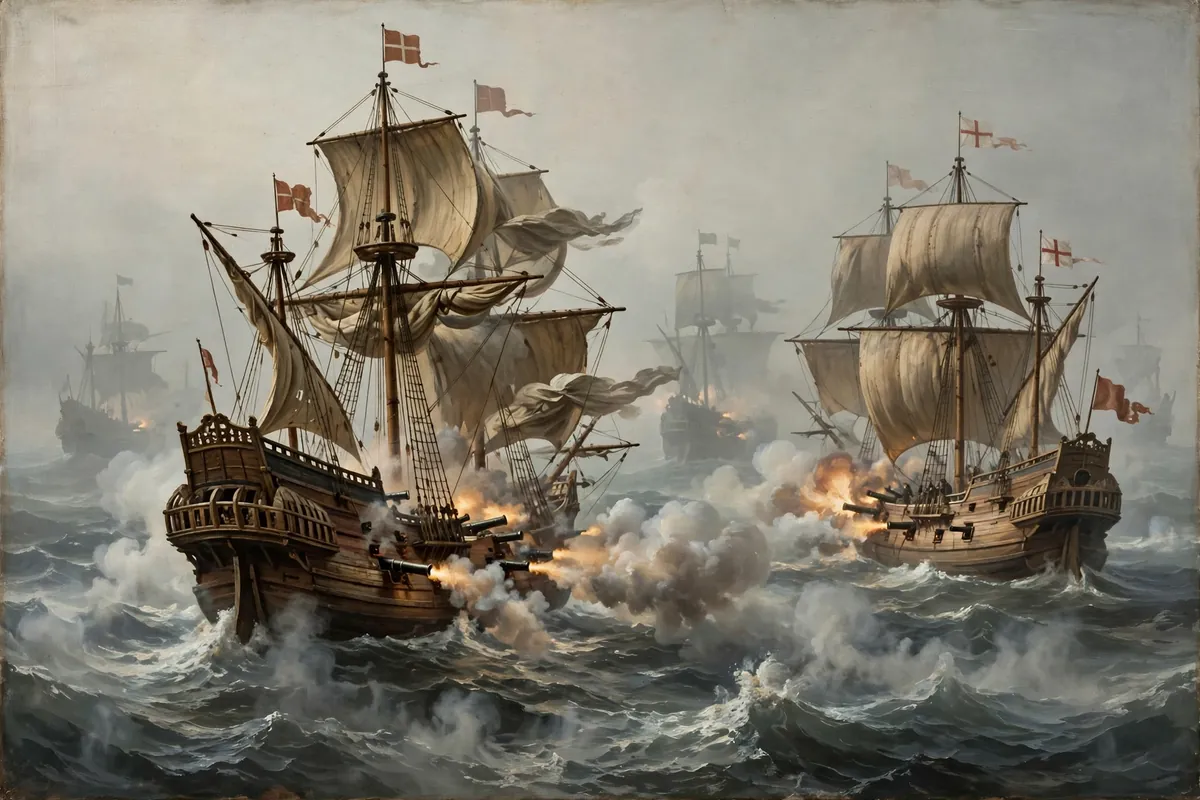
The English struck back. In 1579 she was besieged in her castle by English forces. According to accounts of the siege, she defeated the attackers by pouring hot oil on them — and some versions add the detail that she made homemade bullets from melted-down armor. These are the kind of stories that gather around legends, and they should be read as color rather than confirmed history, but they reflect how her contemporaries saw her: a commander who would fight from her own walls rather than surrender.
The voyage to Greenwich: face to face with Elizabeth I
The most famous episode of Grace O’Malley’s life began with a disaster. The English governor of Connaught, Sir Richard Bingham, captured two of her sons. For most people of the 1500s, that would have been the end of the story. For Grace, it was the beginning of a voyage.
She set sail for England, traveled up the River Thames to London, and secured an audience with Queen Elizabeth I herself at Greenwich. Think about what this meant: an Irish clan leader — a woman the English called a pirate — standing before the most powerful monarch in the English-speaking world, in her own palace.
The stories of the meeting are vivid. Grace refused to bow, telling the queen that she herself was a queen of her land and not a subject of the Queen of England. The two women were roughly the same age, and by all accounts they admired each other. They reached a truce: Grace would stop attacking English ships and turn her attentions to Spanish ones instead, and her sons were returned to her.
That this meeting happened is well established — Grace O’Malley appears in the official records of the English crown, in correspondence by English officials and in records of her petitions and her audience. The exact words exchanged are legend, but the outcome is history: she sailed home with her family restored and her position recognized.
Final years and death at Rockfleet
Grace O’Malley’s later years are quieter in the record, but she remained a force on the Mayo coast into old age. She died at Rockfleet Castle around 1603 — the same year as Queen Elizabeth I, a coincidence that history lovers have never quite gotten over. Both the exact year and the exact place of her death are disputed by historians, which is worth stating plainly: the 1603 date is traditional rather than certain.
What is not disputed is the scale of the life. A career in seafaring and piracy spanning more than forty years. Multiple castles held. Two marriages, a famous divorce, sons who commanded ships of their own. Imprisonment and freedom. And a statue at Westport House in Ireland, where visitors can stand in front of her stone likeness and try to imagine the real woman — the one who cut off her hair to go to sea.

O’Malley Grace: quick facts
The short version: everything below is the cheat sheet — the names, dates, and places you need to talk about O’Malley Grace with confidence.
| Fact | Detail |
|---|---|
| Irish name | Gráinne Ní Mháille |
| Common names | Grace O’Malley, Granuaile, Gráinne Mhaol |
| Lived | c. 1530 – c. 1603 (both dates approximate) |
| Role | Sea-lord, clan leader, fleet commander, political negotiator |
| Clan | Ó Máille (O’Malley) of County Mayo |
| Home base | Clare Island; later Rockfleet Castle |
| First husband | Dónal-an-Chogaidh O’Flaherty — took command of his fleet after his death |
| Second husband | Richard Burke — divorced after about a year under Brehon law; kept Rockfleet Castle |
| Nickname from revenge | The Dark Lady of Doona, after the capture of Castle Doona |
| Famous meeting | Audience with Queen Elizabeth I at Greenwich — refused to bow, won her sons’ release |
| Memorial | Statue at Westport House, County Mayo, Ireland |
Walking in her footsteps: where her world survives today
The short version: Grace O’Malley’s castles are still standing — and you can visit them.
The Mayo coastline of today still carries her marks. Clare Island, where she was born and where the O’Malleys kept their summer residence, is a real place you can reach by ferry. Rockfleet Castle still stands on its tidal inlet near Newport, its stone tower a plain statement of what she was: someone who held ground and would not give it up. Westport House displays her statue, keeping her in the landscape of the family estates of the west.
What visitors often notice is how small her world looks on a map and how large it felt to the people who lived in it. Clew Bay, Galway Bay, the sea roads to Scotland and Spain — this was the whole theater of her power. She never commanded a navy; she commanded a clan. And for four decades, that was enough to make queens negotiate with her.
O’Malley Grace in popular culture
Grace O’Malley’s story has traveled well beyond the history books. She has been the subject of poems for centuries, a musical about her life reached the stage, and she appears in novels, television, and games. The pirate queen image — the cropped hair, the galleys, the audience at Greenwich — translates naturally into fiction because it barely needs exaggeration.
What popular culture sometimes flattens is the politics. The real O’Malley Grace was less a swashbuckler and more a strategist: a woman who managed alliances with the English while raiding their shipping, who used marriage and divorce as tools of statecraft, and who understood that power on the sea meant nothing unless it could be converted into security on land. The legend is fun. The operator behind it is the interesting part.
FAQs
Who was O’Malley Grace?
O’Malley Grace is the name many people search for when they mean Grace O’Malley — Gráinne Ní Mháille — the 16th-century Irish pirate queen and chieftain of the Ó Máille clan. She commanded a fleet of galleys on Ireland’s west coast from around the 1560s until her death around 1603, controlled sea routes and castles, and is famous for her audience with Queen Elizabeth I.
What was Grace O’Malley’s Irish name?
Her Irish name was Gráinne Ní Mháille. She was also called Granuaile and Gráinne Mhaol — “maol” meaning cropped hair or bald — after the childhood story that she cut off her hair so she could sail with her father. Later she earned the nickname “The Dark Lady of Doona” after capturing Castle Doona.
Did Grace O’Malley really meet Queen Elizabeth I?
Yes. After the English governor of Connaught captured two of her sons, Grace O’Malley sailed to England and was granted an audience with Queen Elizabeth I at Greenwich. She refused to bow, stating that she herself was a queen of her land, and the two reached a truce that secured the release of her sons. Her appearance in English state records confirms the meeting took place.
Which castles did Grace O’Malley control?
Her network of strongholds included the family base on Clare Island, Bunowen Castle in County Galway (through her first marriage), Castle Doona (captured in revenge for her lover’s murder), and Rockfleet Castle near Newport, County Mayo (kept after her divorce from Richard Burke). Rockfleet is the castle most associated with her and, by tradition, the place where she died.
When did Grace O’Malley die?
Tradition holds that she died at Rockfleet Castle around 1603, the same year as Queen Elizabeth I. However, historians note that both the exact year and the exact place of her death are disputed. The c. 1530 – c. 1603 dates commonly given for her life should be read as approximate.
Why is she called the pirate queen of Ireland?
The English of her day called her a pirate for raiding ships, levying tolls, and blockading the port of Galway. The “queen” part reflects her real authority: she commanded a fleet, held castles, led a clan, and negotiated with monarchs as an equal. In Ireland she is remembered as a folk hero and a symbol of resistance to English rule.
For more life stories of remarkable figures across history, biographies of remarkable figures across history offers profiles of people whose lives shaped their times.
Read Also: 714 Area Code California: Complete Location & Dialing Guide (2026)
Related Stories

971 Area Code: Portland, Oregon Coverage Guide
The 971 area code serves the Portland, Oregon area as an overlay to 503. Here is what that…
203 Area Code Guide to Southwest Connecticut (2026 Guide)
Everything you need to know about the 203 area code — where it is, which cities it covers,…

413 Area Code: Complete Western Massachusetts Guide
Area code 413 is the single area code for western Massachusetts, in use since 1947. This guide covers…